


AI Generated Summary
- More than a century after his execution, Madan Lal Dhingra continues to be remembered not only as a revolutionary who defied the British Empire, but also as a symbol of sacrifice and unwavering patriotism whose story still resonates with the people of Punjab and the nation at large.
- It was there that he emerged as one of the earliest Indian nationalists to carry out a direct political assassination of a British official — an act that would later resonate deeply with revolutionary movements across the country, especially in Punjab.
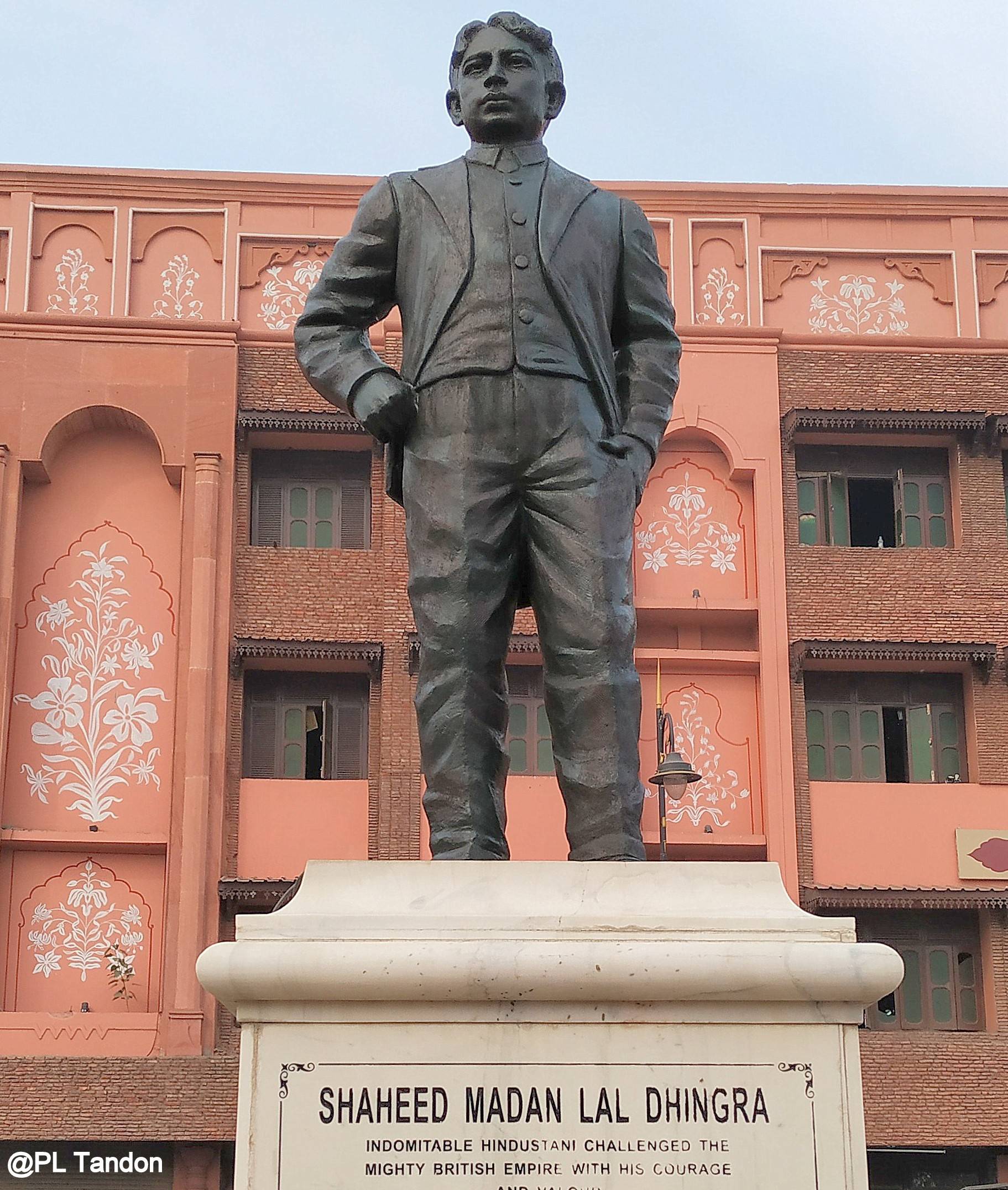
- A statue of the revolutionary martyr was recently unveiled at the Shaheed Madan Lal Dhingra Memorial in Gol Bagh, Amritsar, in a ceremony attended by social workers, scholars, local residents and representatives of various organisations.
A renewed tribute to freedom fighter Madan Lal Dhingra has brought attention once again to one of the earliest Indian revolutionaries who challenged British rule beyond India’s borders and inspired generations of anti-colonial activists.
A statue of the revolutionary martyr was recently unveiled at the Shaheed Madan Lal Dhingra Memorial in Gol Bagh, Amritsar, in a ceremony attended by social workers, scholars, local residents and representatives of various organisations. The event aimed to familiarise younger generations with Dhingra’s life, sacrifice and contribution to India’s struggle for independence.
Born on September 18, 1883, in Amritsar into an affluent Punjabi family, Dhingra grew up in an environment closely aligned with the British administration. His father, Dr Ditta Mal Dhingra, was a respected civil surgeon known for his loyalty to the colonial government. Despite this privileged background, Dhingra gravitated toward nationalist ideology during his student years.
In 1906, he moved to London for higher studies, where he came into contact with Indian revolutionaries working secretly against British imperial rule. It was there that he emerged as one of the earliest Indian nationalists to carry out a direct political assassination of a British official — an act that would later resonate deeply with revolutionary movements across the country, especially in Punjab.
Speaking at the ceremony, former Punjab minister and senior BJP leader Laxmi Kanta Chawla described Dhingra as a fearless patriot who devoted his life to the cause of freedom.
She said Amritsar was the place where the revolutionary spirit first awakened in him and noted that, even while abroad, he remained committed to the dream of an independent India. According to her, today’s youth should draw inspiration from revolutionaries like Dhingra, who embraced martyrdom with conviction and courage.
The memorial at Gol Bagh, established in 2023 through efforts led by Chawla, spreads across more than 4,000 square yards and features inscriptions documenting Dhingra’s life and sacrifice along with a prominent statue of the martyr. The newly unveiled sculpture is the second statue dedicated to him in the city; the first stands near Heritage Street close to his ancestral residence in Katra Sher Singh.
Chawla has also appealed to the Centre and the Punjab government to bring back Dhingra-related artefacts currently preserved in museums in London so that future generations in India can better understand his legacy.
She further proposed the installation of a statue of Udham Singh at the memorial site, drawing a historical connection between the two revolutionaries from Amritsar. Both were executed at London’s Pentonville Prison years apart — Dhingra at the age of 26, and Udham Singh after avenging the victims of the Jallianwala Bagh Massacre.
Historical accounts suggest that during efforts in 1976 to recover Udham Singh’s remains, authorities also located Dhingra’s coffin. His remains were later brought back to India, and several reports indicate that his ashes are now preserved at a memorial in Akola, Maharashtra.
More than a century after his execution, Madan Lal Dhingra continues to be remembered not only as a revolutionary who defied the British Empire, but also as a symbol of sacrifice and unwavering patriotism whose story still resonates with the people of Punjab and the nation at large.