


AI Generated Summary
- The architectural, historical and spiritual evolution of gurdwaras across the world came into focus at a gathering of writers, historians, scholars and art enthusiasts held in the city on Tuesday.
- Among the details highlighted was the unusual technique adopted by the book’s illustrator, Allan Jay Quesada, who used water from the sarovar of the Golden Temple while creating some of the watercolour paintings featured in the volume.
- In the latest volume, he presents the gurdwara as both a physical structure and an embodiment of Sikh values, particularly equality, service and openness.
The architectural, historical and spiritual evolution of gurdwaras across the world came into focus at a gathering of writers, historians, scholars and art enthusiasts held in the city on Tuesday.
The event celebrated author and journalist Roopinder Singh’s latest coffee-table book, Gurdwaras: Abodes of the Guru, published internationally by Manila-based Gentry Press. The 340-page volume documents 51 prominent gurdwaras spread across five continents and traces the development of these sacred spaces over more than 550 years.
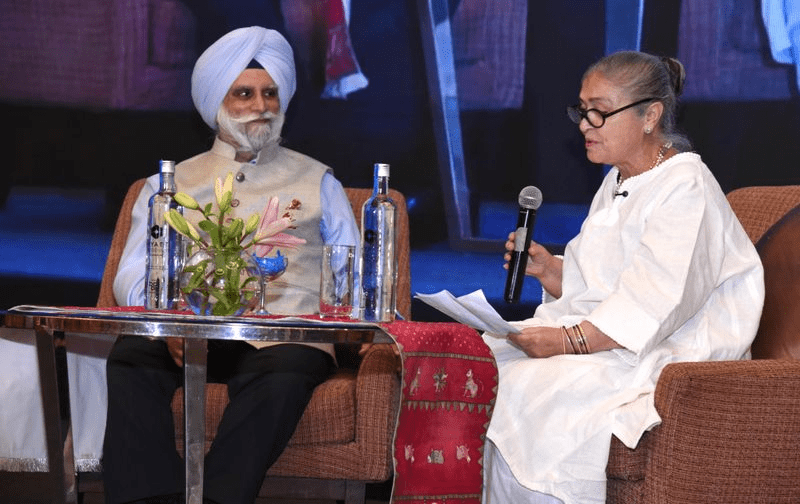
A conversation between Singh and noted theatre director Padma Shri Neelam Mansingh Chowdhry formed the centrepiece of the evening. Their discussion examined the making of the book and the many roles gurdwaras have played beyond serving as places of worship. Through their architecture, community kitchens, congregational traditions and historical associations, Singh said, gurdwaras have emerged as spaces where faith, memory, service and collective identity intersect.
The programme opened with a performance on the Afghan rabab by artiste Gurdeep Singh. Closely associated in Sikh tradition with Bhai Mardana, the instrument provided an evocative beginning to the event. Singh also briefly outlined the rabab’s journey from Iran and Turkey through Afghanistan and Kashmir before it became closely connected with the musical traditions of Punjab.
A short film screened during the programme offered a glimpse into the five years of research and artistic work behind the publication. Among the details highlighted was the unusual technique adopted by the book’s illustrator, Allan Jay Quesada, who used water from the sarovar of the Golden Temple while creating some of the watercolour paintings featured in the volume.
The book brings together visual art, architectural documentation and historical research. It records not only the grandeur of celebrated Sikh shrines but also the changing forms adopted by gurdwaras in different cultural and geographical settings.
One such example is a gurdwara at Richmond Hill in New York City. The building, distinguished by its stained-glass windows, had originally been constructed as a church before being transformed into a Sikh place of worship. Such instances, the author said, reflect the ability of Sikh institutions to adapt to their surroundings while retaining their essential spiritual and communal character.
This is Singh’s ninth book. His previous works span Sikh history, biography and fiction. In the latest volume, he presents the gurdwara as both a physical structure and an embodiment of Sikh values, particularly equality, service and openness.
Towards the conclusion of the discussion, Chowdhry asked Singh to identify the central message he hoped readers would take away from the book. He pointed to the inclusive nature of the gurdwara, saying it serves as a reminder that all human beings are creations of the same Creator.
The publication itself reflects the pluralistic spirit it seeks to celebrate. It has been written by a Sikh author and illustrated by Quesada, a Roman Catholic architectural artist. The book was designed by a member of the Iglesia ni Cristo and published by Rajiv Daswani of Gentry Press, who is Hindu.
It also carries a foreword by former Prime Minister Dr Manmohan Singh, who described the book as a gateway to understanding the Sikh ethos.
Among those present at the event were Justice SS Sodhi, member of The Tribune Trust and former Chief Justice of the Allahabad High Court; former Punjab Chief Secretary Sarvesh Kaushal; Justice Shabibul Hasnain; former IAS officer and Punjab State Red Cross Secretary-cum-Chief Executive Shivdular Singh Dhillon; and historian Prof Indu Banga. Senior journalists, academicians and scholars also attended the gathering.