


AI Generated Summary
- Vikram Sharma, a Punjab Police officer and prominent wrestling coach, said many young people are prepared to spend between Rs 1,000 and Rs 10,000 a month on modern gyms but show little interest in training on mud.
- A decorated wrestler himself, Sharma won gold medals at the World Police Games in Canada in 2009 and in the United States in 2011.
- Mud wrestling continues to command respect and enthusiasm in rural areas, but without institutional support and renewed interest among urban youth, the remaining akharas of the holy city may struggle to survive.
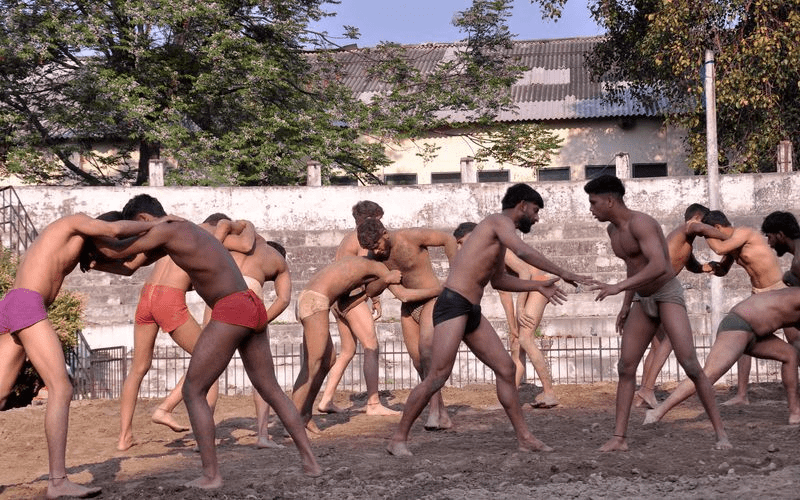
Once central to the physical, social and cultural life of Punjab, Amritsar’s traditional wrestling akharas are rapidly vanishing. Of the nearly 40 prominent arenas that operated in the city before the 1990s, only four continue to train wrestlers today.
The surviving centres are Akhara Chacha Ganda Singh near the bus stand, Akhara Kishan Pehalwan on Dhapai Road, Akhara Bijli Pehalwan opposite the Bijli Pehalwan temple and Akhara Gol Bagh.
Akharas have a long association with Punjab’s history. Guru Angad Dev, the second Sikh Guru, is believed to have encouraged physical training and helped popularise the tradition. Over the centuries, these mud arenas became much more than sporting facilities. They served as community spaces where young people exercised, learned discipline and built lasting social bonds.
Amritsar’s akharas also produced and hosted some of the most celebrated names in Indian wrestling. Legendary grapplers, including Gama Pehalwan and Dara Singh, were associated with the traditional training culture that once flourished across the city.
That culture began to weaken during the 1990s as economic liberalisation, satellite television and changing lifestyles altered the recreational preferences of urban residents. Air-conditioned gyms gradually replaced open-air training grounds, while competitive wrestlers moved towards mat wrestling to meet national and international standards.
Vikram Sharma, a Punjab Police officer and prominent wrestling coach, said many young people are prepared to spend between Rs 1,000 and Rs 10,000 a month on modern gyms but show little interest in training on mud.
Sharma, who has served as a Greco-Roman coach for senior wrestlers and has also worked with the junior national team, said mud wrestling offers considerable physical benefits. However, the perception that traditional akharas are outdated has made it increasingly difficult to attract new trainees.
A decorated wrestler himself, Sharma won gold medals at the World Police Games in Canada in 2009 and in the United States in 2011. He was also crowned champion at the 2011 National Championship and has secured eight gold medals at the All India Police Games.
According to him, the structures of around 36 former akharas can still be found across Amritsar, but most now stand without wrestlers, coaches or regular training activity.
While the tradition is disappearing from cities, mud wrestling remains popular in Punjab’s villages and small towns. Rural tournaments continue to draw large crowds, offer prize money and provide professional opportunities to wrestlers.
Traditional competitions, commonly known as chhinj, remain a major source of income for Punjabi grapplers. Although many wrestlers participate in tournaments across India, a substantial part of their earnings comes from village events where contests are still fought on mud.
A professional wrestler can earn between Rs 5 lakh and Rs 8 lakh annually through competitions, coaching and related engagements. The most successful wrestlers in Punjab are reported to earn as much as Rs 60 lakh a year.
Veteran performers such as Jaskanwar Singh “Jassa Patti”, Bhupinder Ajnala, Pritpal Singh Phagwara and Parveen Kohali of Ajnala have become prominent figures in traditional wrestling. Their achievements have brought them recognition as well as financial success.
Their popularity has also encouraged young wrestlers from other states to travel to Punjab and train under experienced grapplers. These rural akharas remain important centres for preserving techniques that have been passed down through generations.
The contrast between Amritsar’s abandoned arenas and Punjab’s crowded village tournaments reflects the uncertain future of the tradition. Mud wrestling continues to command respect and enthusiasm in rural areas, but without institutional support and renewed interest among urban youth, the remaining akharas of the holy city may struggle to survive.