


AI Generated Summary
- In the heart of Lahore, on April 16, 2026, unidentified gunmen on a motorcycle opened fire on Amir Hamza, a founding member of Lashkar-e-Taiba (LeT) and one of its most senior operatives.
- Hamza, who co-founded the group alongside Hafiz Saeed and played a central role in fundraising, recruitment, and orchestrating attacks against India, now lies critically injured in a hospital.
- He is only the latest name on a grim and lengthening roster.
In the heart of Lahore, on April 16, 2026, unidentified gunmen on a motorcycle opened fire on Amir Hamza, a founding member of Lashkar-e-Taiba (LeT) and one of its most senior operatives. Hamza, who co-founded the group alongside Hafiz Saeed and played a central role in fundraising, recruitment, and orchestrating attacks against India, now lies critically injured in a hospital. He is only the latest name on a grim and lengthening roster. Over the past several years, high-ranking commanders from LeT, Jaish-e-Mohammed (JeM), and Hizbul Mujahideen (HM) have been systematically eliminated inside Pakistan and Pakistan-occupied Kashmir—Shahid Latif of JeM in Sialkot, Bashir Ahmed Peer of HM, Zahoor Mistry, and dozens more. Pakistani authorities call these “mystery killings.” The rest of the world sees a pattern: the very men Islamabad once sheltered as strategic assets are being gunned down in its own streets.
This is not random violence. It is the inevitable blowback from a policy that treated terror groups as instruments of statecraft. For decades, Pakistan’s establishment nurtured LeT, JeM, and HM as proxies to bleed India in Kashmir and project influence into Afghanistan. These organisations were never fringe outfits; they operated with the tacit, and often active, support of elements within the military and intelligence apparatus. Training camps, safe houses, and fundraising networks flourished openly. When the world demanded crackdowns after 9/11 or the 2008 Mumbai attacks, Pakistan delivered cosmetic arrests and denials while keeping the infrastructure intact. The message was clear: these snakes were useful in the neighbour’s garden. What Pakistan forgot is an iron law of nature—you cannot keep venomous reptiles in your own backyard and expect them to bite only on command.
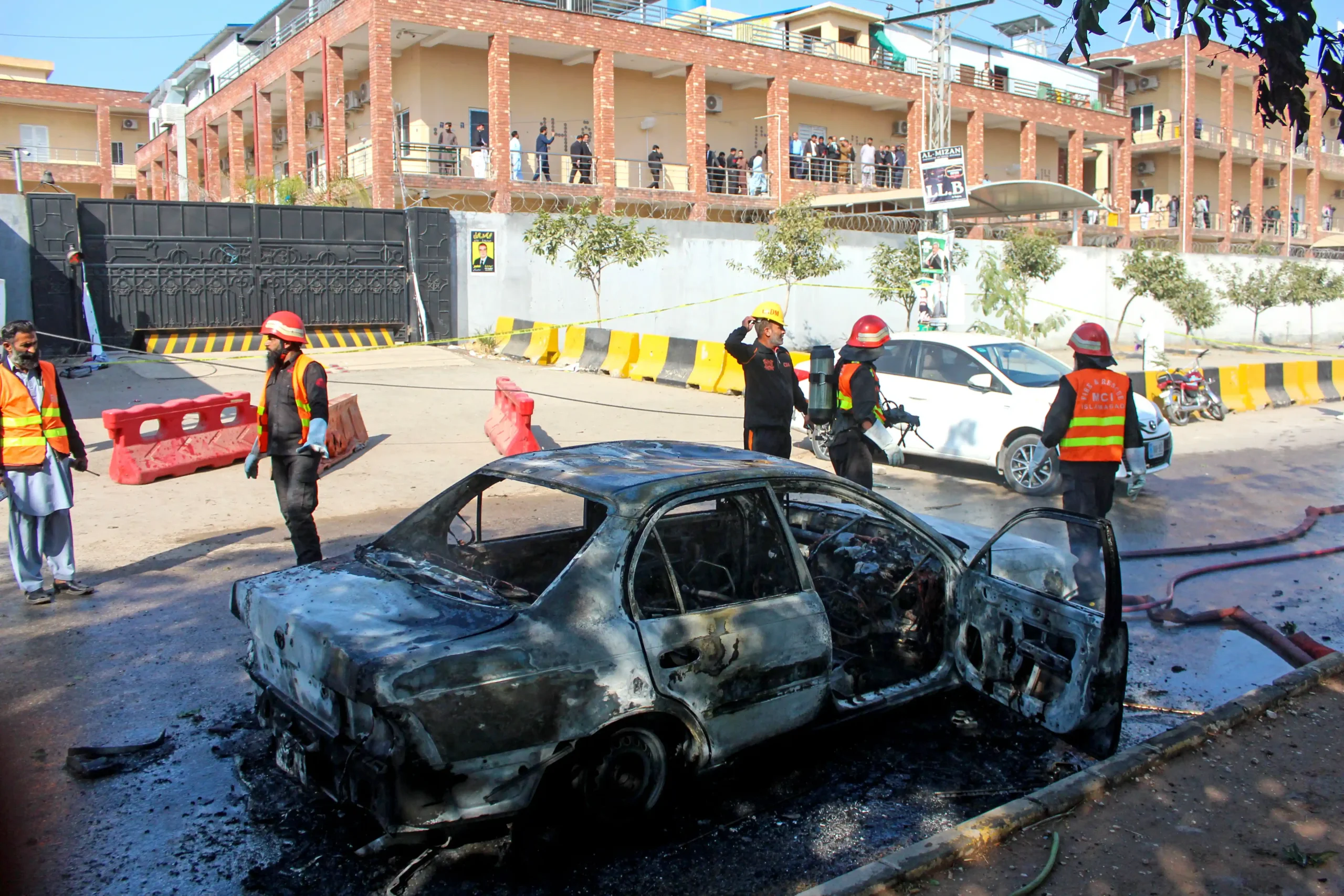
Today, the backyard is on fire. Pakistan now ranks first on the Global Terrorism Index 2026, a position it has never held before. In 2025 alone, the country recorded 1,139 terrorism-related deaths—the highest since 2013—and over a thousand incidents. Bombings surged by 32%. Assassinations exploded by 450%. The violence is not confined to the tribal fringes. In January and February 2026, Balochistan witnessed coordinated attacks by the Balochistan Liberation Army that killed dozens across multiple districts. In February, a suicide bomber struck a Shia mosque in Islamabad, claiming over thirty lives; Islamic State’s Pakistan province proudly claimed responsibility. Khyber Pakhtunkhwa and Balochistan remain bleeding wounds, with Tehrik-i-Taliban Pakistan (TTP) and Baloch insurgents mounting near-daily assaults on security forces and civilians alike.
The irony is brutal. The same ecosystem that sustained anti-India militancy has mutated into domestic monsters. TTP draws ideological and logistical oxygen from the very jihadist networks Pakistan once cultivated. When the Taliban returned to power in Afghanistan in 2021, many in Islamabad privately celebrated, believing the “strategic depth” game had been won. Instead, the TTP surged back across the Durand Line, using Afghan soil as sanctuary while striking deeper into Pakistan. Baloch separatists, once dismissed as manageable irritants, have grown bolder, exploiting the state’s distraction. Even factions once aligned with LeT and JeM have turned inward, settling scores or carving out new turf. The targeted killings of Hamza and his peers are not isolated vendettas; they reflect a fractured terror landscape where old patrons can no longer guarantee protection and old foot soldiers no longer obey.
Economically and politically, the cost is devastating. Foreign investment has dried up. Tourism is dead. The military, already stretched thin, is forced to fight on multiple fronts while the economy buckles under IMF bailouts and inflation. Public trust in the state has eroded; citizens in KP and Balochistan watch helplessly as their children are recruited or killed in the crossfire. And yet the establishment clings to the old playbook. It still distinguishes between “good” militants (those pointed outward) and “bad” ones (those who have turned inward), as if such distinctions ever survived contact with reality.
You cannot have snakes in your backyard without them biting you. Pakistan’s leadership has learned this the hard way, but the lesson has come at the price of thousands of Pakistani lives. The targeted elimination of Amir Hamza and his cohorts is not merely a security failure; it is the visible symptom of a deeper strategic collapse. For years, Islamabad told the world that terror groups on its soil were beyond its control or that India was exaggerating the threat. The corpses piling up in Lahore, Karachi, Peshawar, and Quetta have demolished that fiction. The terrorists Pakistan once weaponised against its neighbours have now turned their guns inward.
The path forward is painful but obvious. Pakistan must dismantle the entire terror ecosystem—not selectively, not for international photo-ops, but comprehensively. That means shuttering the madrassas that radicalise, cutting the financial lifelines, and ending the policy of plausible deniability that has defined its security doctrine for decades. Until then, the snakes will keep biting. The only question is how many more Pakistanis must die before Islamabad admits that the backyard it so carefully cultivated has become a graveyard. The rest of the region is watching. So is the world. The lesson is no longer theoretical: when a state chooses terror as policy, terror eventually chooses the state.