


AI Generated Summary
- This incident is not an isolated event but a stark manifestation of Pakistan’s enduring strategy of using terrorism as an instrument of state policy against India, even as its own house crumbles under economic ruin, domestic insurgencies, and volatile regional ties.
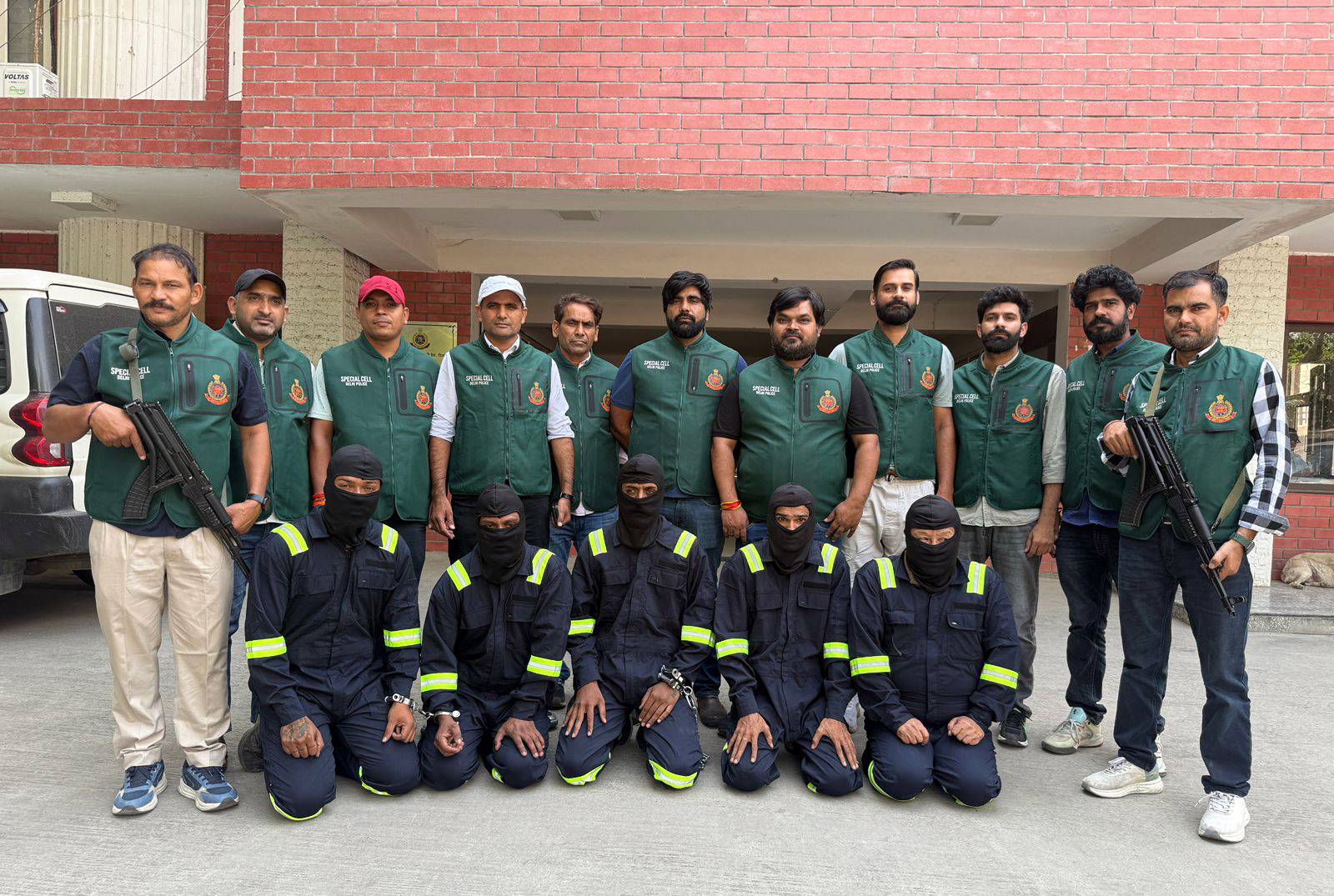
- In a significant counter-terrorism operation on May 30, 2026, the Indian Delhi Police’s Special Cell arrested nine individuals allegedly linked to Pakistan’s Inter-Services Intelligence (ISI) and the fugitive gangster Dawood Ibrahim’s network.
- The province, rich in minerals but plagued by underdevelopment and alienation, has seen a resurgence in Baloch Liberation Army (BLA) attacks.
In a significant counter-terrorism operation on May 30, 2026, the Indian Delhi Police’s Special Cell arrested nine individuals allegedly linked to Pakistan’s Inter-Services Intelligence (ISI) and the fugitive gangster Dawood Ibrahim’s network. The accused, including Nepali nationals, were reportedly planning coordinated attacks on vital installations such as airports, railway stations, power plants, and security personnel in Delhi, Mumbai, and other cities. Authorities recovered Pakistan-made hand grenades, Glock pistols, ammunition, and explosives. Investigators revealed recruitment of local youths with promises of hefty payouts, facilitated through a Nepal-based network and handlers like Shahzad Bhatti.
This incident is not an isolated event but a stark manifestation of Pakistan’s enduring strategy of using terrorism as an instrument of state policy against India, even as its own house crumbles under economic ruin, domestic insurgencies, and volatile regional ties.
Pakistan’s ISI has long been accused by Indian and international observers of orchestrating proxy warfare. From the 1993 Mumbai bombings to the 2008 Mumbai attacks (166 killed), the 2019 Pulwama incident (40 CRPF personnel killed), and repeated infiltration attempts in Jammu & Kashmir, the pattern is consistent: deniability through non-state actors while providing logistics, training, funding, and intelligence. Recent arrests in Delhi echo earlier modules busted in April 2026, including an ISI-linked espionage ring with Babbar Khalsa International involving solar-powered CCTV surveillance near military sites.
Data from the South Asia Terrorism Portal underscores the sustained threat. While India has significantly reduced terrorism-related fatalities in recent years through improved intelligence, border fencing, and operations, Pakistan-backed groups continue attempts. In contrast, Pakistan itself recorded alarming violence in 2025: around 1,709 terrorist incidents resulting in nearly 4,000 deaths, the highest since 2013 according to some assessments, driven largely by Tehrik-e-Taliban Pakistan (TTP) and Baloch insurgents.
Pakistan’s Domestic Crises
Yet Pakistan persists in external adventurism despite dire internal conditions. Its economy is in shambles. As of June 2025, total public debt crossed $286 billion (PKR 80.6 trillion), up 13% year-on-year, with a debt-to-GDP ratio hovering around 70-83% depending on estimates. Debt servicing consumes a massive portion of federal revenue—often cited around 89% in recent reports—leaving little for development. Real GDP growth in FY25 was a modest 2.7%, hampered by high interest rates, rupee depreciation, and structural issues. Inflation has eased but remains a burden on citizens, while reserves rely heavily on remittances and bailouts.
The situation in Balochistan is particularly grim. The province, rich in minerals but plagued by underdevelopment and alienation, has seen a resurgence in Baloch Liberation Army (BLA) attacks. Insurgents have targeted security forces, infrastructure, and Chinese-linked projects under CPEC. Pakistani forces face stretched resources combating both TTP in the northwest and Baloch separatists in the southwest. Cross-border linkages with Afghanistan exacerbate this; militants exploit porous borders for sanctuary and operations.
Pakistan’s relations with Afghanistan remain volatile. Since the Taliban takeover in 2021, TTP attacks inside Pakistan surged, prompting Islamabad to accuse Kabul of providing safe havens—a charge denied by the Taliban. This led to border clashes, Pakistani airstrikes into Afghan territory in 2025, retaliatory actions, border closures disrupting trade, and mass expulsions of Afghan refugees. Ceasefires have been fragile, mediated by third parties like China, Qatar, and Turkey, but mistrust persists. Pakistan, once a patron of the Taliban, now finds itself confronting blowback from the very militant ecosystem it helped foster.
Strategic Irrationality
This raises a fundamental question: why does Pakistan invest scarce resources in destabilizing India when its economy contracts, debt balloons, and western provinces burn? The answer lies in the Pakistani military-ISI establishment’s doctrinal obsession with “strategic depth” and using asymmetric warfare to offset conventional military inferiority. Successive governments have prioritized this over governance, education, and economic reform. Defense spending often exceeds budgeted limits, crowding out productive investment.
India, by contrast, has focused on economic growth, infrastructure, and defensive modernization. Terrorism incidents in India have declined significantly from peaks in the 2000s. In 2025, India reported far fewer fatalities than Pakistan despite ongoing threats. India’s response—surgical strikes, Balakot, and diplomatic isolation of Pakistan—has raised costs for Islamabad, yet the proxy machinery grinds on.
The latest Delhi plot, foiled through proactive intelligence, highlights the resilience of India’s security apparatus. However, it also signals that Pakistan shows no signs of strategic course correction. International pressure, including FATF scrutiny (though eased at times), has had limited impact on ISI operations. Global Terrorism Index rankings consistently place Pakistan among the worst affected and perpetrators.
For India, the imperative remains clear: zero tolerance for terrorism, continued capacity building, and international exposure of Pakistan’s duplicity. Dialogue can only resume when Pakistan dismantles terror infrastructure—a precondition repeatedly ignored. As long as the ISI views terror as cheap warfare, incidents like the recent arrests will recur, draining resources on both sides but primarily harming Pakistan’s own people through misgovernance.
Pakistan’s leadership must confront the self-defeating nature of this policy. An economy in tatters, Balochistan in turmoil, and Afghan borders aflame offer no foundation for sustained external aggression. True security for Pakistan lies in internal reform and peaceful coexistence, not perpetual proxy conflict. Until then, India must remain vigilant, as the May 30 arrests grimly remind us.