


AI Generated Summary
- In a separate literary gathering, Majha House also hosted author Tanuja Chaturvedi for the launch of her book Hum Dono, a tribute to the cinematic legacy of Dev and Vijay Anand.
- Through a thoughtful conversation, Hajela reflected on the emotional and historical layers of her work, which draws from the lived experiences of those affected by the Partition of India.
- Rebuilding his life as a ladies’ tailor, Gurdev carries with him the lingering trauma of displacement, even as he crafts a new existence for his family.
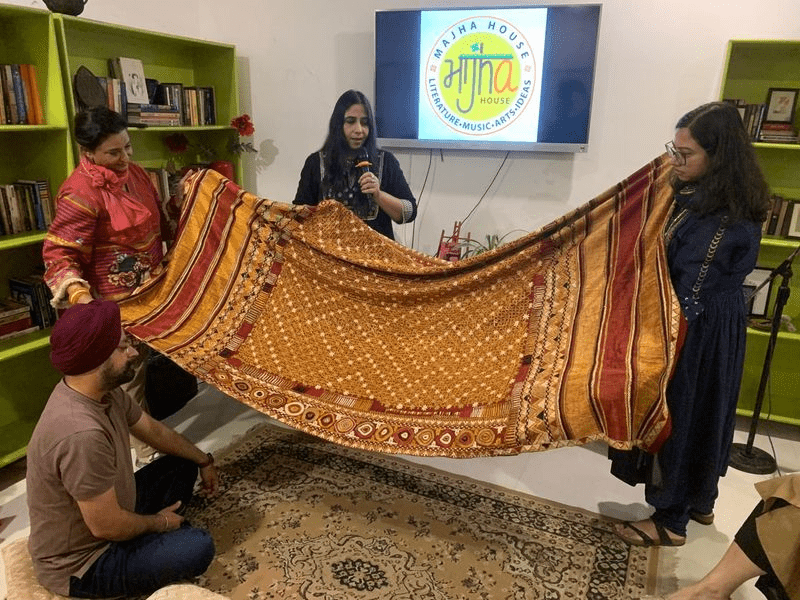
Amritsar witnessed a unique confluence of literature, history, and textile art as Majha House hosted an engaging session that blended storytelling with hands-on creativity. The event brought together writer Priya Hajela and activist-archivist Rubina Singh in an immersive exploration of memory, displacement, and healing.
The evening began with a literary discussion centred on Hajela’s novel Ladies’ Tailor, moderated by Dr Sumneet Kaur Pahwa, associate professor of English at Guru Nanak Dev University. Through a thoughtful conversation, Hajela reflected on the emotional and historical layers of her work, which draws from the lived experiences of those affected by the Partition of India.
Although fictional, the narrative echoes real histories of loss and resilience. The story follows Gurdev, a Sikh man forced to flee his home in present-day Pakistan during Partition. Rebuilding his life as a ladies’ tailor, Gurdev carries with him the lingering trauma of displacement, even as he crafts a new existence for his family. Hajela spoke about how such stories, though rooted in the past, continue to resonate across generations.
Transitioning from words to tactile expression, the session moved into a hands-on workshop led by Rubina Singh. A social designer known for integrating law, design, and advocacy, Singh guided participants through the traditional art of rafoo (darning). Drawing inspiration from feminist embroidery traditions and her own connection to phulkari, she encouraged attendees to view stitching not just as craft, but as a form of storytelling and resistance.
Participants created small textile pieces that reflected personal memories of inheritance, loss, and renewal. The exercise echoed the central themes of Hajela’s novel—survival, quiet resilience, and hope—transforming Gurdev’s fictional tailoring space into a shared, lived experience.
The event stood out for its ability to bridge narrative and practice, allowing participants to internalise literary themes through artistic engagement. By the end of the session, storytelling had moved beyond the page, finding expression in thread and fabric.
In a separate literary gathering, Majha House also hosted author Tanuja Chaturvedi for the launch of her book Hum Dono, a tribute to the cinematic legacy of Dev and Vijay Anand. The book was released by Bhupendra Kainthola, alongside noted actor and costume designer Dolly Ahluwalia.
Chaturvedi’s session, interwoven with songs from classic films, featured a discussion with Gurpartap Singh, who explored themes from iconic works such as Kaala Bazar, Guide, and Tere Mere Sapne. The evening concluded with a reflective baithak on poet Mirza Ghalib, led by Dr Gurupdesh Singh, offering audiences a deeper look into the timeless richness of Ghalib’s poetry.
Together, the sessions highlighted Majha House’s commitment to fostering spaces where literature, art, and history intersect—inviting audiences not just to listen, but to participate, reflect, and create.
