


AI Generated Summary
- Merchant was found guilty of murder-for-hire and attempting an act of terrorism transcending national boundaries for his role in a foiled plot to assassinate President Donald Trump, along with other prominent figures like former President Joe Biden and Nikki Haley.
- Merchant, a 47-year-old businessman with longstanding ties to both Pakistan and Iran (including family in Tehran), admitted during his trial that IRGC handlers recruited him, threatened his loved ones, and dispatched him to the United States.
- He was arrested in July 2024, just before departing for Pakistan, and the plot never advanced to naming a final target or executing an attack.
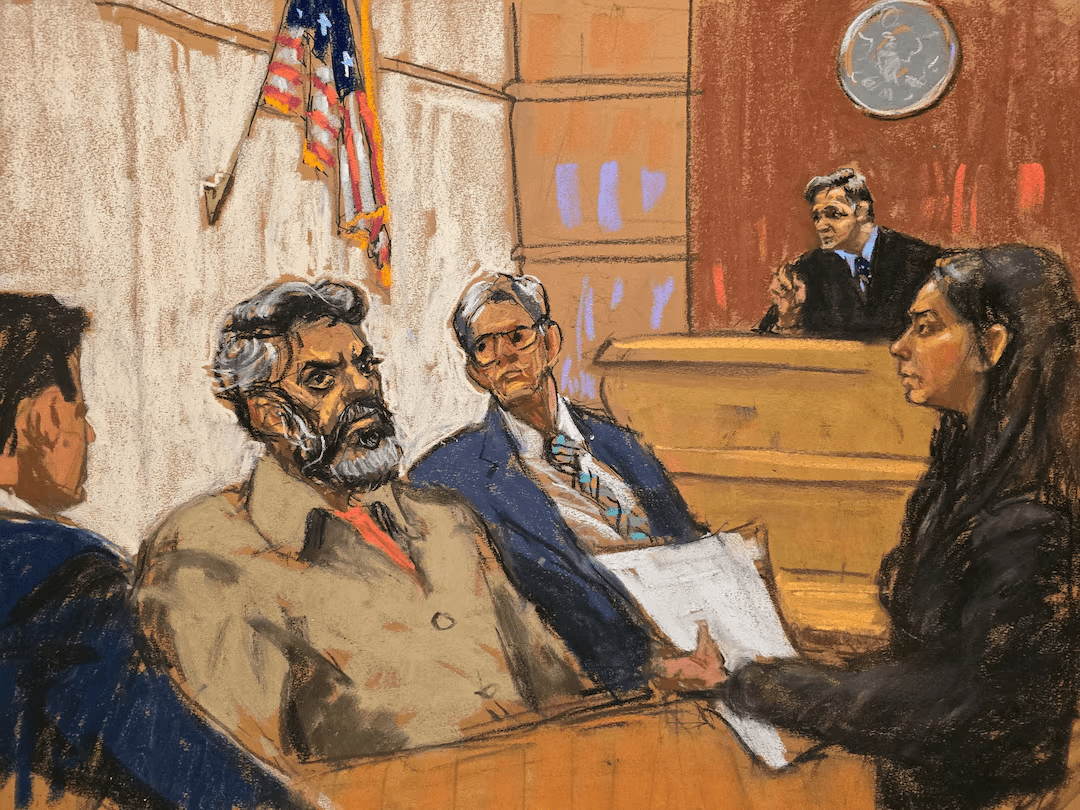
The recent conviction of Asif Merchant, a Pakistani national, in a U.S. federal court reveals a disturbing chapter in the long shadow war between Iran and the United States. Merchant was found guilty of murder-for-hire and attempting an act of terrorism transcending national boundaries for his role in a foiled plot to assassinate President Donald Trump, along with other prominent figures like former President Joe Biden and Nikki Haley. This scheme, orchestrated in 2024 during Trump’s presidential campaign, was directed by Iran’s Islamic Revolutionary Guard Corps (IRGC) in retaliation for the 2020 U.S. drone strike that killed IRGC commander Qassem Soleimani.
Merchant, a 47-year-old businessman with longstanding ties to both Pakistan and Iran (including family in Tehran), admitted during his trial that IRGC handlers recruited him, threatened his loved ones, and dispatched him to the United States. He attempted to recruit hitmen—unbeknownst to him, undercover FBI agents—handing over $5,000 in cash as a down payment. He was arrested in July 2024, just before departing for Pakistan, and the plot never advanced to naming a final target or executing an attack. Prosecutors presented evidence of his communications, handwritten notes with codewords for the operation, and even online posts depicting Trump’s death as part of the broader scheme.
🚨 BREAKING: An Iranian intelligence operative has just been federally convicted for plotting to assassinate Donald Trump in 2024.
— Commentary 🇺🇸 Tom Homan (@HomanNews) March 7, 2026
Asif Merchant — a trained agent tied to the Iranian regime — entered the United States in April 2024 as part of the plan.
AG Pam Bondi said it… pic.twitter.com/0Sz34ABcoh
While the “Pakistan link” in headlines might suggest state involvement from Islamabad, the facts point elsewhere. There is no public evidence implicating Pakistan’s government, military, or Inter-Services Intelligence (ISI) in directing or supporting this plot. Merchant acted as an individual operative under Iranian command, leveraging his dual connections but not as a proxy for Pakistani authorities. Iran has long used non-Iranian nationals—often from neighboring countries with historical, economic, or familial ties—to execute operations abroad, providing plausible deniability and operational flexibility.
This case underscores several urgent realities. First, the IRGC remains determined to exact revenge for Soleimani’s killing, even years later, and views high-profile American leaders as legitimate targets. The timing—amid escalating U.S.-Iran tensions, including recent military strikes—highlights how assassination plots can serve as asymmetric tools when conventional confrontation risks escalation. Second, the recruitment of a Pakistani national illustrates the porous nature of transnational networks in South Asia and the Middle East, where personal grievances, coercion, and ideological alignment can intersect with state-directed terrorism.
For U.S. policymakers, this episode demands a clear-eyed response. The foiling of the plot demonstrates the effectiveness of intelligence and law enforcement vigilance, but it also exposes ongoing vulnerabilities. Enhanced scrutiny of IRGC-linked operatives, stronger countermeasures against proxy recruitment, and diplomatic pressure on states that tolerate such networks are essential. Pakistan itself has cooperated with the U.S. on counterterrorism in the past; this incident should prompt Islamabad to reaffirm that boundary and investigate any unwitting facilitation.
Ultimately, the Merchant conviction is a reminder that threats to American leaders do not always originate from lone actors or domestic extremists. State sponsors like Iran continue to exploit global diasporas and willing (or coerced) individuals to project power onto U.S. soil. Deterring such plots requires not only robust domestic security but a sustained strategy to degrade the IRGC’s operational reach—through sanctions, targeted disruptions, and, when necessary, decisive military action. President Trump’s survival of multiple threats, including this one, is fortunate. Ensuring no future attempt succeeds will demand unrelenting resolve.