


AI Generated Summary
- In a move that is likely to resonate strongly across Punjab, the National Council of Educational Research and Training (NCERT) has introduced a redesigned Class IX physical education textbook that places indigenous sports—especially those rooted in Sikh tradition—at the heart of school learning.
- For a state where sports—from kabaddi to hockey—form a vital part of social life, the inclusion of Gatka and other indigenous disciplines in school education could help bridge the gap between tradition and modern learning.
- The book also notes that the sport today has a structured competitive format under the World Gatka Federation, reflecting its transformation from a traditional art into a globally recognised discipline.
In a move that is likely to resonate strongly across Punjab, the National Council of Educational Research and Training (NCERT) has introduced a redesigned Class IX physical education textbook that places indigenous sports—especially those rooted in Sikh tradition—at the heart of school learning.
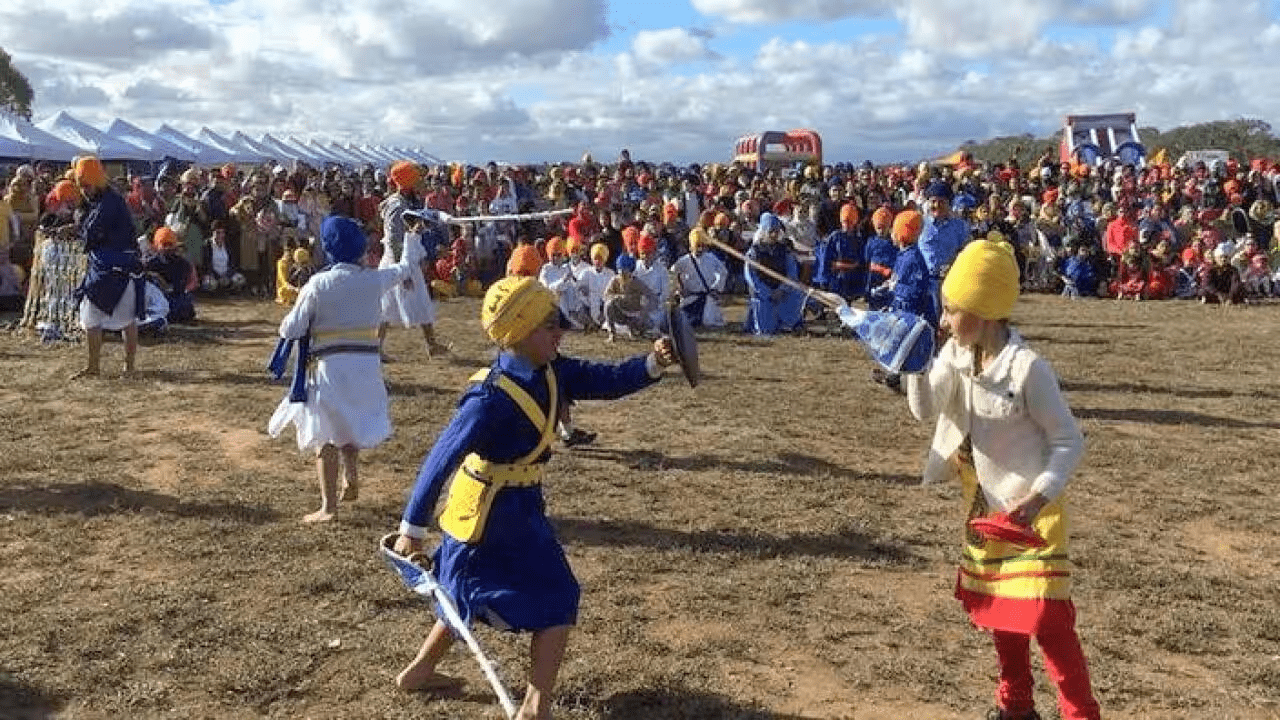
The new textbook, Khel Praveen, marks a departure from conventional curricula by integrating traditional Indian disciplines such as Gatka, Mallakhamb, Thang-Ta and Kalaripayattu. For Punjab, the inclusion of Gatka is particularly significant, bringing a centuries-old martial art closely tied to Sikh identity into the national academic mainstream.
Gatka: Punjab’s Living Legacy in Classrooms
The textbook traces the origins of Gatka to Guru Hargobind, who introduced the concept of martial preparedness among Sikhs, and its later evolution under Guru Gobind Singh, who formalised it as an essential part of Sikh discipline.
By including Gatka in a formal curriculum, NCERT has effectively acknowledged a practice that continues to be performed in gurdwaras, festivals and rural akharas across Punjab. The book also notes that the sport today has a structured competitive format under the World Gatka Federation, reflecting its transformation from a traditional art into a globally recognised discipline.
Reviving Indigenous Strength Traditions
Alongside Gatka, the textbook introduces students to other traditional sports. Mallakhamb is linked to ancient Sanskrit texts and its revival during the Maratha era under Bajirao Peshwa II, while Kalaripayattu is described as one of the oldest martial arts, once discouraged during colonial rule for its emphasis on physical and mental discipline.
Though these traditions originate in different parts of India, their inclusion signals a broader effort to familiarise students—including those in Punjab—with the country’s diverse physical cultures.
Focus on Gender Equality and Inclusion
Beyond heritage, Khel Praveen reflects changing social priorities. A full chapter is devoted to women in sports, addressing issues such as unequal pay and limited leadership opportunities—topics that have increasingly found resonance in Punjab’s own sporting ecosystem.
The textbook also highlights encouraging developments, including women leading major sporting bodies in India and a growing push for equal representation at international events like the Olympics.
A Holistic Approach to Physical Education
NCERT Director Dinesh Prasad Saklani notes in the foreword that the revamped curriculum is designed to go beyond physical drills. It emphasises teamwork, sportsmanship, disability awareness and cultural connection—an approach that aligns with Punjab’s long-standing tradition of combining physical strength with community values.
For a state where sports—from kabaddi to hockey—form a vital part of social life, the inclusion of Gatka and other indigenous disciplines in school education could help bridge the gap between tradition and modern learning.
As Khel Praveen reaches classrooms, it not only reshapes how physical education is taught but also ensures that Punjab’s martial heritage finds a firm place in the minds of the next generation.
