


AI Generated Summary
- Punjabaan (2003), which centers on a cross-border romance between a Pakistani Muslim man and an Indian Sikh woman, also faced criticism for being based on the notion that Sikh women are emotionally or spiritually drawn toward Islam and Muslim Pakistan, regardless of any later “twist” in the storyline.
- Because of this regressive mindset among Pakistanis, a situation has emerged where, on one hand, the whole of India and Indian Punjab are attracting global attention due to rapid economic growth, institutional reforms, and social progress, while on the other hand, Pakistani Punjab remains trapped in corruption, scams, and long-standing misgovernance.
- Films like Weryam (1981) are remembered for portraying the emotional inclination of a Sikh woman toward a Muslim male protagonist in a manner that implicitly presents Islam and Muslim culture as superior and more attractive.
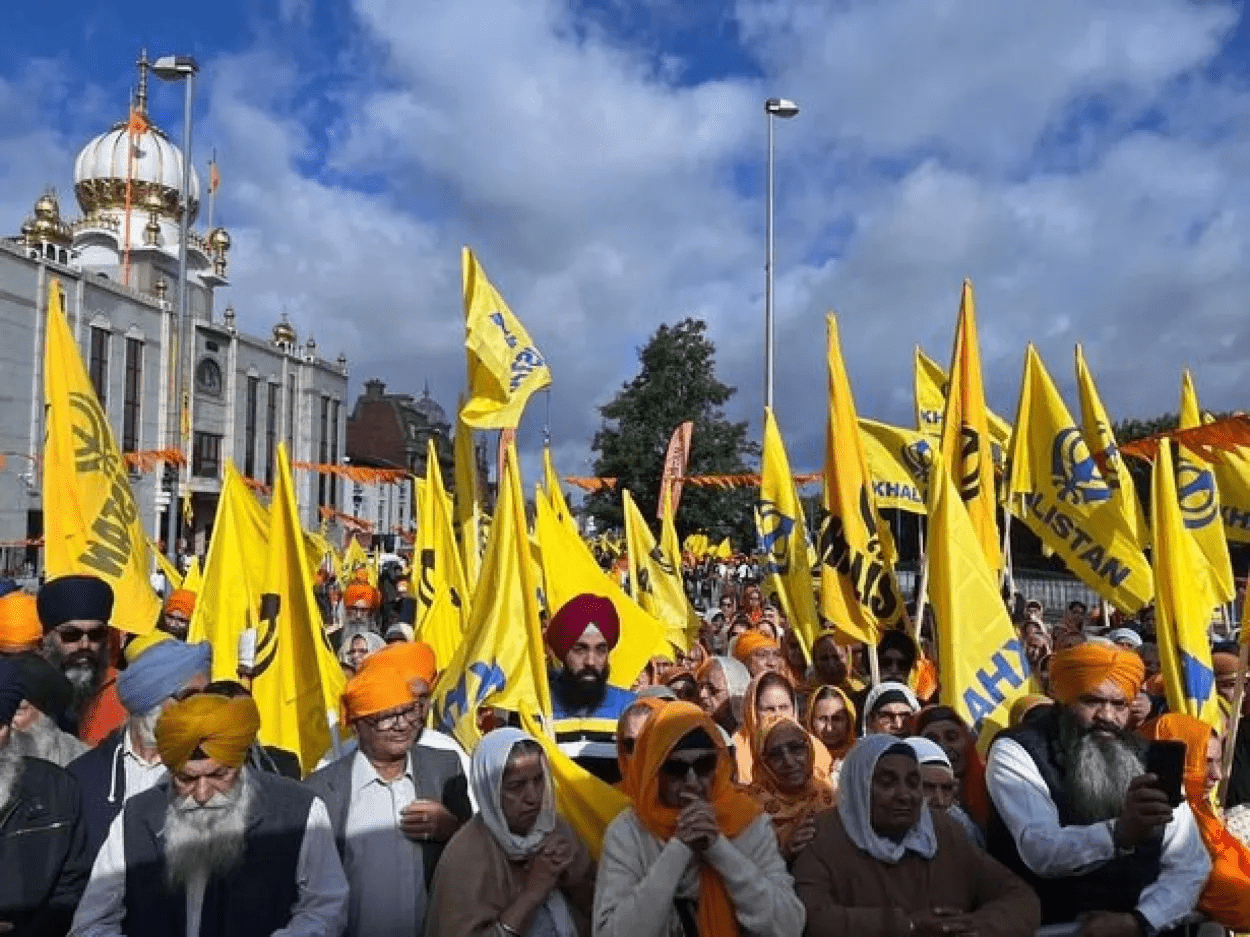
It is being observed in Pakistan that cinema is increasingly being used as a tool to intensify anti-India activities, particularly those linked to Khalistan. Those individuals who face difficulties in producing films or songs promoting Khalistan due to restrictions in India appear to be taking full advantage of this situation. They go to Pakistan, carry out their activities without any restrictions, and then make the content go viral on social media.
Because of this regressive mindset among Pakistanis, a situation has emerged where, on one hand, the whole of India and Indian Punjab are attracting global attention due to rapid economic growth, institutional reforms, and social progress, while on the other hand, Pakistani Punjab remains trapped in corruption, scams, and long-standing misgovernance. Instead of confronting its domestic failures, the Pakistani state is increasingly relying on anti-India narratives. For this purpose, state-supported media houses, social media influencers, YouTubers, and filmmakers are being activated so that attention can be diverted and public opinion influenced through cultural production.
In any case, the weaponization of cinema is not a new phenomenon. For decades, Pakistani films and television serials have portrayed Sikh characters—especially Sikh women—from an extremely narrow and deeply controversial perspective. Many productions use tropes such as Islamization or “conversion romance,” which numerous Sikh commentators consider insulting and ideologically biased. Films like Weryam (1981) are remembered for portraying the emotional inclination of a Sikh woman toward a Muslim male protagonist in a manner that implicitly presents Islam and Muslim culture as superior and more attractive. Punjabaan (2003), which centers on a cross-border romance between a Pakistani Muslim man and an Indian Sikh woman, also faced criticism for being based on the notion that Sikh women are emotionally or spiritually drawn toward Islam and Muslim Pakistan, regardless of any later “twist” in the storyline. Similarly, Bilkis (2012) places a woman of Sikh origin within a Muslim family, where instead of establishing an independent and dignified Sikh identity, assimilation into a Muslim identity is normalized. Since then, Sikhs have become a regular presence within Pakistan’s cultural ecosystem.
The decision to carry out filming at sacred Sikh sites—especially Nankana Sahib, the birthplace of Guru Nanak Dev Ji—has drawn particularly sharp condemnation. Sikh religious authorities have denounced this as beadbi (desecration) and emphasized that gurdwaras exist solely for spiritual practice, selfless service, and devotion to Guru Granth Sahib Ji. The use of these places for commercial filmmaking or political messaging is widely regarded as a violation of core religious principles.
For many Sikhs, this controversy goes deeper than geopolitics. It raises uncomfortable questions about complicity—about how a handful of individuals, motivated by money, visibility, or institutional protection, appear willing to compromise religious sanctity and communal dignity. From this perspective, the making of films such as Encounter is not merely a Pakistani state propaganda exercise, but also a warning of how faith, memory, and trauma can be turned into commodities when personal gain is placed above collective responsibility.
Pakistani cinema is being used to strengthen anti-India narratives and to exploit religious symbols for political objectives. Critics warn that such strategies erode the sanctity of holy sites, normalize the politicization of heritage, and turn art and religion into instruments of state power. The cost of this is not paid by governments, but by the communities whose identities are repeatedly appropriated and distorted. Therefore, all Sikh organizations must take cognizance of this issue and launch campaigns to stop it; otherwise, the Sikh community may have to pay a heavy price in the future.