


AI Generated Summary
- His academic achievements also include a Master of Science in engineering management from Missouri University of Science and Technology, an MBA from the University of Maryland, and a Master of Operational Studies from the U.
- “The Army and this Nation have given this village kid from Punjab far more than he deserves, and my hope is to be able to give even a tenth of it back,” he said.
- Army Corps of Engineers – Japan Engineer District (JED), was promoted to the rank of lieutenant colonel in a ceremony held November 26 at the JED headquarters on Camp Zama.
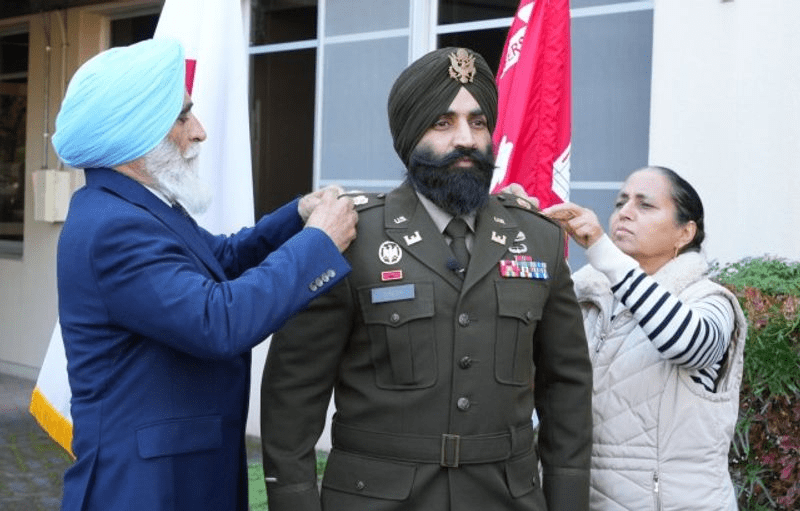
Major Simratpal “Simmer” Singh, deputy commander of the U.S. Army Corps of Engineers – Japan Engineer District (JED), was promoted to the rank of lieutenant colonel in a ceremony held November 26 at the JED headquarters on Camp Zama.
The ceremony was presided over by Colonel Patrick Biggs, JED commander, who administered the reaffirmation of Singh’s oath of office. The proud moment became even more special as Singh’s parents, Sukhbir Singh and Jasvir Kaur, had the honor of pinning their son’s new insignia in front of family, friends, and colleagues.
Reflecting on his journey, Singh credited his mentors, peers, and Army leaders for their guidance and support. “The Army and this Nation have given this village kid from Punjab far more than he deserves, and my hope is to be able to give even a tenth of it back,” he said. “Good leaders throughout my career have lifted me up and helped remove barriers. This is what I hope to emulate.”
As deputy commander, Lt. Col. Singh plays a key role in managing a wide range of engineering operations that strengthen the U.S.–Japan Alliance and enhance regional stability across the Indo-Pacific. His promotion stands as a recognition of his leadership, dedication, and ability to manage complex missions that are vital to U.S. interests abroad.
Over a career spanning more than 15 years, Singh has distinguished himself as a combat engineer and leader in multiple command and staff positions. He began his Army journey with the 2nd Stryker Brigade Combat Team, 2nd Infantry Division, where he served as an assistant brigade engineer and platoon leader. During his deployment to Kandahar, Afghanistan, in support of Operation Enduring Freedom, he led over 180 combat patrols aimed at clearing routes, fortifying defenses, and establishing the first medical facility in Shah Wali Kot Province.
After returning from deployment, Singh took on the role of brigade finance officer, overseeing a $15 million training budget and ensuring financial operations for more than 20 enabling units. His subsequent assignments included service with the 249th Engineer Battalion at Fort Belvoir, Virginia, where he managed critical power-generation missions supporting national defense facilities around the world. He also played a key role in disaster-response efforts during Hurricanes Matthew, Harvey, and Maria.
Singh went on to command the battalion’s Headquarters and Headquarters Company before joining the U.S. Military Academy at West Point as an instructor and assistant professor of economics and finance, shaping the next generation of Army leaders.
A native of Kent, Washington, Singh graduated from the U.S. Military Academy at West Point in 2010 with a Bachelor of Science in electrical engineering. His academic achievements also include a Master of Science in engineering management from Missouri University of Science and Technology, an MBA from the University of Maryland, and a Master of Operational Studies from the U.S. Army Command and General Staff College.
His numerous military honors include the Bronze Star Medal, Meritorious Service Medal with oak leaf cluster, Army Commendation Medal with oak leaf cluster, Army Achievement Medal, Afghanistan Campaign Medal, NATO Service Medal, German Armed Forces Proficiency Badge, Combat Action Badge, Air Assault Badge, and Ranger Tab.
Lt. Col. Singh’s journey from Punjab to the upper ranks of the U.S. Army stands as a testament to dedication, resilience, and service — an inspiring example of how perseverance and leadership can bridge continents and cultures.