


AI Generated Summary
- He started as an operative for Babbar Khalsa International (BKI), a group infamous for the 1985 Air India bombing that killed 329 people, the deadliest aviation terror attack before 9/11, claiming the lives of more than 300 Canadian citizens.
- Yet, in a recent Global News Canada report, he is casually referred to as a “B.
- If the media can rebrand terrorists as “leaders” based on cultural affiliations, it undermines the fight against all forms of extremism, be it Islamist, far-right, or separatist.
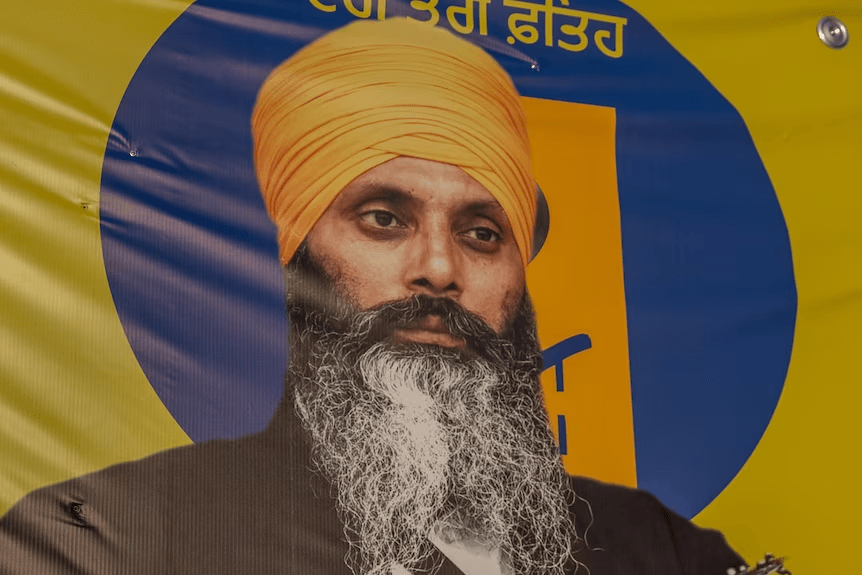
In a world increasingly divided by identity politics and selective narratives, the media’s portrayal of individuals can shape public opinion and policy with profound consequences. Take the case of Hardeep Singh Nijjar, gunned down in Surrey, British Columbia, in June 2023. To the world, he was a designated terrorist, mastermind of violent plots, and a key figure in militant Khalistani groups. Yet, in a recent Global News Canada report, he is casually referred to as a “B.C. Sikh leader“. This isn’t mere semantics; it’s a dangerous erasure of facts, akin to dubbing Osama bin Laden a “Muslim leader” while glossing over his role in al-Qaeda atrocities. Such whitewashing not only dishonors victims of terrorism but sets a precedent that emboldens extremists under the guise of community advocacy.
Nijjar’s story begins far from the peaceful plumber image often peddled in Western media. Born in Punjab, India, in 1977, he emigrated to Canada in 1997 using fraudulent documents, claiming asylum under a fake name. By the early 2000s, he had embedded himself in the Khalistani extremist movement, which has long been hijacked by violent militants. Nijjar’s affiliations were not with peaceful activism but with outlawed terrorist outfits. He started as an operative for Babbar Khalsa International (BKI), a group infamous for the 1985 Air India bombing that killed 329 people, the deadliest aviation terror attack before 9/11, claiming the lives of more than 300 Canadian citizens. BKI is a designated terrorist organization and is linked to Pakistan’s Inter-Services Intelligence (ISI), which provided Nijjar with his entry into extremism.
His trajectory escalated when he became the self-styled chief of the Khalistan Tiger Force (KTF), another militant group banned in 2023 as a terrorist entity.
Nijjar’s international ties paint an even darker picture. Intelligence dossiers reveal he traveled to Pakistan between 2012 and 2014, where he met BKI leader Jagtar Singh Tara, the assassin of former Punjab Chief Minister Beant Singh, and was reportedly recruited by the ISI.
This is no fringe radical; Nijjar was a linchpin in a transnational web of extremism, blending separatism with terrorism. Yet, outlets like Global News persist in labeling him a “Sikh leader,” as seen in their coverage of wiretap evidence in his killing. This framing ignores the blood on his hands and reduces complex geopolitics to simplistic victimhood. It’s reminiscent of how some media once softened portrayals of bin Laden as a “devout Muslim” or “anti-imperialist fighter,” downplaying his orchestration of mass murder. The parallel is stark: Both men used religious identity to cloak violent agendas, yet selective reporting elevates them to community icons.
The dangers of this whitewashing are manifold. First, it legitimizes extremism within diaspora communities. By portraying Nijjar as a mere advocate for Sikh rights, ignoring his ISI grooming and training camps, it risks radicalizing impressionable youth who see separatism as synonymous with heroism.
Canada’s large Sikh population deserves better than to have terrorists conflated with legitimate community leaders. Second, it strains international relations. India’s repeated extradition requests for Nijjar went unheeded, with Canada citing insufficient evidence despite shared dossiers and Interpol notices. This perceived double standard, harboring individuals India deems terrorists while accusing New Delhi of overreach, fuels diplomatic rifts and erodes trust in counterterrorism cooperation.
This sets a global precedent. If the media can rebrand terrorists as “leaders” based on cultural affiliations, it undermines the fight against all forms of extremism, be it Islamist, far-right, or separatist. Victims of KTF’s violence in Punjab, from assassinated politicians to bombed civilians, are sidelined in this narrative. Canada’s own history with Sikh militancy, including the Air India tragedy, should serve as a cautionary tale against such leniency.
It’s time for accountability. Journalists must prioritize facts over feel-good framing, acknowledging Nijjar’s terrorist designations and activities without equivocation. Governments, too, should enforce consistent standards: Extradite based on evidence, not politics. Whitewashing terrorists doesn’t promote peace; it perpetuates cycles of violence. For the sake of global security, let’s call Nijjar what he was, not a leader, but a threat.
