


AI Generated Summary
- As part of the economic reforms of the early 1990s, the government headed by then prime minister P V Narasimha Rao, with Manmohan Singh as finance minister, dismantled the policy.
- “Industrial failure is a slow process, but it is happening at a fast pace in Batala.
- For an industrial economy already weakened by the turbulence of the preceding decade, it proved a severe blow.
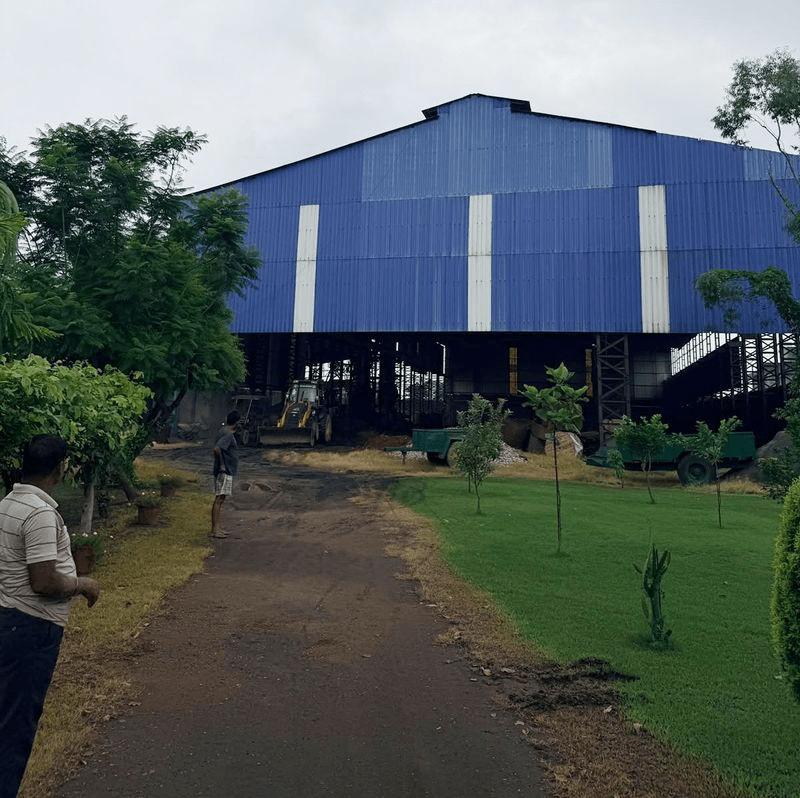
Once counted among Punjab’s most vibrant manufacturing centres, Batala has watched thousands of industrial units disappear over the past three decades. Industrialists say the border town now needs a long-term revival strategy, not piecemeal assurances.
There was a time when the clatter of machinery was the soundtrack of Batala.
Foundries, machine-tool workshops and factories manufacturing agricultural implements, cast-iron products, pipes and furniture formed the backbone of the town’s economy. By the late 1980s and early 1990s, industrial activity was expanding rapidly, drawing entrepreneurs into manufacturing and generating employment for thousands of workers.
Three decades later, much of that industrial landscape has disappeared.
Figures available with the Industries Department indicate that nearly 60 per cent of Batala’s industrial units have shut down over the past three decades. Many of those still operating are struggling with high input costs, changing markets and competition from manufacturing centres located closer to sources of raw material.
For industrialists here, Batala’s decline is not the result of one crisis. It is the cumulative effect of Partition, militancy, changes in national economic policy, rising production costs and increasingly difficult competition.
A geographical disadvantage resurfaces
One of the most significant turning points came in 1992 with the abolition of the Freight Equalisation Policy.
Introduced by the Union government in 1952, the policy subsidised transportation of essential industrial raw materials such as coal, iron ore and steel. Its purpose was to ensure that manufacturers located far from mineral-producing regions did not have to pay substantially more for these inputs merely because of geography.
The arrangement allowed industrial centres such as Batala, hundreds of kilometres away from India’s major coal and iron-ore belts, to remain competitive.
As part of the economic reforms of the early 1990s, the government headed by then prime minister P V Narasimha Rao, with Manmohan Singh as finance minister, dismantled the policy. While freight equalisation had long been criticised for distorting industrial location and disadvantaging mineral-rich states, its withdrawal exposed industries in places such as Batala to the full cost of transporting raw materials.
Batala’s manufacturers suddenly faced a structural disadvantage: they could neither relocate their factories closer to steel-producing regions nor easily absorb the additional cost.
For an industrial economy already weakened by the turbulence of the preceding decade, it proved a severe blow.
2,000 foundries once, around 400 today
Few figures illustrate the scale of the contraction better than those of Batala’s foundry industry.
On conservative estimates, the town had nearly 2,000 foundries around 1980. Today, industrial representatives put the number at roughly 400, of which only about 100 are considered genuinely viable or consistently operational.
Agricultural implements have followed a similar trajectory. More than 450 firms once manufactured such equipment in Batala; barely 120 remain.
The contraction has spread through industries that once gave the town its manufacturing identity.
“Manufacturers of machine tools have been wiped off the industrial map, while producers of galvanised pipes, conduit pipes, brass cutting and aluminium doors and windows are gasping for breath. Industries dealing in wooden and steel furniture are dying a slow death,” says Parmjit Singh Gill, president of the Batala Industrial Estate Factories Association (BIEFA).
Gill says the consequences extend far beyond factory balance sheets.
“Industrial failure is a slow process, but it is happening at a fast pace in Batala. It harms not just the factory owners, but also the workers and the national economy. When factories shut down, people lose jobs and goods become expensive,” he says.
Partition severed an older economic network
Batala’s industrial problems, however, go further back than the policy changes of the 1990s.
Before Partition, its geographical location connected the town with commercial centres that today lie across the international border. Lahore, Sialkot and Faisalabad formed part of a larger economic network through which goods, skills and capital moved.
Partition and the Radcliffe Line abruptly severed those connections.
Batala rebuilt its industrial economy in independent India, eventually developing a formidable manufacturing base of its own. But its location in a border district continued to pose disadvantages that industrialists say have never been adequately recognised in national or state industrial policy.
The militancy of the 1980s dealt another blow.
“In the eighties, militancy, that was so pronounced here, killed the industry. Then came the FEP bug,” says Ravinder Handa, secretary of BIEFA.
Handa argues that Batala subsequently found itself competing not only with industrial centres closer to raw materials but also with neighbouring states offering more attractive incentives.
“Where does the Batala businessman go in the absence of tax rebates and electricity concessions? If states like Himachal Pradesh and Jammu and Kashmir can give such rebates, why not Punjab?” he asks.
Cost of making goods becoming unviable
At the heart of the present crisis is a basic problem of economics: what it costs Batala’s factories to manufacture goods compared with competitors elsewhere.
According to Handa, the town’s industry has recorded negative growth for much of the past two decades.
“The cost of raw material procured by the foundries here now exceeds the price of finished goods produced by units located in the vicinity of steel plants,” he says.
That disparity is particularly damaging for small and medium enterprises, which have limited ability to absorb increases in freight, power and raw-material costs.
Another challenge, industrialists say, has come from the availability of imported second-hand machinery.
“The decision to allow the import of second-hand machinery, too, has hit us hard. Industrialists manufacturing new machinery in no way can compete with the rates of second-hand machinery procured from abroad,” Handa says.
The result is a squeeze from both ends: production costs have risen while the market increasingly demands lower prices.
Foundry owner Surinder Bittu says the distress is no longer confined to any particular industry.
“It is not just a question of foundries. The malaise has spread across the board. It is high time the government announces some rebates, or Batala may well be a haunted town in the near future,” he says.
Industry seeks special package for border districts
Industrial associations are now demanding intervention at both the state and Union government levels.
Among their principal demands is a special industrial package for Punjab’s four border districts — Gurdaspur, Amritsar, Tarn Taran and Ferozepur — aimed at compensating businesses for the structural disadvantages associated with their location.
Industry representatives have also sought electricity and tax concessions and rationalisation of taxation for smaller manufacturing units. Handa has advocated a fixed-turnover-based structure on the lines of arrangements used in parts of the textile sector.
But industry leaders argue that incentives alone will not be enough.
What Batala requires, they say, is a reconstruction strategy extending over the next two decades — one that combines support for existing small and medium enterprises with technology upgrades, industrial research, skill development and employment opportunities for younger workers.
Such a plan would also have to confront a problem that becomes more difficult with every passing year: once an industrial ecosystem disappears, recreating it is considerably harder than saving it.
Factories do not exist in isolation. They sustain suppliers, mechanics, transporters, technicians, traders and generations of skilled workers. When enough units close, that supporting network begins to vanish with them.
A government official has indicated that the condition of Batala’s industries will be taken up with the Chief Minister and other stakeholders.
For manufacturers who have watched the town’s industrial base contract year after year, however, another round of discussions will mean little unless it produces a concrete policy response.
Batala still possesses an industrial legacy built over generations. What it increasingly lacks is the scale that once made that legacy economically formidable.
After decades of decline, the question confronting the town is therefore no longer how to restore its old industrial glory overnight.
It is whether policymakers can act quickly enough to preserve what remains — and give Batala a reason to manufacture again.