


AI Generated Summary
- The Independent Office for Police Conduct is continuing its investigation into the actions of officers who responded to the incident, with the government promising a transparent review of the circumstances surrounding the case.
- British lawmakers from across political parties have reaffirmed support for the Sikh community’s right to carry the kirpan, a ceremonial article of faith, following a heated parliamentary debate sparked by a recent murder conviction involving a British Sikh man.
- The discussion in the House of Commons came a day after 23-year-old Vickrum Digwa was sentenced to life imprisonment for the fatal stabbing of 18-year-old Henry Nowak in Southampton in December last year.
British lawmakers from across political parties have reaffirmed support for the Sikh community’s right to carry the kirpan, a ceremonial article of faith, following a heated parliamentary debate sparked by a recent murder conviction involving a British Sikh man.
The discussion in the House of Commons came a day after 23-year-old Vickrum Digwa was sentenced to life imprisonment for the fatal stabbing of 18-year-old Henry Nowak in Southampton in December last year. The case drew significant public attention, particularly after footage from police body cameras showed the victim’s final moments while he was being restrained by officers amid allegations of racist abuse.
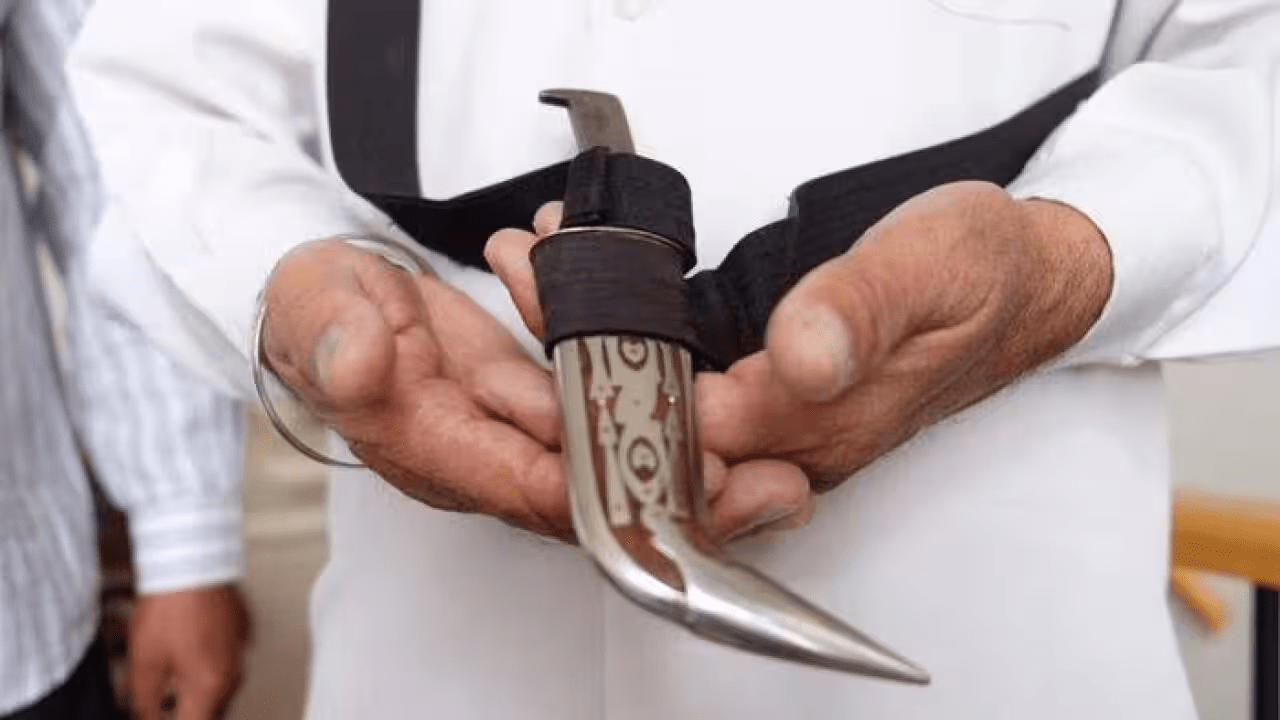
Addressing Parliament, Home Secretary Shabana Mahmood cautioned against allowing the actions of one individual to fuel hostility toward an entire religious community. She noted that some groups had called for restrictions on the kirpan, a ceremonial blade carried by initiated Sikhs as one of the five articles of faith.
Mahmood stressed that UK law already provides protections for the carrying of kirpans for religious purposes under the Offensive Weapons Act 2019. However, she drew a clear distinction between religious observance and criminal misuse of a weapon.
“A religious article carried as part of faith practice is entirely different from its use in a violent crime,” she told MPs, describing the killing as a grave offence deserving the strongest legal consequences.
The Home Secretary also urged the public not to associate Digwa’s actions with the wider Sikh population. “We condemn the perpetrator of this crime, not an entire faith or ethnic community,” she said, rejecting calls for collective blame.
Several Sikh MPs intervened during the debate, voicing concerns over what they described as attempts by some political groups to exploit the tragedy. Labour MP Tanmanjeet Singh Dhesi criticised parties and activists who had demanded a ban on the kirpan, arguing that the Sikh community was being unfairly targeted.
Dhesi highlighted the long history of Sikh contributions to Britain, including the role of Sikh soldiers who fought alongside British forces in both World Wars while observing their religious traditions. He called on the government to reaffirm Sikhs’ right to practise their faith freely and without fear.
Another Labour MP, Gurinder Singh Josan, condemned the killing and emphasised that there was no religious justification for the attack. He said concerns had emerged among both Sikh and non-Sikh residents regarding public safety, knife crime and the protection of religious freedoms.
Mahmood responded by expressing willingness to engage further with Sikh organisations and community leaders to ensure that public safety measures remain balanced with the protection of religious rights enjoyed by minority faith groups.
The parliamentary exchange also touched on broader concerns surrounding policing practices and allegations of unequal treatment between communities. Mahmood rejected suggestions of preferential policing, insisting that law enforcement agencies must operate impartially and uphold the law without favour.
Outside Parliament, Sikh organisations moved quickly to distance the faith from the crime. The Council of Southampton Gurdwaras issued a statement expressing condolences and prayers for the victim’s family, stating that the attack was fundamentally at odds with Sikh teachings.
The group said Digwa’s actions contradicted values that have guided Sikh communities for more than five centuries and formed no part of legitimate Sikh religious practice.
During sentencing, Judge William Mousley echoed those sentiments, describing the kirpan as a symbol of faith rather than aggression. He told the court that Digwa had abused a religious exemption intended for peaceful observance and, in doing so, had brought harm not only to his victim but also to the reputation of his community.
Meanwhile, Digwa’s mother, Kiran Kaur, remains in custody after being convicted of removing the murder weapon from the crime scene. She is scheduled to be sentenced on July 17.
The Independent Office for Police Conduct is continuing its investigation into the actions of officers who responded to the incident, with the government promising a transparent review of the circumstances surrounding the case.