


AI Generated Summary
- I encouraged him to try it without fertiliser, and after seeing the crop and the yield, he is very happy with the outcome,” Jaspal Singh said.
- On his 12-acre farm in Mahabalipur village, farmer Sukhjinder Singh is demonstrating how agriculture can become less dependent on chemical inputs by making better use of resources already available on the farm.
- Sukhjinder Singh said he remained in regular contact with the Agriculture Department during the process and followed the farming practices suggested by the official.
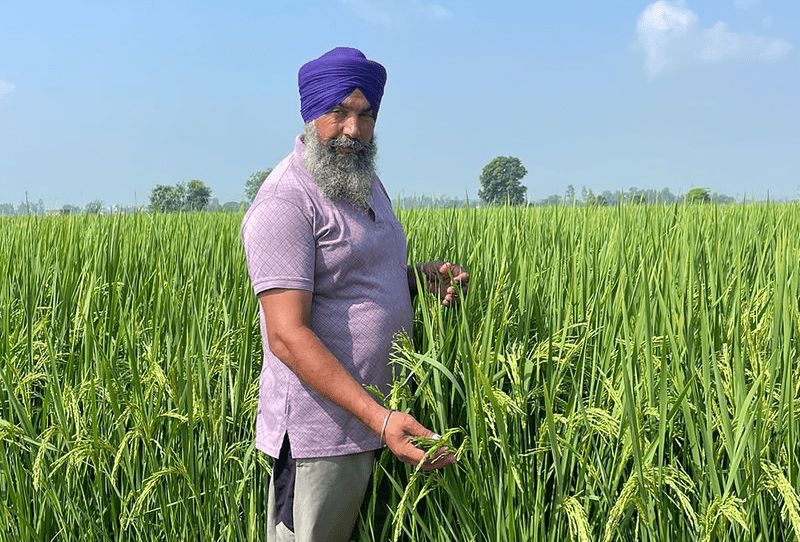
On his 12-acre farm in Mahabalipur village, farmer Sukhjinder Singh is demonstrating how agriculture can become less dependent on chemical inputs by making better use of resources already available on the farm.
This paddy season, Singh has replaced urea with slurry from his dairy unit on a substantial part of his crop, an experiment that he says has produced encouraging results.
Singh cultivated the PR 126 paddy variety across eight acres this season. While conventional fertiliser was used on three acres, the remaining five acres were cultivated without urea, with slurry generated from his dairy farm being used instead.
The difference, according to Singh, has strengthened his confidence in the alternative approach.
“The paddy where we did not use urea is doing very well. In fact, it appears better than the crop where urea was applied. Looking at the results, I intend to continue with this method,” he said.
The experiment is part of a larger system Singh has developed by integrating crop cultivation with dairy farming. He owns around 50 cattle and has installed a gobar gas plant at the dairy unit. Besides helping manage cattle waste, the plant generates energy that is used to meet electricity requirements at his house and farm.
The slurry produced in the process is returned to the fields, allowing what would otherwise be farm waste to become an agricultural input.
Singh’s efforts at reducing the environmental impact of farming are not new. He has avoided burning paddy stubble since 2014 and has adopted crop residue management practices instead.
His farm has also moved beyond conventional crops. Along with paddy and other agricultural produce, Singh has ventured into dragon fruit cultivation, diversifying his sources of farm income.
Agriculture Development Officer Jaspal Singh, who guided the farmer during the experiment, said there was some hesitation initially over growing paddy without conventional fertilisers.
“He was reluctant in the beginning to cultivate the crop without ‘khaad’. I encouraged him to try it without fertiliser, and after seeing the crop and the yield, he is very happy with the outcome,” Jaspal Singh said.
Sukhjinder Singh said he remained in regular contact with the Agriculture Department during the process and followed the farming practices suggested by the official.
For him, sustainable agriculture is not simply about eliminating a particular fertiliser. It is about understanding how different parts of a farm can complement each other.
“The important thing is to make sure that farming is done in the right manner. Whether it is crop cultivation or dairy farming, adopting the correct practices makes the difference,” he said.
Agriculture officials believe Singh’s farm provides an example of how different agricultural activities can be linked to create a more efficient system. Cattle waste feeds the gobar gas plant, the plant provides energy, its slurry goes back into the fields, while crop residue is managed without burning.
Such integration can help farmers make productive use of agricultural waste while reducing their reliance on inputs purchased from outside the farm, Jaspal Singh said.
For Singh, however, the strongest argument for continuing the experiment is visible in his fields. Encouraged by the performance of the paddy cultivated without urea, he now plans to carry the practice forward in the coming seasons.