


AI Generated Summary
- At a time when Punjab is exploring alternatives to its traditional wheat-paddy cropping cycle, a farmer from Ferozepur district is demonstrating how scientific fish farming can emerge as a profitable avenue for agricultural diversification and rural entrepreneurship.
- For educated rural youth, enterprises such as fish farming represent an opportunity to combine entrepreneurship with agriculture without necessarily migrating to urban centres in search of employment.
- Navjotpal Singh, a 40-year-old postgraduate from Noorpur Sethan village, has developed a successful aquaculture enterprise that generates annual returns of up to Rs 2.
At a time when Punjab is exploring alternatives to its traditional wheat-paddy cropping cycle, a farmer from Ferozepur district is demonstrating how scientific fish farming can emerge as a profitable avenue for agricultural diversification and rural entrepreneurship.
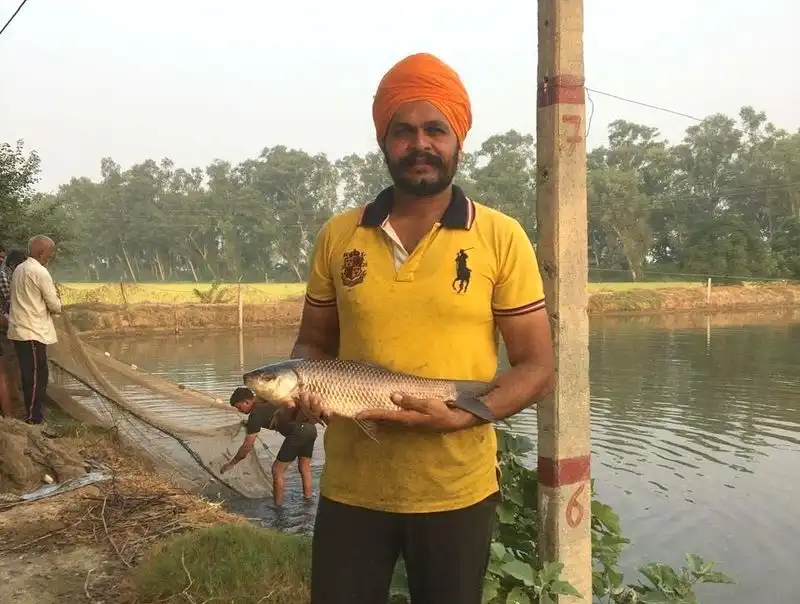
Navjotpal Singh, a 40-year-old postgraduate from Noorpur Sethan village, has developed a successful aquaculture enterprise that generates annual returns of up to Rs 2.25 lakh per acre. His journey illustrates the potential of combining agricultural experience with scientific expertise and modern farming techniques.
A landowner with 35 acres, Singh previously experimented with conventional agriculture, dairy farming and organic vegetable cultivation before establishing his six-acre aquaculture facility in 2019.
His enterprise includes a dedicated one-acre fish nursery alongside five acres of production ponds. Together, the facility produces approximately 15 tonnes of fish annually. The nursery helps maintain a dependable supply of fish seed, an important component in sustaining production.
With technical assistance from Guru Angad Dev Veterinary and Animal Sciences University, Singh has adopted scientific practices while introducing innovations suited to local conditions.
His farm produces several varieties, including rohu, catla, mrigal and grass carp. During periods of high demand, daily sales reach approximately 70 to 80 kg. Wholesale prices are around Rs 150 per kg, while retail prices can reach Rs 250 per kg.
Singh is now considering expanding his business through the establishment of a fish processing facility, which could enable him to explore opportunities beyond primary production.
His experience holds particular significance for Punjab, where agricultural diversification has become increasingly important amid groundwater depletion, rising cultivation costs and concerns over the long-term sustainability of conventional cropping patterns.
Aquaculture offers farmers an opportunity to develop alternative income streams, although its success depends heavily on water management, technical knowledge, access to quality inputs and reliable market linkages.
The development of supporting infrastructure, including cold storage facilities, processing units and distribution networks, could further strengthen the sector. Value addition can also help rural entrepreneurs access wider consumer markets and reduce their dependence on intermediaries.
For educated rural youth, enterprises such as fish farming represent an opportunity to combine entrepreneurship with agriculture without necessarily migrating to urban centres in search of employment.
Singh believes that greater exposure to modern technology and professional training could encourage younger generations to explore the sector.
His success underlines a broader possibility for Punjab's agricultural economy: transforming farming from a predominantly traditional occupation into a diversified, knowledge-driven enterprise capable of generating sustainable livelihoods and new employment opportunities.