

AI Generated Summary
- With just two acres of ancestral land, he chose to move beyond the conventional cycle and adopt an integrated farming model—one that now offers him stability, multiple income streams, and a measure of independence from market volatility.
- His journey began in 2016 with training at KVK Gurdaspur, followed by a foray into dairy farming the next year.
- In 2023, he received the Progressive Farmer Award at a Kisan Mela hosted by PAU’s regional station.
Punjab’s farms have revolved around a predictable rhythm—wheat in winter, paddy in summer. This wheat–paddy cycle, once the backbone of India’s food security, is now showing signs of strain. Shrinking landholdings, rising input costs, depleting groundwater, and erratic weather patterns are pushing small farmers to the brink. Increasingly, monoculture is no longer a viable path to sustainable livelihoods.
Recognising this shift, institutions like Punjab Agricultural University and its network of Krishi Vigyan Kendras (KVKs) have been promoting diversification. Their message is clear: resilience lies in integration—combining crops with allied activities such as dairy, poultry, goat rearing, fisheries, and beekeeping.
In Gurdaspur district’s Abalkhair village, farmer Gurnam Singh embodies this transition. With just two acres of ancestral land, he chose to move beyond the conventional cycle and adopt an integrated farming model—one that now offers him stability, multiple income streams, and a measure of independence from market volatility.
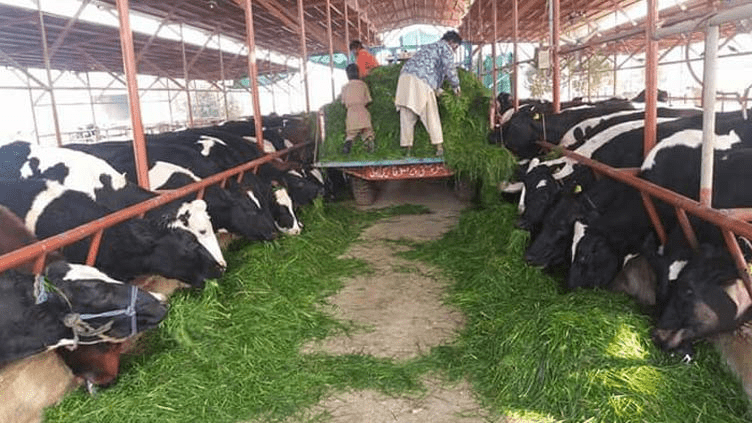
His journey began in 2016 with training at KVK Gurdaspur, followed by a foray into dairy farming the next year. Today, his farm houses 26 animals, including Murrah buffaloes, heifers, and calves, producing over a quintal of milk daily. By selling directly to local households, he secures better margins while maintaining customer trust.
But dairy is only one pillar of his system. Singh has diversified into poultry, raising 150 indigenous chickens whose meat and eggs command premium prices. Seasonal demand ensures steady returns, with eggs fetching higher rates in winter. More recently, he introduced Beetal goats—valued for both milk and meat—adding yet another revenue stream.
What sets Singh apart is not just diversification, but integration. Farm waste is recycled, cattle feed is prepared in-house, and animal care is prioritised through well-ventilated sheds and clean water systems. Each component supports the other, reducing costs and enhancing productivity.
His efforts have not gone unnoticed. In 2023, he received the Progressive Farmer Award at a Kisan Mela hosted by PAU’s regional station. Yet, for Singh, the real reward is sustainability.
Experts agree his model holds lessons for Punjab’s future. Diversification, they argue, is no longer optional—it is essential. As small farmers grapple with uncertainty, integrated farming offers a practical roadmap: one that turns limited land into a source of diverse and dependable income.
In a state searching for its next agricultural chapter, farmers like Gurnam Singh are quietly writing it.