


AI Generated Summary
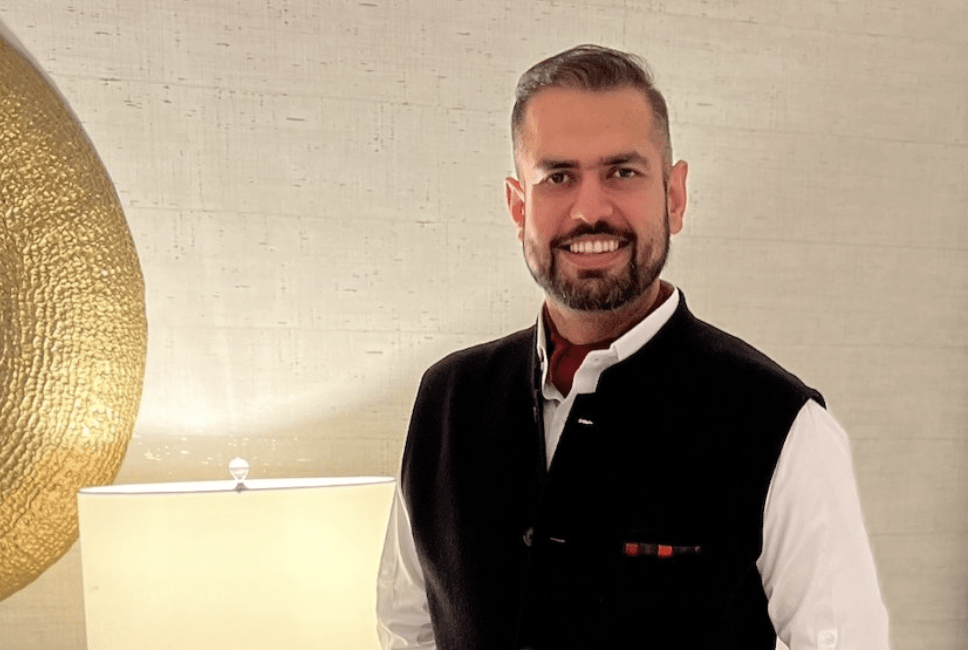
- Currently based in the San Francisco Bay Area, Dhalla serves in a director-level position overseeing Global Field Services Operations and Group Governance, Risk, and Compliance at Iron Systems in Pleasanton.
- Tech student in Electronics and Communication Engineering, now operates at the crossroads of strategy, governance, and global operations in California’s technology corridor.
- What began in the lecture halls of Guru Nanak Dev University’s regional campus in Jalandhar has evolved into a global leadership journey spanning continents and cultures.
What began in the lecture halls of Guru Nanak Dev University’s regional campus in Jalandhar has evolved into a global leadership journey spanning continents and cultures. Jaivijay Singh Dhalla, once a B.Tech student in Electronics and Communication Engineering, now operates at the crossroads of strategy, governance, and global operations in California’s technology corridor.
Currently based in the San Francisco Bay Area, Dhalla serves in a director-level position overseeing Global Field Services Operations and Group Governance, Risk, and Compliance at Iron Systems in Pleasanton. His role places him at the heart of large-scale international delivery environments, where operational precision and risk oversight determine business continuity.
Engineering Roots, Leadership Instincts
Dhalla credits his engineering education in Jalandhar for shaping the analytical mindset that underpins his work today. “Engineering trained me to break complex problems into manageable components, measure outcomes and design processes that hold steady under pressure,” he reflects during a recent visit home.
But his leadership journey began long before corporate boardrooms. As a student, Dhalla competed nationally in handball and represented his state in fencing and hammer throw. The discipline of sport, he says, instilled resilience, teamwork and composure—traits that later proved invaluable in high-stakes business environments.
From Technical Foundations to Global Strategy
As his professional responsibilities expanded beyond technical operations into broader management roles, Dhalla pursued an MBA at Hult International Business School. There, working alongside multicultural teams sharpened his cross-border communication skills and broadened his worldview.
Recognising the growing importance of negotiation in complex operational ecosystems, he later completed a Negotiation Mastery certification from Harvard Business School (HBX). The programme refined his ability to manage sensitive stakeholder dynamics, especially in environments where misalignment can escalate into costly disruptions.
Building Order in Complexity
Dhalla’s work sits at a critical intersection: operational performance and risk governance. In global delivery settings, he explains, recurring incidents, vendor dependencies, unclear accountability and change management failures can quickly snowball into leadership-level crises.
His approach is systematic. By establishing clear decision rights, measurable leadership reporting and structured governance rhythms, he seeks to transform reactive firefighting into proactive oversight. Among the frameworks he has developed and implemented are:
- Strategic Governance Operating Models that define who decides what, how risks are escalated and how corrective actions are tracked to closure.
- Stakeholder Alignment Frameworks that map authority and interests, ensuring cross-functional teams operate in synchronised cycles.
- Change Quality Controls that use timed checkpoints to detect drift early and prevent small process lapses from becoming recurring operational failures.
For Dhalla, governance is not bureaucracy. It is a management system designed to enable consistency across regions and partners, even as market conditions and business variables shift.
The Art of Corporate Diplomacy
Beyond systems and metrics lies another crucial capability: corporate diplomacy. Dhalla describes it as the ability to align executives, cross-functional leaders and vendor partners during moments of pressure—then translate short-term resolutions into long-term process improvements.
In globally distributed operations, where cultural nuances and competing priorities intersect, this diplomatic skillset often determines whether strategic decisions endure beyond crisis moments.
A Message for Young Aspirants
Reflecting on his journey from Punjab to Silicon Valley, Dhalla underscores a simple lesson: growth often comes from embracing difficult assignments rather than avoiding them.
“Progress rarely follows a straight line,” he says. “Each challenge becomes an opportunity to refine judgment and capability.”
The arc from GNDU to California’s technology ecosystem, he adds, represents more than a geographical transition. It is a testament to building systems that allow organisations to perform reliably—even when complexity is unavoidable.
For students in regional campuses dreaming of global careers, Dhalla’s story stands as proof that disciplined foundations, continuous learning and the courage to accept demanding roles can transform local beginnings into international impact.