


AI Generated Summary
- Balancing work, motherhood, and academics, she earned a graduation degree, followed by an MA in Punjabi and Religious Studies, and eventually a PhD on the portrayal of Baba Budha Sahib in Punjabi literature.
- In 1976, she cleared the Giani examination in first division, secured a clerical job at Government School in Khemkaran, and transformed her gruelling 50-km daily commute into productive study hours.
- The couple welcomed two daughters and a son, but tragedy struck in 1974 when her husband died in a road accident.
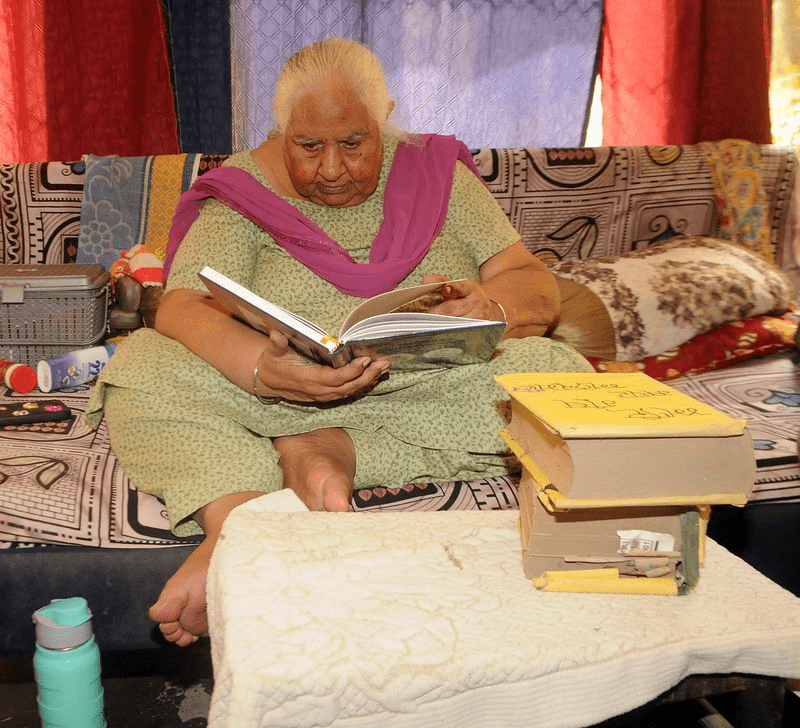
In the bustling lanes of Amritsar, where history whispers through every gurdwara and marketplace, 74-year-old Amarjit Kaur embodies the quiet resilience of Sikh scholarship. Far from slowing down, this indefatigable historian is preparing to release yet another meticulously researched book — this time on Bidhi Chand of Sur Singh, a valiant contemporary of Guru Hargobind Sahib known for his strategic prowess and devotion. With over 30 books on Sikh history already to her credit, Kaur’s latest work promises to illuminate another lesser-known figure who helped safeguard the faith’s core values during turbulent times.
Kaur’s journey is as inspiring as the saints and warriors she chronicles. Born into modest circumstances, she completed her matriculation in Kalka but set aside further studies after marrying Jagdev Singh of Amritsar in 1968. The couple welcomed two daughters and a son, but tragedy struck in 1974 when her husband died in a road accident. Left to support her young family, Kaur turned adversity into determination. At her mother-in-law’s urging, she began stitching cuffs for a mere 25 paise each. Yet she refused to let circumstances define her. In 1976, she cleared the Giani examination in first division, secured a clerical job at Government School in Khemkaran, and transformed her gruelling 50-km daily commute into productive study hours.
Balancing work, motherhood, and academics, she earned a graduation degree, followed by an MA in Punjabi and Religious Studies, and eventually a PhD on the portrayal of Baba Budha Sahib in Punjabi literature. Her scholarly output soon gained recognition. Many titles, including Itihas Bibi Veero Ji, Bhai Sukha Singh (1702-1752), Sant Bilas Shahid Baba Bir Singh, and Sikh Panth Ch Wapsi Baba Wad Bhag Singh Ji Di, have been published by prestigious bodies like Punjab Government’s Bhasha Vibhag and the Delhi Sikh Gurdwara Management Committee. Through these works, Kaur has shone a light on overlooked Sikh personalities — women, warriors, and saints — whose lives reinforced ethical living and community strength amid historical challenges.
Her literary pursuits were complemented by fearless journalism. During the peak of militancy in Punjab, she reported for a Punjabi daily from the volatile Bhikhiwind area, fearlessly interviewing people from all walks of life to capture ground realities. Essays in journals like Gurmat Parkash, Sant Sipahi, and Phulkariyan further amplified her voice.
At an age when many seek retirement, Amarjit Kaur’s pen remains active, driven by a deep commitment to preserving Sikh heritage. Her story reminds us that true scholarship is not merely academic — it is an act of devotion, perseverance, and quiet defiance against time itself. In documenting the past, she continues to inspire the present, proving that the flame of inquiry burns brightest when fueled by personal grit and cultural pride.