


AI Generated Summary
- As Türkiye stepped onto the pitch for their opening FIFA World Cup match in Vancouver, Canada, many viewers were focused on the players, the atmosphere, and the significance of the nation’s return to football’s biggest tournament after 24 years.
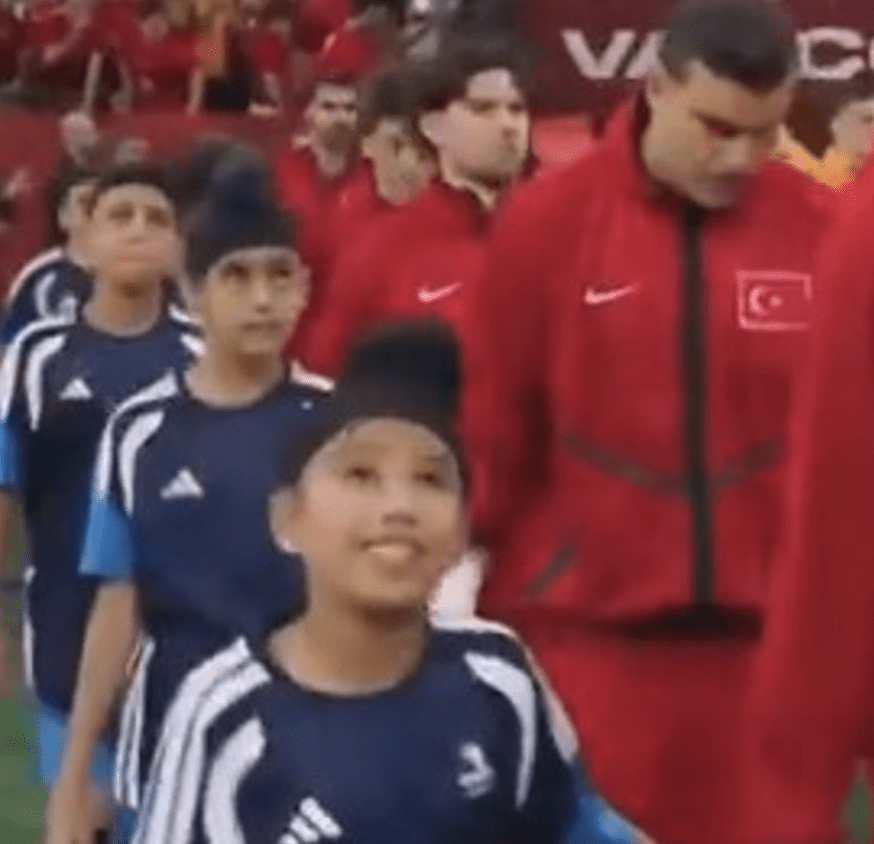
- The image of young Sikh boys wearing patkas and walking proudly onto the World Cup stage may have been brief, but it served as a meaningful symbol of visibility and inclusion.
- Sometimes, the most powerful moments in sport are not found in the scoreline but in the stories that remind us who belongs on the world’s biggest stage.
As Türkiye stepped onto the pitch for their opening FIFA World Cup match in Vancouver, Canada, many viewers were focused on the players, the atmosphere, and the significance of the nation’s return to football’s biggest tournament after 24 years.
Yet, just ahead of the players, a quieter but equally meaningful moment unfolded.
Among the official FIFA player escorts were Sikh boys proudly wearing patkas, the traditional head covering worn by young Sikh children. For many watching around the world, the sight may have lasted only a few seconds. Some may not have noticed it at all. But for Sikhs and advocates of representation, it carried a message far greater than its brief appearance on screen.
The FIFA World Cup is one of the most watched sporting events on the planet, bringing together nations, cultures, and communities through a shared love of football. To see Sikh children visibly embracing their identity while participating in such a prestigious global event was a powerful reminder of the diversity that exists within modern societies.
The moment was especially significant because it took place in Vancouver, a city located in British Columbia, Canada, which is home to one of the largest Sikh populations outside India. Sikh communities have played an important role in shaping the social, cultural, and economic fabric of the region for generations. Seeing local Sikh children represented on football’s grandest stage reflected that rich heritage and the multicultural character of the host city.
For Türkiye, the occasion marked a long-awaited return to the World Cup after more than two decades. For the Sikh boys walking alongside the players, it was an opportunity to represent not only their community but also the values of confidence, inclusion, and belonging.
Sport has long had the power to unite people across backgrounds, languages, and beliefs. While trophies, goals, and results often dominate headlines, moments of representation can leave a lasting impact that extends far beyond the final whistle.
The image of young Sikh boys wearing patkas and walking proudly onto the World Cup stage may have been brief, but it served as a meaningful symbol of visibility and inclusion. Sometimes, the most powerful moments in sport are not found in the scoreline but in the stories that remind us who belongs on the world’s biggest stage.