


AI Generated Summary
- It symbolises humility, equality, and the Guru’s grace in Sikh tradition, a living link to the values of the Gurus who emphasised selfless service (seva) and community unity.
- 5 metre length of fabric—is bestowed upon devotees, scholars, philanthropists, and distinguished visitors as a mark of the Guru’s blessings, recognition of piety, service, or devotion.
- Sikh institutions could explore diversifying suppliers, investing in domestic alternatives for the required chemicals or fabrics, or even innovating with sustainable, locally sourced materials that preserve the siropa’s sanctity and colour symbolism without heavy petrochemical dependence.
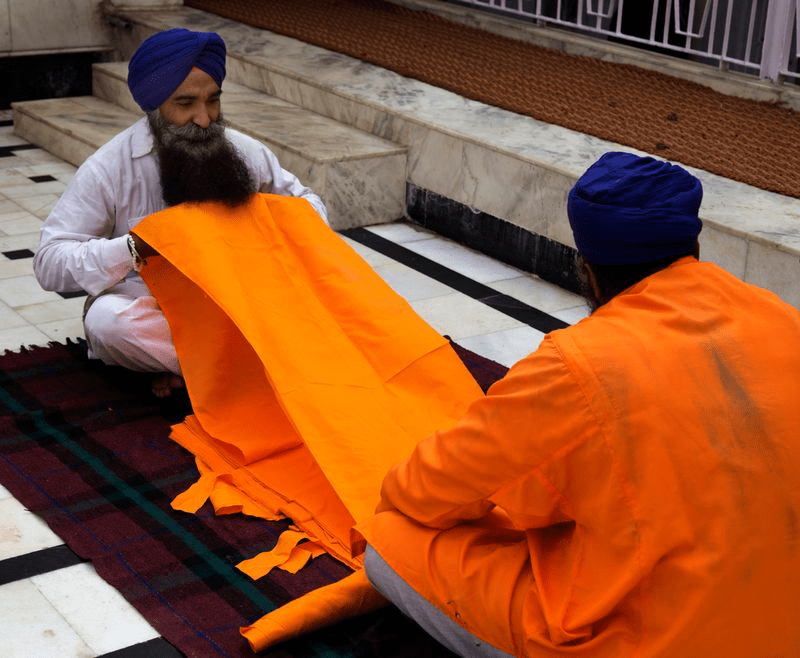
For us Sikhs, a simple piece of saffron or orange cloth carries profound spiritual weight. Known as a siropa (or saropa), this ceremonial robe of honour—typically a 2 to 2.5 metre length of fabric—is bestowed upon devotees, scholars, philanthropists, and distinguished visitors as a mark of the Guru’s blessings, recognition of piety, service, or devotion. It symbolises humility, equality, and the Guru’s grace in Sikh tradition, a living link to the values of the Gurus who emphasised selfless service (seva) and community unity.
Yet today, this cherished custom faces an unexpected strain. The Shiromani Gurdwara Parbandhak Committee (SGPC), which manages the Golden Temple and hundreds of gurdwaras, requires around seven to eight lakh metres of siropa cloth annually. Suppliers have delivered only about 19,000 metres against an order for 100,000 metres. Production has slowed sharply because a key petroleum-based chemical—essential for processing the fabric and threads—has become scarce. The root cause? Disruptions in supplies from Iran and other Gulf regions triggered by the escalating conflict involving the US, Israel, and Iran.
For Sikhs, this is more than a logistical inconvenience. The siropa is not mere fabric; it embodies the egalitarian spirit of Sikhism—where honour is not bought but earned through devotion and service. In gurdwaras worldwide, it fosters a sense of belonging and inspiration. When distribution is curtailed, it subtly dilutes a tradition that has endured invasions, partitions, and migrations. The Golden Temple, a beacon of open doors and langar (community kitchen) that continues uninterrupted despite related fuel shortages, now confronts this quieter challenge to its rituals.
This episode also highlights broader vulnerabilities in our interconnected world. India’s textile and chemical industries, while robust, still rely on imported intermediates for specialised fabrics. Petrochemical disruptions—whether from conflict-driven shipping hazards in the Strait of Hormuz or direct supply halts from Iran—expose how distant wars can inflate costs, delay production, and touch everyday cultural life. Similar ripples have affected other sectors, from fuel to manufacturing, reminding us that peace is not just a geopolitical ideal but an economic and cultural necessity.
The SGPC’s call for restraint is pragmatic, but it should also spark proactive reflection. Sikh institutions could explore diversifying suppliers, investing in domestic alternatives for the required chemicals or fabrics, or even innovating with sustainable, locally sourced materials that preserve the siropa’s sanctity and colour symbolism without heavy petrochemical dependence. This moment offers an opportunity to strengthen self-reliance (atma nirbharta) while upholding tradition—aligning with Sikh principles of resilience and foresight.
Ultimately, the shortage of siropas at the Golden Temple is a humble but poignant reminder: in an age of globalisation, no tradition is an island. Conflicts that scar the Middle East cast long shadows, dimming even the saffron glow of honour in Punjab’s holiest shrine. As the world watches the violence unfold, Sikhs—and all who value cultural continuity—must hope for swift de-escalation and diplomatic resolution. Only then can the timeless practice of bestowing siropas resume fully, allowing the Guru’s blessings to flow freely once more.
Peace in West Asia is not abstract; for millions, including the Sikh community, it is intimately tied to the threads that bind faith, history, and daily devotion.
