


AI Generated Summary
- In a heartfelt message issued this week, the Army urged young men and women of Punjab to step forward and enlist in the Sikh Regiment, reminding them that the regiment’s soul has always been drawn from the land of the Gurus.
- It is an invitation to reclaim a legacy, to become a source of pride for their families, and to ensure that the storied history of the Sikh Regiment does not fade into memory.
- At a time when the regiment continues to uphold the highest standards, the absence of new blood is a stark reminder that traditions survive only when each generation chooses to carry them forward.
The Indian Army’s recent appeal to the youth of Punjab carries both pride and pain. Pride in an extraordinary legacy built over centuries, and pain at the reality that one of the country’s most glorified fighting regiments—the Sikh Regiment—is today grappling with a worrying manpower shortfall.
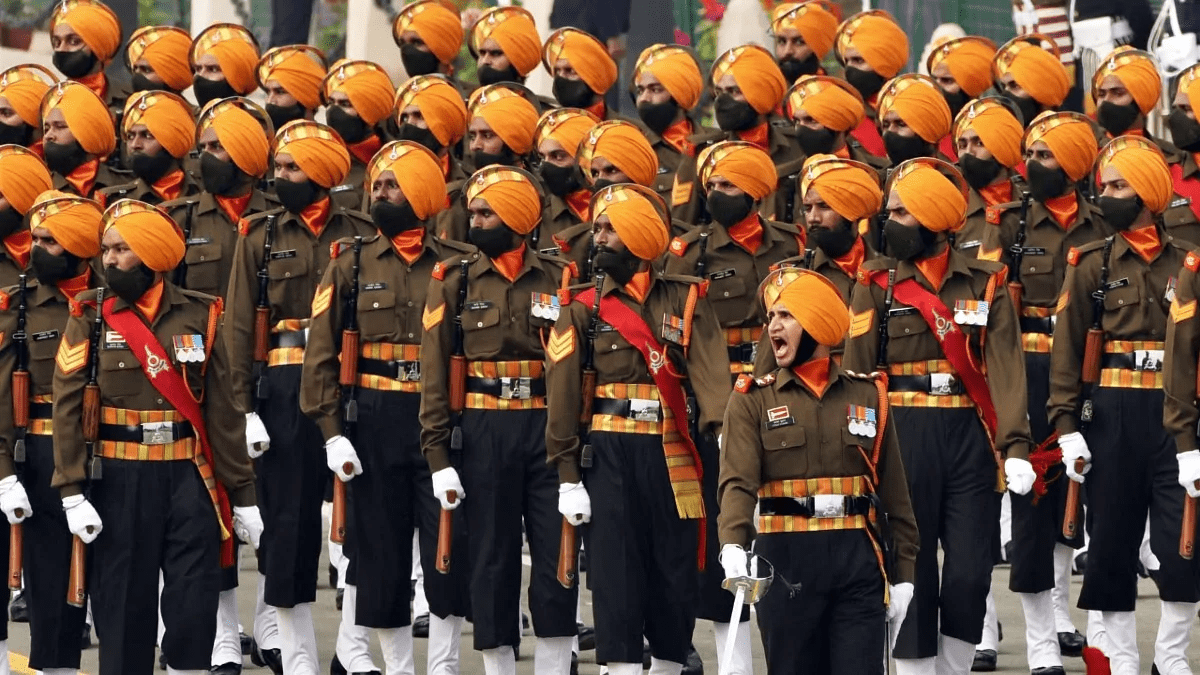
In a heartfelt message issued this week, the Army urged young men and women of Punjab to step forward and enlist in the Sikh Regiment, reminding them that the regiment’s soul has always been drawn from the land of the Gurus. From the time of Guru Hargobind and Guru Gobind Singh, the Sikh martial tradition has stood for courage, sacrifice and unwavering commitment to righteousness. It is this very tradition that shaped the regiment into one of the most respected combat units not just in India, but across the Commonwealth.
Yet, senior Army officers have repeatedly flagged a troubling trend: not enough Sikh youth are choosing to wear the uniform. For a regiment so deeply intertwined with Punjab’s identity, this decline is difficult to comprehend—and even harder to accept.
The Sikh Regiment’s record is unmatched. With 75 battle honours, 38 theatre honours and more than 1,650 gallantry awards, it ranks among the most decorated regiments in military history. Its soldiers have fought with distinction in the two World Wars, the 1947–48 conflict, the wars of 1965 and 1971, the 1962 Sino-Indian War and the Kargil conflict of 1999. Time and again, they have been at the forefront when the nation needed them most.
As recently as January 2026, seven battalions of the regiment were collectively recognised for exemplary service—a rare achievement. Two battalions received the Chief of Army Staff Unit Citation, one earned a Unit Appreciation from the COAS, and four were honoured with Army Commander’s Unit Appreciation. Such accolades underscore that, despite current challenges, operational standards remain exceptionally high.
Service in the Sikh Regiment has never been limited to battlefield heroics alone. Soldiers from its ranks have risen to become Junior Commissioned Officers and Commissioned Officers, setting benchmarks in leadership and discipline across the Army. Modern military service also offers avenues in technology, sports and specialised roles, along with long-term security and opportunities for soldiers’ families. It is a career that combines honour with stability—values deeply cherished in Punjabi society.
The concern, however, is clear. With 20 regular battalions, three Territorial Army units and a Rashtriya Rifles battalion, the regiment relies heavily on recruitment from the Jat Sikh community. A sustained shortfall threatens not only operational strength but also the continuity of a heritage that has been passed down through generations.
“The warrior spirit flows through Punjabi veins,” an Army spokesperson noted, stressing that this spirit must find expression in service to the nation. The statement reflects a deeper sentiment—sadness that a regiment synonymous with valour and sacrifice must now ask for what once came naturally.
For Punjab’s youth, the Army’s appeal is more than a recruitment call. It is an invitation to reclaim a legacy, to become a source of pride for their families, and to ensure that the storied history of the Sikh Regiment does not fade into memory. At a time when the regiment continues to uphold the highest standards, the absence of new blood is a stark reminder that traditions survive only when each generation chooses to carry them forward.