


AI Generated Summary
- According to a report by The Tribune, he was pursuing his BA degree when the 1971 India-Pakistan war unfolded, bringing him face to face with the realities of life in a border region.
- For approximately 64 years, Rangera has handcrafted specialised leather covers and holsters for firearms, sustaining a family profession whose origins can be traced to the period of British rule in India.
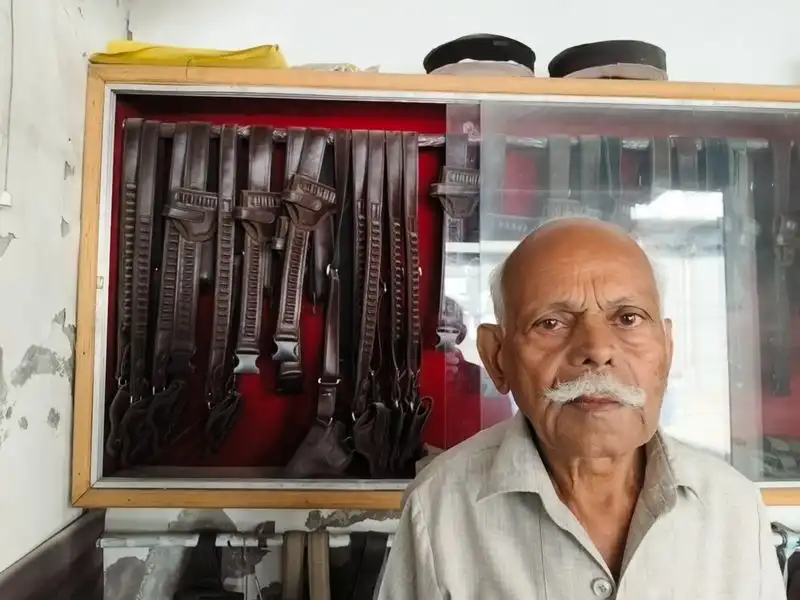
- In Punjab's historic border town of Ferozepur, 78-year-old Dayanand Rangera continues to preserve a traditional leatherworking craft inherited from his ancestors, representing a remarkable story of dedication and cultural continuity.
In Punjab's historic border town of Ferozepur, 78-year-old Dayanand Rangera continues to preserve a traditional leatherworking craft inherited from his ancestors, representing a remarkable story of dedication and cultural continuity.
For approximately 64 years, Rangera has handcrafted specialised leather covers and holsters for firearms, sustaining a family profession whose origins can be traced to the period of British rule in India.
Operating from his shop in the Ferozepur cantonment area, the veteran craftsman has developed a reputation extending beyond his hometown, attracting customers from neighbouring districts and even overseas.
The family's association with leatherworking began with his father, Bihari Lal, who worked as a craftsman at the historic Ferozepur Fort.
During the British period, Bihari Lal undertook contracts involving leather products, tents, footwear and other essential supplies. His professional experience extended across the era of both World Wars, reflecting the long association between local craftsmanship and military requirements.
Although the family's work at the fort ended following India's Independence, the traditional occupation continued through successive generations.
Dayanand eventually took responsibility for preserving the family business. According to a report by The Tribune, he was pursuing his BA degree when the 1971 India-Pakistan war unfolded, bringing him face to face with the realities of life in a border region.
He subsequently chose to continue the ancestral profession rather than complete his higher education.
His career also included six years of work with the Army's 103 Engineer Company at Ferozepur Fort, where specialised footwear was manufactured for military personnel.
Over the decades, Rangera developed expertise in crafting protective leather covers for different firearms, including various pistol and rifle models.
Customers from Patti, Khem Karan, Faridkot, Amritsar and Muktsar have sought his handmade products. Some of his creations have also reached international markets.
According to Rangera, a properly maintained leather cover made by him can remain usable for nearly 15 years, demonstrating the durability associated with traditional craftsmanship.
Despite his long professional journey, the future of the family trade remains uncertain.
Rangera has five children, including four daughters and a son who works as a lecturer, but none has entered the ancestral leatherworking profession.
His story highlights a wider challenge facing India's traditional artisans as younger generations increasingly pursue alternative careers.
For Rangera, however, the workshop remains more than a business. It represents a living connection to his family history, Punjab's military heritage and a specialised craft sustained through generations of skill and perseverance.