


AI Generated Summary
- The Homeland Security Secretary may waive the restriction for an individual worker, employees of a particular company or workers in an industry if their employment is considered to be in the US national interest and does not pose a threat to the country’s security or welfare.
- The Trump administration has defended the measure as part of a broader effort to curb what it says is misuse of the visa system and redirect the programme towards more highly skilled and better-paid foreign workers.
- The State, Justice, Labor and Homeland Security departments have been directed to review the impact of the extended restriction after the next H-1B lottery and advise the President on whether it should be continued….
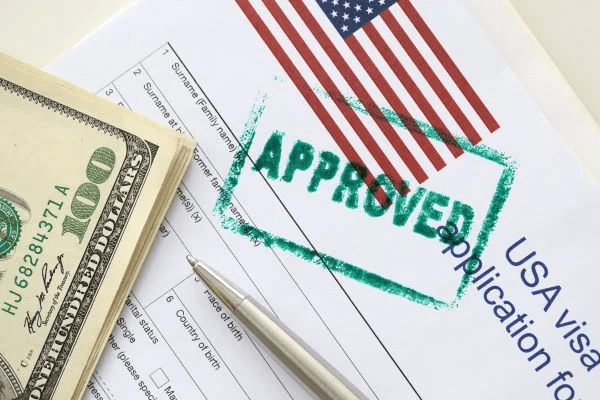
US President Donald Trump has extended by another year a controversial $100,000 payment requirement for certain H-1B visa petitions, prolonging a measure that significantly raises the cost for American companies seeking to bring skilled foreign professionals into the country.
The restriction, first introduced in September 2025, will now remain in effect until September 21, 2027. Under the proclamation signed by Trump on September 18, employers seeking to bring certain H-1B workers from outside the United States must make the $100,000 payment, unless they qualify for an exemption.
The decision could have significant implications for Indian technology professionals and IT companies, which have traditionally been among the biggest users of the H-1B programme.
The Trump administration has defended the measure as part of a broader effort to curb what it says is misuse of the visa system and redirect the programme towards more highly skilled and better-paid foreign workers.
According to the White House, payments have been made for more than 700 H-1B petitions since the requirement came into force on September 21 last year.
The H-1B programme allows American employers to recruit foreign professionals for specialised occupations. The administration has argued that some companies, particularly IT staffing and outsourcing firms, have relied on the programme to hire lower-paid foreign workers in place of American employees.
In extending the restriction, the White House pointed to substantial changes in H-1B filing patterns over the past year.
Registrations submitted by the largest IT staffing and outsourcing firms fell from 24,946 to 2,055, representing a 92 per cent decline. Requests for consular processing — used when workers need to enter the United States — dropped by nearly 97 per cent between the FY2025 and FY2027 cap seasons.
The administration also cited data indicating that a greater proportion of applicants now have advanced qualifications.
Beneficiaries with at least a US Master’s degree accounted for 66.1 per cent of registrations for FY2027, up from 45.1 per cent in FY2026. Around 46.3 per cent of selected registrations involved job offers falling within the two highest wage levels, compared with 17.8 per cent at the lowest wage level.
The White House said the figures suggested that the combination of the $100,000 requirement and a new weighted selection system was discouraging lower-wage recruitment while increasing the share of higher-paid and more highly qualified workers.
The weighted system was introduced by the Department of Homeland Security in December 2025 and was used for the FY2027 H-1B cap season. The Department of Labor has separately proposed changes to rules governing prevailing wages for foreign workers.
Despite these changes, the administration said conditions that led to the original restrictions had not sufficiently improved.
The proclamation cited unemployment among recent US college graduates at 5.7 per cent in June this year, compared with 5.8 per cent in September 2025. Underemployment among recent graduates increased marginally from 41.8 per cent to 42 per cent during the same period. The administration also continues to cite concerns over wage suppression, fraud and misuse of the H-1B system.
For employers, the extension means that petitions covered by the proclamation for H-1B workers outside the US will continue to attract the additional $100,000 cost.
There is, however, provision for exemptions. The Homeland Security Secretary may waive the restriction for an individual worker, employees of a particular company or workers in an industry if their employment is considered to be in the US national interest and does not pose a threat to the country’s security or welfare.
The administration is also tightening scrutiny of the H-1B system beyond the payment requirement. In a separate executive order issued alongside the proclamation, federal agencies were directed to increase coordination while reviewing H-1B cases and to consider whether sponsoring employers have recently laid off, or plan to lay off, similarly situated American workers.
The State, Justice, Labor and Homeland Security departments have been directed to review the impact of the extended restriction after the next H-1B lottery and advise the President on whether it should be continued further.
The policy is particularly relevant to India because of the large number of Indian professionals employed in the US technology sector through the H-1B route. New Delhi had expressed concern after the measure was introduced last year, while emphasising the role of skilled-worker mobility in supporting innovation, economic growth and competitiveness.
With the payment requirement now continuing for another year, companies dependent on recruiting skilled workers from abroad will have to factor the substantially higher cost into their US hiring plans, while Indian professionals seeking H-1B opportunities from outside the country will continue to face the tighter regime through September 2027.