

AI Generated Summary
- Agencies have linked this approach to what has traditionally been referred to within the security establishment as the “K2 strategy” — an alleged effort by Pakistan-based actors to connect separatist narratives involving Kashmir and Khalistan and exploit social and political divisions within India.
- According to officials, the purpose of such provocation is to trigger a forceful police response and produce dramatic photographs or videos that can subsequently be circulated internationally as propaganda.
- Among the incidents cited by agencies are the events at Delhi’s Red Fort during the farmers’ tractor rally on Republic Day in January 2021, when sections of the demonstration turned violent.
Cyber-security and Indian intelligence agencies are closely tracking what they describe as coordinated attempts by foreign-based digital networks and extremist organisations to influence the online conversation surrounding protests in India.
According to intelligence assessments, groups linked to Pakistan-based propaganda networks and overseas Khalistani organisations are seeking to exploit demonstrations arising from genuine domestic concerns, including unemployment, agrarian difficulties, labour disputes and student grievances.
Officials emphasise that such networks rarely initiate large public movements themselves. Instead, they allegedly identify protests that are already gaining attention and attempt to insert polarising messages into the wider digital discussion.
The objective, according to security officials, is to gradually redirect the narrative from specific demands for policy reform or government accountability towards broader hostility against the Indian state.
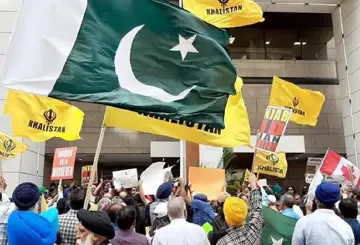
Agencies have linked this approach to what has traditionally been referred to within the security establishment as the “K2 strategy” — an alleged effort by Pakistan-based actors to connect separatist narratives involving Kashmir and Khalistan and exploit social and political divisions within India.
Social media trends closely monitored
A major area of concern is the alleged use of coordinated and inauthentic activity across social-media platforms.
Intelligence reports suggest that operators based in Pakistan, Europe and North America closely monitor protest-related hashtags and slogans. Once a subject begins trending, networks of automated accounts, anonymous profiles and organised troll groups are allegedly deployed to increase the visibility of provocative or misleading material.
Officials say the messaging is often introduced gradually. Rather than immediately circulating openly separatist content, such accounts may initially repeat popular demands associated with a protest before steering the discussion towards confrontation, institutional distrust or secessionist themes.
The growing availability of artificial-intelligence tools has added another layer to the challenge. Agencies are examining the circulation of AI-generated images, videos and text that can be produced rapidly and presented as authentic material from protest sites.
Such content, officials fear, can be used to deepen social divisions, spread false claims and create misleading impressions about the scale or character of a movement.
Suspected financial networks under scrutiny
Investigators are also examining possible financial channels used to support individuals seeking influence within peaceful demonstrations.
These allegedly include informal hawala transfers, concealed overseas funding and diaspora-based charitable organisations suspected of acting as fronts. Security officials claim that money may be directed towards fringe actors who attempt to introduce extremist slogans or symbols into otherwise legitimate public gatherings.
Agencies have further alleged that individuals with criminal backgrounds may sometimes be encouraged to provoke violence or clashes with law-enforcement personnel.
According to officials, the purpose of such provocation is to trigger a forceful police response and produce dramatic photographs or videos that can subsequently be circulated internationally as propaganda.
These claims remain difficult to verify independently, particularly because large protest movements often involve a wide range of participants, organisations and competing narratives.
Overseas separatist groups remain under watch
Security agencies continue to monitor the activities of Sikhs for Justice, or SFJ, a separatist organisation operating largely from North America and Europe.
Officials allege that during previous high-profile protests, overseas activists circulated videos and online messages offering financial rewards for displaying Khalistani symbols at prominent Indian landmarks.
Among the incidents cited by agencies are the events at Delhi’s Red Fort during the farmers’ tractor rally on Republic Day in January 2021, when sections of the demonstration turned violent.
Authorities have maintained that attempts were made by overseas groups to use images from the incident to promote separatist narratives outside India.
The Union government has previously acted against digital platforms and accounts accused of participating in Pakistan-linked disinformation campaigns. The Ministry of Information and Broadcasting has blocked several YouTube channels and websites for allegedly spreading false or coordinated content during politically sensitive events, including the farmers’ agitation and protests against the Citizenship Amendment Act.
Security agencies have consequently stressed the need to distinguish between lawful dissent and attempts by external actors to manipulate public anger.
The principal concern, they say, is not the existence of protests but the increasing ability of foreign networks to enter rapidly evolving online conversations and amplify the most confrontational voices.
Young social-media users are considered particularly vulnerable because political content now spreads through short videos, memes, influencer accounts and emotionally charged posts rather than through traditional news sources alone.
Agencies believe that repeated exposure to misleading or extremist material can gradually radicalise sections of the online audience and transform a local policy dispute into a wider ideological conflict.
The emerging challenge for the government will be to counter coordinated foreign influence operations without undermining legitimate criticism, peaceful mobilisation or freedom of expression.
As protest movements become increasingly intertwined with digital platforms, officials say identifying the difference between organic public sentiment and organised online manipulation will be central to India’s internal-security strategy.