


AI Generated Summary
- Two days later, a joint operation by the Border Security Force (BSF) and the Anti-Narcotics Task Force (ANTF) resulted in the seizure of 27 kilograms of heroin—one of the largest recoveries in recent months.
- Smuggling syndicates operating along the India-Pakistan border are adopting increasingly sophisticated methods to circumvent security forces, with investigators reporting the use of high-volume music and larger drones to facilitate the cross-border movement of narcotics and weapons.
- According to Punjab Police, smugglers have begun playing loud DJ music at designated drop locations to conceal the distinctive buzzing of drones and the sound of consignments landing on the ground.
Smuggling syndicates operating along the India-Pakistan border are adopting increasingly sophisticated methods to circumvent security forces, with investigators reporting the use of high-volume music and larger drones to facilitate the cross-border movement of narcotics and weapons.
According to Punjab Police, smugglers have begun playing loud DJ music at designated drop locations to conceal the distinctive buzzing of drones and the sound of consignments landing on the ground. The tactic is aimed at preventing nearby residents and security personnel from detecting drone activity during deliveries.
Punjab Police Commissioner Gurpreet Singh Bhullar said investigations have revealed that accomplices on the Indian side deliberately use amplified music during drone operations, making it significantly harder for surveillance teams to identify and respond to aerial drops.
The change in strategy comes amid a series of major recoveries in Punjab’s border districts, indicating that trafficking networks are continuously refining their operational methods in response to intensified enforcement efforts.
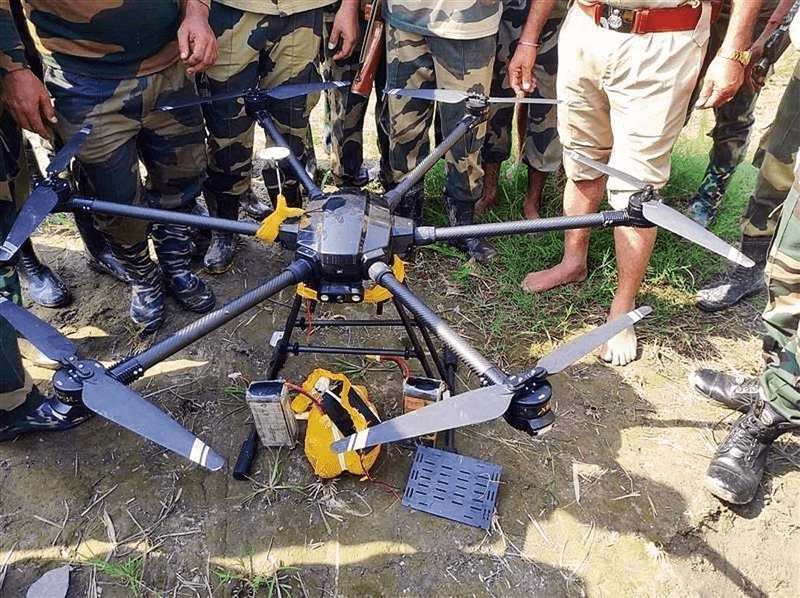
Officials have also observed a notable shift in the type of drones being deployed. While smugglers earlier relied on smaller unmanned aerial vehicles capable of transporting limited quantities of heroin, ammunition or pistols, recent interceptions suggest an increasing preference for larger drones with payload capacities ranging between 10 and 15 kilograms.
Security officials believe these high-capacity drones allow traffickers to transport multiple weapons, substantial quantities of narcotics and even cash in a single flight. Fewer sorties not only improve operational efficiency but also reduce the chances of drones being detected or intercepted.
The evolving tactics are reflected in recent seizures across the state. On June 19, Punjab Police recovered 26 sophisticated firearms, including an AK-47 rifle. Two days later, a joint operation by the Border Security Force (BSF) and the Anti-Narcotics Task Force (ANTF) resulted in the seizure of 27 kilograms of heroin—one of the largest recoveries in recent months. Earlier, on June 11, Amritsar Police confiscated more than 30 kilograms of heroin in another major operation.
Investigators say these recoveries underscore the growing scale of cross-border trafficking attempts and the enhanced carrying capacity of the drones now being employed by smuggling networks.
Authorities are simultaneously examining seized drones, communication equipment and digital evidence to trace handlers operating across the border and identify their local collaborators. Security agencies maintain that technical analysis and intelligence-led investigations remain central to dismantling the networks behind the smuggling operations.