


AI Generated Summary
- In 1805, the Sikh ruler invited highly skilled craftsmen from Chiniot, a renowned artistic centre in present-day Pakistan, to decorate the interiors of the Harmandir Sahib, popularly known as the Golden Temple.
- Art scholars note that while the word naqqashi originates from the Arabic term naqsh, meaning drawing or ornamentation, the art form acquired a distinctly Sikh identity during the Sikh Empire.
- So influential did the craft become that a neighbourhood near the Golden Temple earned the name Gali Naqqashan—the street of the naqqash artists.
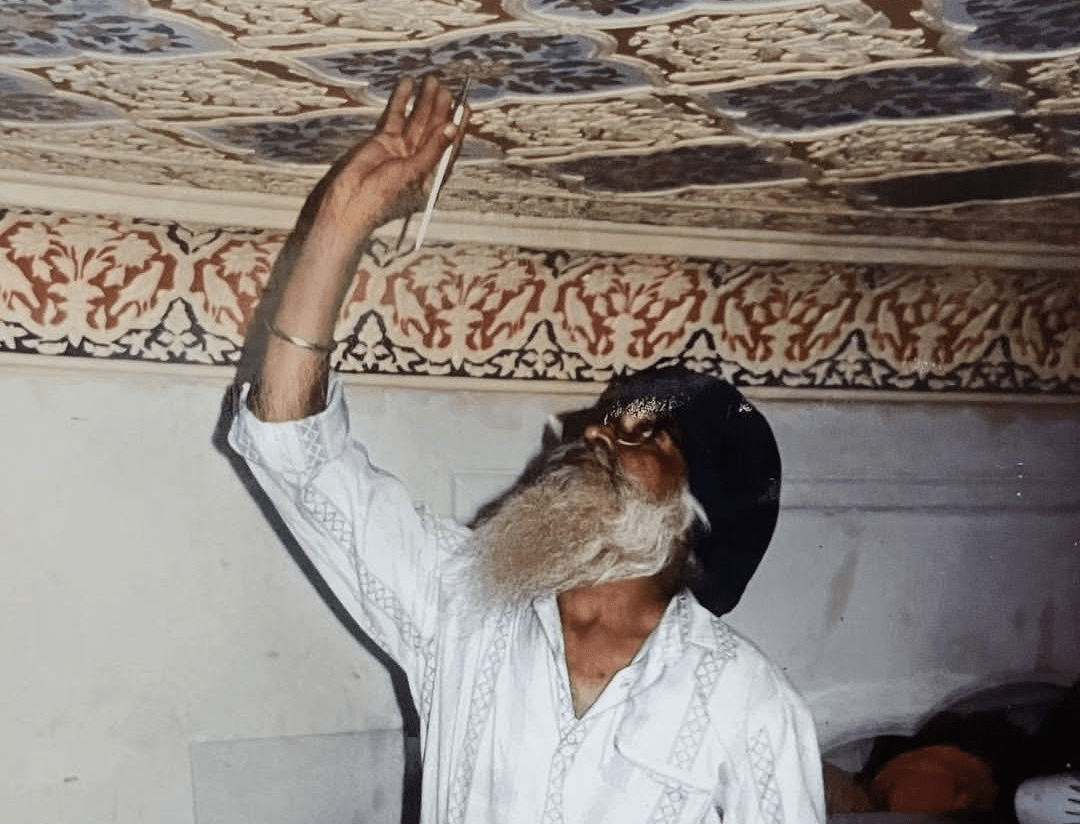
Behind the gleaming marble walls and gilded domes of Punjab’s historic gurdwaras lies an artistic tradition that few visitors notice but generations of artisans devoted their lives to perfecting. Known as naqqashi, this intricate decorative art—characterised by floral motifs, mirror inlays, embossed plaster reliefs and gold-leaf ornamentation—has adorned Sikh shrines for more than two centuries.
Today, however, the craft stands at a critical crossroads. As restoration projects increasingly favour modern materials and simplified aesthetics, a shrinking number of traditional artists and conservationists are striving to preserve the original techniques that once defined Sikh sacred architecture.
A Tradition Born in the Sikh Empire
The roots of naqqashi in Punjab can be traced to the early nineteenth century during the reign of Maharaja Ranjit Singh. In 1805, the Sikh ruler invited highly skilled craftsmen from Chiniot, a renowned artistic centre in present-day Pakistan, to decorate the interiors of the Harmandir Sahib, popularly known as the Golden Temple.
The project was supervised by Giani Sant Singh, himself from Chiniot, who brought master artisans to Amritsar and settled them near Lahori Gate. The locality eventually became known as Chiniotian Di Haveli. These craftsmen transformed the shrine’s interiors with elaborate ceiling decorations, floral carvings and reflective mirror work.
Led by the artisan Badarmuhiudin, many of these Muslim craftsmen continued working across Punjab’s historic gurdwaras for decades. Their interaction with local artists eventually gave rise to a distinctive Sikh artistic tradition that evolved beyond its Persian and Mughal influences.
Evolution of a Unique Sikh Style
Art scholars note that while the word naqqashi originates from the Arabic term naqsh, meaning drawing or ornamentation, the art form acquired a distinctly Sikh identity during the Sikh Empire.
Artist and researcher Harpreet Singh Naaz explains that Sikh naqqashi gradually diverged from the decorative styles associated with Mughal monuments. Contributions from artists belonging to Rajput, Pahari and Mughal traditions enriched the evolving visual language, producing a unique blend found nowhere else in South Asia.
Historic structures such as the Baba Atal Rai Tower in Amritsar preserve some of the earliest examples of this Sikh school of naqqashi. The artistic lineage was strengthened by pioneering figures like Kehar Singh, a court painter of Maharaja Ranjit Singh who trained numerous artists and helped establish a lasting tradition.
The Street of the Artists
So influential did the craft become that a neighbourhood near the Golden Temple earned the name Gali Naqqashan—the street of the naqqash artists.
For generations, celebrated craftsmen lived and worked there, decorating shrines, havelis and religious structures across Punjab. Their murals, ornamental panels and mirror embellishments became hallmarks of Sikh architecture.
During the colonial period, European artistic influences also found their way into some works, creating a fascinating fusion that remains visible in several heritage buildings.
A Single Family Carries the Torch
Today, one family remains at the forefront of preserving traditional Sikh naqqashi.
Amritsar-based artisan Arwinder Singh Naqqash, grandson of the renowned Harbhajan Singh Naqqash, continues to practise techniques handed down through generations. He traces his family’s artistic lineage both to the original Chiniot craftsmen and to the school established by Kehar Singh.
Arwinder stresses that many people mistakenly identify the craft as gach work. “Gach is only the plaster material used,” he explains. “The art itself is naqqashi.”
The process remains painstakingly labour-intensive. Artists apply multiple layers of plaster, create moulded impressions, carve intricate floral designs and then finish them with gold leaf. Decorative mirror inlay work, known as jaratkari or jadau, forms another important component of the tradition.
Yet preserving authenticity has become increasingly difficult. Traditional pigments once used by master craftsmen are now rare and expensive, while modern alternatives often fail to achieve the same visual richness.
Restoration Efforts Gain Momentum
Despite the challenges, several restoration initiatives are breathing new life into historic Sikh art.
Conservation projects are currently underway at the Golden Temple, Gurdwara Guru Tegh Bahadur in Baba Bakala, and Gurdwara Baba Bir Singh in Naurangabad, Tarn Taran district. Experts are replacing inappropriate cement-based repairs with traditional lime-based methods in an effort to recover the original appearance of these heritage structures.
Dr Balbinder Kumar, a conservation specialist associated with restoration work at the Golden Temple, says the Sikh artistic tradition emerged through centuries of collaboration among artists from diverse backgrounds.
According to him, the Sikh court under Maharaja Ranjit Singh became a rare cultural space where Mughal, Rajput and Pahari artists worked together, creating a distinct artistic identity that deserves far greater recognition.
Heritage at Risk
Many scholars believe Punjab has already lost a substantial portion of its artistic heritage.
Art historian Subhash Parihar argues that extensive renovations over recent decades have led to the disappearance of original decorative work from numerous historic buildings. Ironically, some examples of Punjab’s traditional artistic legacy survive more intact across the border in Pakistan than in their place of origin.
Conservationists also point to a lack of academic focus on Sikh art traditions. While institutions outside Punjab often teach Sikh, Mughal and Pahari artistic styles together, dedicated study of Sikh visual heritage remains limited within the state itself.
Passing the Knowledge Forward
One of the greatest champions of naqqashi preservation was Gyan Singh Naqqash (1883–1953), whose contributions extended beyond artistic practice. A master associated with the Kangra School, he meticulously documented techniques and design principles in books such as Naqqashi Darpan and Naqqashi Art Sikhya, ensuring future generations would have access to the craft’s knowledge.
His work was celebrated for its extraordinary detail, with floral paintings so precise that even the natural veins of petals appeared lifelike.
Today, Arwinder Singh hopes to continue that legacy. He remains willing to train new students, but finding committed apprentices has proven difficult.
“People admire the work, but very few are prepared for the years of dedication it demands,” he says.
Supported by a small team and a handful of heritage organisations, he continues to work on restoration projects across Punjab. For him, naqqashi is more than an occupation—it is a cultural inheritance worth protecting.
“It has always been difficult,” he says. “But preserving a legacy has never been easy.”
As restoration efforts gather pace, the future of Punjab’s forgotten artistic treasure may depend on whether a new generation chooses to learn the craft before its last masters disappear.