


AI Generated Summary
- The evening began on a patriotic note as Rahman delivered a powerful rendition of Jai Ho, turning the border venue into a celebration of national pride.
- Addressing attendees, Imtiaz Ali described the concert as a tribute to the spirit of the nation and the dedication of India’s security forces.
- The performance, held at the Joint Check Post ahead of the daily Beating Retreat ceremony, marked the first time the Oscar-winning musician performed at the iconic frontier location.
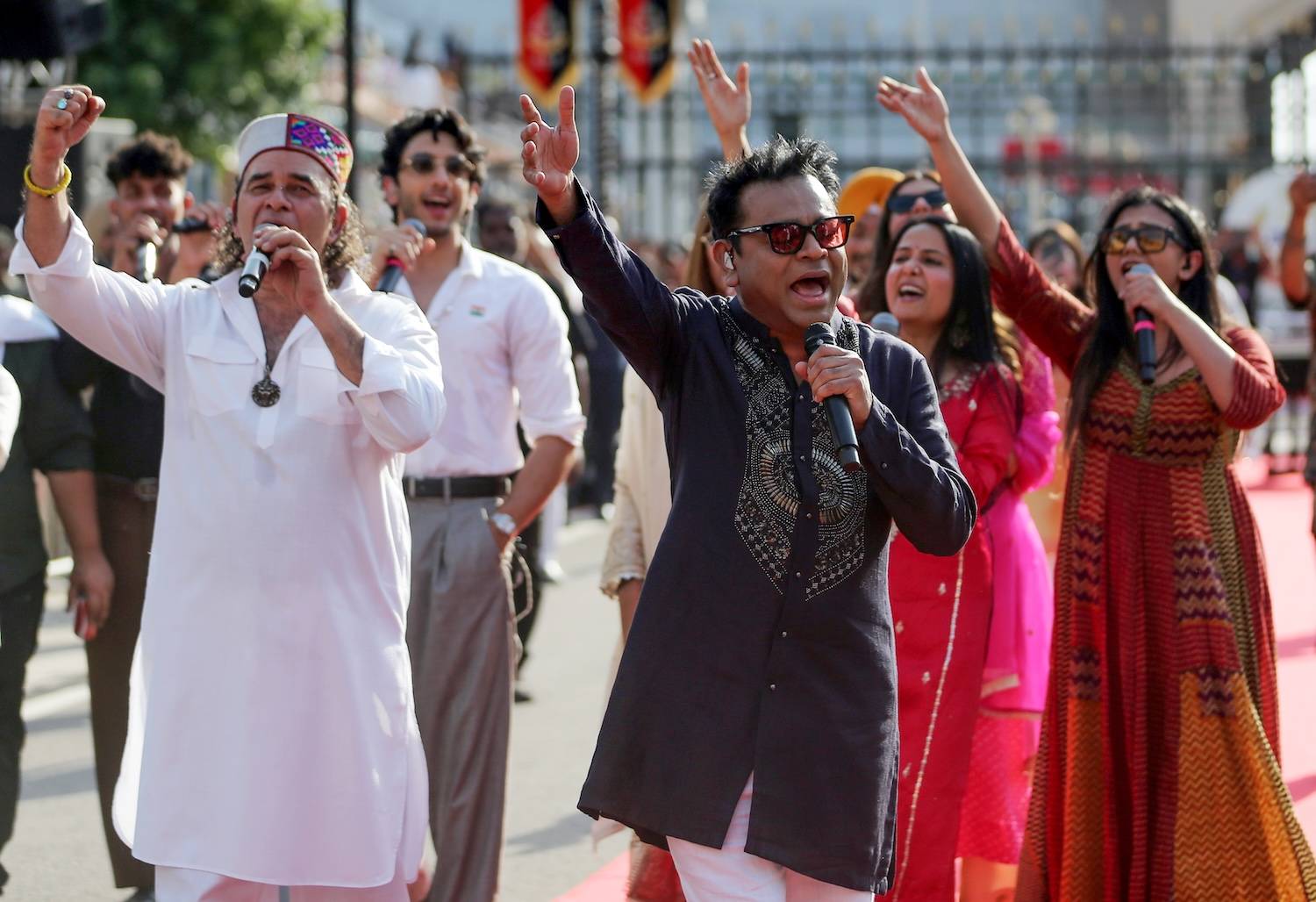
In an unprecedented cultural event at the Attari border, renowned composer and singer A.R. Rahman captivated thousands on Sunday with a special live concert dedicated to India’s border guardians. The performance, held at the Joint Check Post ahead of the daily Beating Retreat ceremony, marked the first time the Oscar-winning musician performed at the iconic frontier location.
The evening began on a patriotic note as Rahman delivered a powerful rendition of Jai Ho, turning the border venue into a celebration of national pride. Visitors from across India joined Border Security Force (BSF) personnel to witness the landmark event, which drew enthusiastic applause throughout the performance.
Rahman dedicated the concert to the unwavering service and sacrifice of BSF personnel who safeguard the nation’s borders. The atmosphere grew increasingly emotional as the musician later performed his celebrated anthem Maa Tujhe Salaam, prompting audience members to sing along in a stirring display of unity and patriotism.
The programme was organised in collaboration with the BSF by the team behind the upcoming film Main Vaapas Aaunga. Directed by filmmaker Imtiaz Ali, the movie explores themes of love, separation and human resilience against the backdrop of the 1947 Partition. The film features Diljit Dosanjh, Naseeruddin Shah, Sharvari and Vedang Raina, with music by Rahman and lyrics by Irshad Kamil. It is scheduled to release worldwide on June 12.
Beyond Rahman’s patriotic performances, the event showcased several songs from the film. Artists Nilanjana Ghosh and Vedang Raina presented Maskara, while singers Mohit Chauhan, Pooja Tiwari and Nargis entertained the audience with Ishq Mastana and other compositions.
Addressing attendees, Imtiaz Ali described the concert as a tribute to the spirit of the nation and the dedication of India’s security forces. He noted that the performance, staged just steps away from the international border, symbolised respect for the BSF and the Indian Army.
Ali also highlighted the film’s connection to the border region, explaining that parts of Main Vaapas Aaunga were shot at Attari. According to him, the story reflects the emotional upheaval experienced by millions during Partition and examines the lasting impact of displacement and separation.
While lead actors Diljit Dosanjh and Naseeruddin Shah could not attend due to prior engagements, the event nevertheless emerged as a memorable addition to Attari’s cultural history. Spectators on the Pakistani side of the border were also seen observing the performances, underscoring the unique setting of the evening.
The concert further strengthened Attari’s reputation as a venue for significant cultural moments, joining a legacy that includes appearances by distinguished artists such as Lata Mangeshkar and Kailash Kher. For many in attendance, Rahman’s performance transformed a routine border ceremony into an unforgettable celebration of music, patriotism and shared heritage.