


AI Generated Summary
- Calling it “the refrigerator of the poor,” he smiled as he carried the pot home, convinced that no machine can quite match the taste of water cooled naturally in clay.
- Malkiat Singh, who recently purchased a tap-fitted earthen pot from a roadside stall, said he still relies on it despite having a refrigerator at home.
- While modern appliances such as refrigerators, water coolers and filtration systems dominate urban homes, the traditional clay pot continues to hold its place in Punjabi households, carrying with it a legacy that stretches back more than 5,000 years.
As temperatures soar across Punjab each summer, a familiar sight returns to roadsides and marketplaces — rows of earthen clay pots stacked neatly under the open sky, waiting for buyers seeking relief from the heat. While modern appliances such as refrigerators, water coolers and filtration systems dominate urban homes, the traditional clay pot continues to hold its place in Punjabi households, carrying with it a legacy that stretches back more than 5,000 years.
Historians and archaeologists say the simple vessel used today is remarkably similar to the clay pots discovered from the ancient Indus Valley Civilisation at Harappa. The design, structure and even the method of production have survived centuries with little alteration, making pottery one of Punjab’s oldest living traditions.
Despite rapid technological changes, many families still prefer drinking water stored in earthen pots during the harsh summer months. Sellers claim demand has risen in recent years as people increasingly view clay-stored water as healthier, naturally cool and free from the effects associated with plastic storage containers.
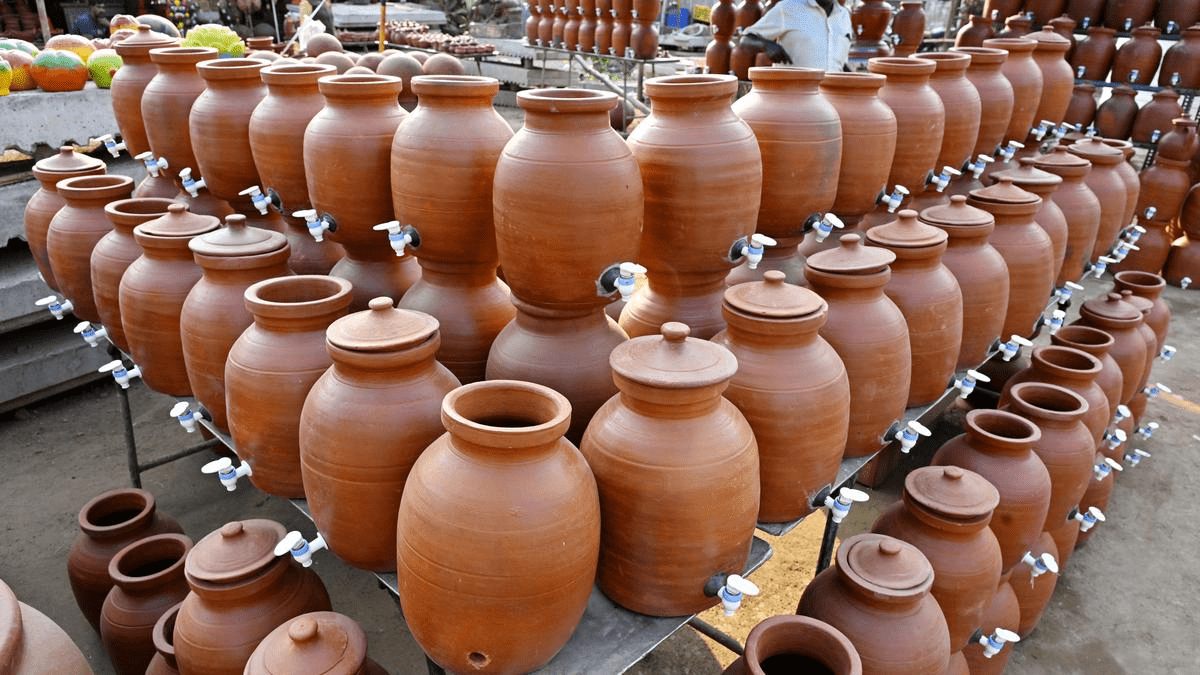
Along the outer bypass of the walled city, roadside pottery stalls have once again become a seasonal attraction. Though rooted in tradition, the clay pot has adapted modestly to modern convenience. Many now come fitted with taps, allowing water to be drawn easily without lifting the lid repeatedly.
Kewal, a long-time earthenware seller, said customers from both villages and cities continue to purchase clay pots in large numbers every summer.
“People feel the water tastes fresher and cooler in clay pots. Even those who own refrigerators often prefer this traditional method,” he said while attaching a tap to a freshly baked vessel.
Beyond its practical use, the earthen pot occupies a special place in Punjab’s cultural and historical identity. It has appeared in folk songs, poetry and Punjabi folklore for generations, and has even been used as a musical instrument in rural traditions.
Researchers also point to archaeological evidence showing that clay pots were placed beside human remains during burial rituals in the Harappan civilisation, highlighting their spiritual and social importance thousands of years ago.
Punjab history researcher Ramandeep Singh said the most striking aspect of these vessels is the continuity of craftsmanship across millennia.
“The potter’s wheel is believed to have originated during the Indus Valley Civilisation. Before that, clay utensils were shaped entirely by hand. The wheel allowed artisans to create perfectly rounded vessels with greater precision,” he explained.
He added that ancient communities in Punjab also pioneered the technique of firing clay in intense heat to harden utensils, laying the foundation for pottery traditions that still survive today.
For many consumers, the appeal of the clay pot lies not only in tradition but also in affordability and practicality. Malkiat Singh, who recently purchased a tap-fitted earthen pot from a roadside stall, said he still relies on it despite having a refrigerator at home.
Calling it “the refrigerator of the poor,” he smiled as he carried the pot home, convinced that no machine can quite match the taste of water cooled naturally in clay.
