


AI Generated Summary
- The Pakistan government, after initially going against the Government of India and issuing visas to devotees for the period from April 10 to 19—during which pilgrims celebrated Khalsa Sajna Diwas at Gurdwara Panja Sahib—has now dealt a direct blow to religious sentiments by denying visas to 92 devotees.
- While Pakistan pretends to be sympathetic towards Sikhs, its intelligence agency ISI is allegedly involved in sending drugs and weapons into India and providing financial support to pro-Khalistan elements based abroad, in an attempt to disturb peace in the country.
- Not only in India but also in Pakistan’s Sindh province and across the world, there are a large number of non-Sikh families who bow before the Guru Granth Sahib and conduct all their family ceremonies in accordance with Sikh traditions.
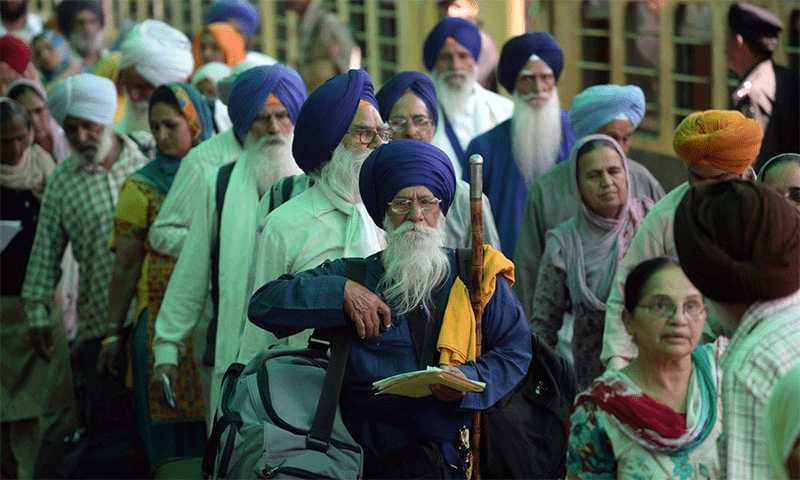
The Pakistan government, after initially going against the Government of India and issuing visas to devotees for the period from April 10 to 19—during which pilgrims celebrated Khalsa Sajna Diwas at Gurdwara Panja Sahib—has now dealt a direct blow to religious sentiments by denying visas to 92 devotees.
Even if these 92 devotees do not carry “Singh” or “Kaur” in their names, their faith in Guru Nanak Dev Ji and all ten Sikh Gurus is unwavering. Whether one is a Keshdhari or a Sehajdhari Sikh, every devotee, in their daily prayers (Ardas), seeks the opportunity to visit and have the blessed darshan of separated Gurdhams. However, due to the flawed policies of the Pakistan government, that opportunity has been taken away from these Sehajdhari families, deeply hurting their sentiments.
This should serve as a lesson for those who still dream of friendship with Pakistan. It appears that Pakistan’s intention is to distance people of the Hindu community from Gurdwaras. Under what seems like a calculated move, Sehajdhari devotees have been denied visas.
Not only in India but also in Pakistan’s Sindh province and across the world, there are a large number of non-Sikh families who bow before the Guru Granth Sahib and conduct all their family ceremonies in accordance with Sikh traditions. Therefore, if Pakistan harbors such intentions, it would be making a grave mistake. The relationship between Hindu and Sikh families is deeply intertwined—like flesh and nails—and cannot be separated.
Earlier, the Pakistani authorities issued visas from April 10 to 19, going against India’s schedule. The Government of India, based on recommendations from the Shiromani Gurdwara Parbandhak Committee and the Punjab government, had announced sending the जत्था from April 12 to 21. This clearly shows that Pakistan often acts in opposition to India.
Moreover, while Pakistan pretends to be sympathetic towards Sikhs, its intelligence agency ISI is allegedly involved in sending drugs and weapons into India and providing financial support to pro-Khalistan elements based abroad, in an attempt to disturb peace in the country.
According to Paramjit Singh Chandok, advisor on foreign affairs to the Delhi Sikh Gurdwara Management Committee, the issue has been raised with the Pakistan government. He questioned what fault those 92 devotees had, when their faith in the Gurus is sincere and they only wish to visit sacred sites like Panja Sahib and other Gurdwaras in Pakistan, just like their fellow Sikh devotees. Why, then, is the government creating obstacles in their religious practice by denying visas?
The Sindhi community, in particular, has deep faith in Sikh institutions. They regularly visit Gurdwaras and perform their family ceremonies there, even though they may not be Keshdhari, do not wear turbans, and do not use “Singh” or “Kaur” in their names. There is a growing concern that if such policies continue, the Pakistan government might, in the future, even restrict their entry into Gurdwaras.