


AI Generated Summary
- Before the Partition of India in 1947, the village was home to a diverse population that included a significant number of Muslim families, alongside members of other communities.
- Though the upheaval of Partition led to the demolition of most mosques in the village, one still survives as a quiet reminder of that shared past.
- Villagers recount that Guru Arjan Dev, the fifth Sikh Guru, visited the area in the late 16th century while searching for a suitable location for the holy sarovar of Tarn Taran Darbar Sahib.
In the heart of Punjab’s Tarn Taran district lies Kairon village, a place where history, spirituality, and communal harmony intertwine to create a unique cultural fabric. For generations, residents have considered themselves blessed, believing their village was once visited by revered Sikh Gurus. This deep-rooted faith continues to shape the identity of the village today.
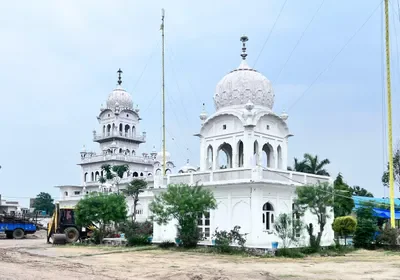
At the centre of this belief stands Gurdwara Jhad Sahib, a sacred site that serves as a lasting symbol of devotion. Villagers recount that Guru Arjan Dev, the fifth Sikh Guru, visited the area in the late 16th century while searching for a suitable location for the holy sarovar of Tarn Taran Darbar Sahib. During this journey, he is believed to have stopped in Kairon, tying his horses to a tree and resting briefly. Later, Guru Hargobind is also said to have graced the village with his presence.
While these accounts are rooted in local belief, their influence is unmistakable. The gurdwara today stands not just as a religious structure but as a focal point of community life and spiritual connection.
Kairon’s story, however, extends beyond its Sikh heritage. Before the Partition of India in 1947, the village was home to a diverse population that included a significant number of Muslim families, alongside members of other communities. Though the upheaval of Partition led to the demolition of most mosques in the village, one still survives as a quiet reminder of that shared past.
Among the figures remembered with deep respect is Maulana Veeru Muhamad, who once served at a local mosque before migrating during Partition. His memory endures among villagers, symbolising the bonds that once united different communities.
Despite demographic changes over the decades, Kairon continues to uphold a spirit of inclusivity. The Shiv Sidhi Mandir remains an important place of worship, even though very few Hindu families reside in the village today. Maintained by appointed caretakers, the temple is cleaned daily, reflecting the respect it commands among residents.
Festivals further highlight this shared ethos. The celebration of Maha Shivratri brings together villagers across communities, who participate with devotion and enthusiasm. The air resonates with prayers and songs dedicated to Lord Shiva, reinforcing a sense of unity that transcends religious lines. Another place of reverence, the temple dedicated to Lord Valmiki, adds to this spirit of brotherhood.
In an era often marked by division, Kairon stands out as a quiet yet powerful example of coexistence. Its sacred sites, collective memories, and shared traditions reflect a village that has not only preserved its past but continues to nurture harmony in everyday life.