


AI Generated Summary
- As winter approaches and health risks rise, officials in Kabul say the continued supply of vaccines, food, and medical kits will play a crucial role in saving lives and stabilizing vulnerable communities.
- The latest shipment was confirmed by the Ministry of External Affairs (MEA), with spokesperson Randhir Jaiswal noting that India remains steadfast in supporting the Afghan population through consistent medical aid.
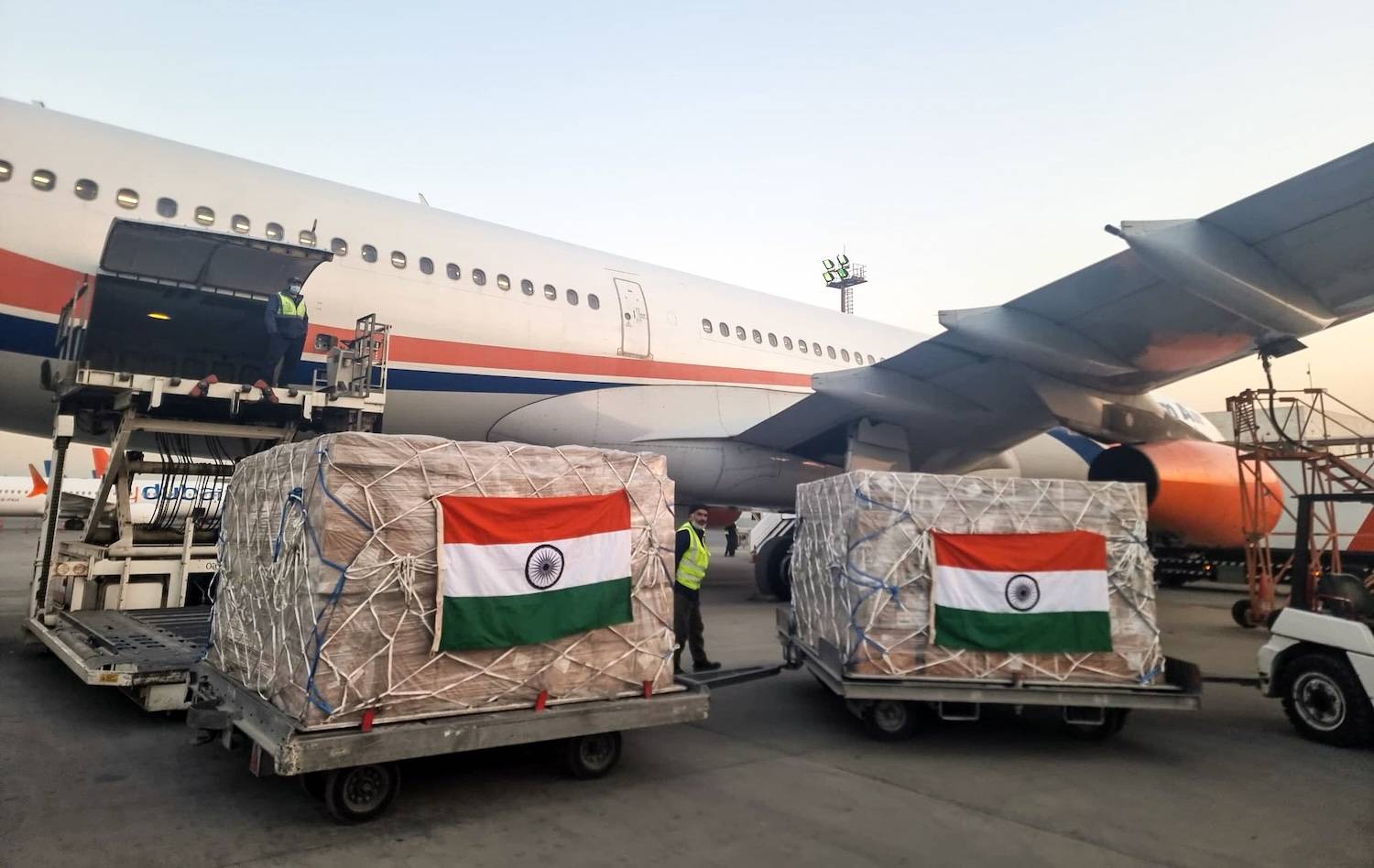
- Images shared by the MEA highlighted consignments being prepared and handed over, reinforcing India’s position as one of the earliest responders to Afghan crises in recent years.
India has intensified its humanitarian outreach to Afghanistan, dispatching a new consignment of 63,734 doses of Influenza and Meningitis vaccines to Kabul to meet urgent health requirements. The supplies form part of New Delhi’s continued commitment to bolster Afghanistan’s fragile public health system amid ongoing crises.
The latest shipment was confirmed by the Ministry of External Affairs (MEA), with spokesperson Randhir Jaiswal noting that India remains steadfast in supporting the Afghan population through consistent medical aid. The vaccines follow last week’s delivery of 73 tonnes of essential medicines, vaccines, and nutritional supplements—materials that Afghan health authorities say are critical for hospitals facing severe shortages.
India’s assistance over recent weeks has extended beyond medical intervention. In early November, New Delhi sent food aid for families still reeling from the devastating earthquake that struck northern Afghanistan. Images shared by the MEA highlighted consignments being prepared and handed over, reinforcing India’s position as one of the earliest responders to Afghan crises in recent years.
External Affairs Minister S. Jaishankar also spoke with Afghanistan’s acting Foreign Minister Amir Khan Muttaqi to express condolences for the lives lost in the 6.3 magnitude earthquake that hit the Balkh, Samangan, and Baghlan provinces. The disaster claimed at least 20 lives and left over 300 injured. Jaishankar assured Kabul that relief materials were already being distributed on the ground and that additional medical supplies were en route.
Beyond emergency response, both governments acknowledged the importance of maintaining diplomatic engagement. Discussions between Jaishankar and his Afghan counterpart touched on growing cultural and people-to-people links and broader regional developments.
For Afghanistan—still navigating conflict, natural disasters, and strained healthcare capacity—the sustained support from India marks a lifeline. As winter approaches and health risks rise, officials in Kabul say the continued supply of vaccines, food, and medical kits will play a crucial role in saving lives and stabilizing vulnerable communities.
India, meanwhile, has emphasized that its focus remains the Afghan people, underscoring that humanitarian cooperation will continue, regardless of political complexities in the region.