


AI Generated Summary
- At the heart of this change is a new initiative that is equipping women with skills, confidence and market access to build sustainable agri-based enterprises of their own.
- To ensure the training did not end at the classroom door, each participant was provided with starter materials — including mushroom cultivation bags and spawn — enabling them to begin production at home immediately.
- By focusing on skills, leadership and market linkages, PAMETI’s initiative is reshaping livelihoods and redefining the role of rural women in Punjab’s agrarian economy.
A quiet but powerful transformation is unfolding across Punjab’s countryside, where rural women are stepping out of traditional farm labour roles and into the world of entrepreneurship. At the heart of this change is a new initiative that is equipping women with skills, confidence and market access to build sustainable agri-based enterprises of their own.
Launched in October 2025, the Business Biba’z Project of the Punjab Agricultural Management and Extension Training Institute (PAMETI) aims to turn rural women into independent agri-preneurs. The programme focuses on practical training, enterprise development and financial literacy, enabling participants to move from subsistence work to income-generating businesses.
A recent three-day entrepreneurship development programme on mushroom cultivation, held at PAMETI’s Ludhiana campus, offered a glimpse into how this vision is being translated into action. Women from rural areas were trained in the cultivation of multiple mushroom varieties, including button, oyster, shiitake, milky and paddy mushrooms. The training combined classroom instruction with hands-on demonstrations, ensuring participants gained both technical know-how and real-world experience.
The curriculum went well beyond basic cultivation. Participants learned about compost and spawn preparation, casing, harvesting, processing and packaging, as well as value addition and marketing strategies. Special sessions on banking facilities, government schemes for women entrepreneurs and the role of self-help groups helped prepare them to navigate the business ecosystem with confidence.
To ensure the training did not end at the classroom door, each participant was provided with starter materials — including mushroom cultivation bags and spawn — enabling them to begin production at home immediately. This practical push was designed to encourage women to take their first steps towards establishing micro-enterprises.
PAMETI officials believe that such initiatives have a ripple effect far beyond individual incomes. “When women gain economic independence, they uplift entire communities. Empowerment is contagious,” said Dr Kanwar Barjinder Singh, Director of the institute.
Participants echoed this sentiment, describing the training as a turning point. One woman trainee said mushroom cultivation offered her a pathway to self-employment and financial stability. “Learning the techniques hands-on has given us the confidence to start on our own. With proper guidance and support, we now feel ready to become entrepreneurs,” she said.
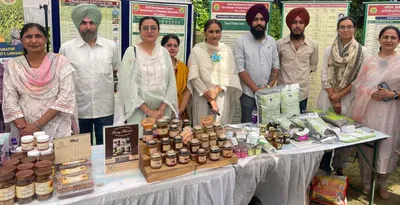
The Business Biba’z Project also extends its reach beyond mushrooms. It promotes value addition in agriculture by blending traditional skills with modern business practices. Women are being trained in business management, production and market analysis for products such as pickles, herbal teas, soaps, processed foods and handicrafts, helping them access wider and more profitable markets.
By focusing on skills, leadership and market linkages, PAMETI’s initiative is reshaping livelihoods and redefining the role of rural women in Punjab’s agrarian economy. What is emerging is not just a new generation of women entrepreneurs, but a more inclusive and resilient model of rural development.