
AI Generated Summary
- It is a transnational supremacist worldview that explicitly rejects democracy, individual liberty, and secular governance in favor of global submission to a rigid interpretation of Islamic law.
- “The spread of Islamist ideology, in some cases led by individuals and organizations associated with the Muslim Brotherhood,” she stated, “poses a fundamental threat to freedom and the foundational principles that underpin Western civilization.
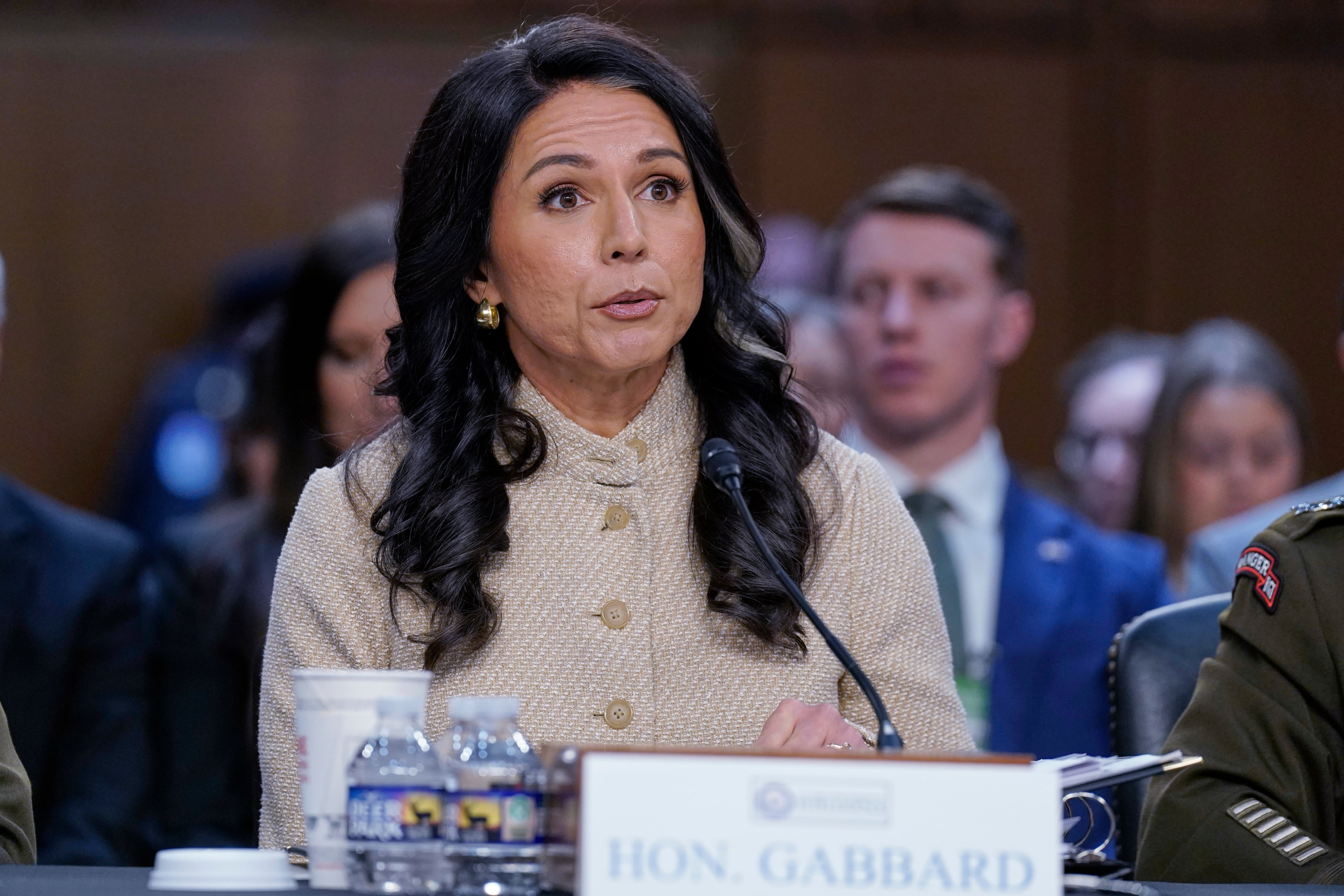
- At the Senate Select Committee on Intelligence’s Worldwide Threats hearing on March 18, 2026, the US Director of National Intelligence, Tulsi Gabbard, delivered a refreshingly candid assessment.
At the Senate Select Committee on Intelligence’s Worldwide Threats hearing on March 18, 2026, the US Director of National Intelligence, Tulsi Gabbard, delivered a refreshingly candid assessment. “The spread of Islamist ideology, in some cases led by individuals and organizations associated with the Muslim Brotherhood,” she stated, “poses a fundamental threat to freedom and the foundational principles that underpin Western civilization.” She added that Islamist groups use this ideology for recruiting, fundraising, and advancing the goal of an Islamist caliphate governed by Sharia. Gabbard praised President Trump’s designation of certain Muslim Brotherhood chapters as Foreign Terrorist Organizations (FTOs) as “a mechanism to secure Americans against this threat.”
She is right. Radical Islamist ideology — distinct from the faith practiced peacefully by the vast majority of Muslims worldwide — is not a distant problem confined to far-off deserts. It is a transnational supremacist worldview that explicitly rejects democracy, individual liberty, and secular governance in favor of global submission to a rigid interpretation of Islamic law. Its adherents believe that man-made laws, pluralism, and Western freedoms are idolatrous. This ideology fuels both spectacular terrorism and quiet “civilization jihad” — the patient erosion of host societies from within.
The evidence of its global reach is overwhelming and current. In 2025 alone, Islamic State-inspired attackers struck in New Orleans, where a truck-ramming attack on New Year’s Day killed 14 and injured 57. In Sydney, two IS-linked gunmen opened fire at a Hanukkah celebration on Bondi Beach, murdering 15. In Niger, IS militants massacred 44 worshippers in a mosque attack. Across Africa, IS and al-Qaeda affiliates remain the world’s deadliest terrorist forces, expanding into ungoverned spaces in the Sahel, Somalia, and beyond. In Europe, teenaged radicals inspired by the same ideology plot vehicle attacks, stabbings, and bombings — from Vienna train stations to German festivals. Even after losing its territorial caliphate, the Islamic State continues to inspire and direct operations from Afghanistan’s Khorasan Province to the streets of Western cities.
The Muslim Brotherhood network is central to this ecosystem. Founded in 1928 with the explicit motto “Allah is our objective; the Prophet is our leader; the Quran is our law; Jihad is our way,” the group’s Palestinian branch is Hamas — already a designated FTO since 1997. Its Egyptian, Jordanian, and Lebanese chapters have provided material support to Hamas, which unleashed the October 7, 2023 massacre that killed 1,200 Israelis and triggered cascading terror waves. These chapters operate under the guise of civic organizations while quietly advancing the same endgame: incremental Islamization. They fundraise, radicalize youth online, and embed in diaspora communities.
President Trump’s January 2026 designations of these specific Brotherhood branches as FTOs and Specially Designated Global Terrorists were long overdue. The move freezes assets, criminalizes material support, and disrupts the financial pipelines that sustain propaganda, recruitment, and proxy violence. It sends a clear signal: the United States will no longer treat ideological enablers of terrorism as legitimate charities or political movements.
Why does this ideology threaten global civilizations? Because its core tenets are incompatible with the Enlightenment values that built free societies. It demands blasphemy laws that silence critics — recall the Charlie Hebdo massacre or the fatwas against authors and cartoonists. It subjugates women through enforced veiling, unequal inheritance, and honor-based violence. It persecutes religious minorities, LGBT individuals, and apostates under Sharia penalties that include execution. In Europe, parallel societies have emerged where Sharia patrols operate and antisemitic incidents have surged since October 2023. Gabbard noted “increasing examples” on the continent; the pattern is visible from French banlieues to British grooming scandals to Swedish no-go zones.
This is not Islamophobia; it is pattern recognition. The threat is not every Muslim immigrant, but the ideology that radicalizes a dangerous minority and exploits open societies’ generosity. Ignoring it under the banner of “diversity” has cost lives. Countering it requires naming it plainly, as Gabbard did.
The FTO designations are a vital first step. They must be paired with vigilant domestic enforcement, online content moderation targeting recruitment, and cultural pushback that defends secular values without apology. Moderate Muslim reformers deserve support; supremacists do not. The alternative — continued denial — invites more New Orleans-style carnage, more European chaos, and the slow erosion of the freedoms that define the West.
Gabbard’s testimony was not alarmist. It was accurate. Radical Islamist ideology remains a global menace precisely because it is ideological. Until we confront the doctrine as aggressively as we confront its foot soldiers, the threat will persist. America, and the civilization it defends, cannot afford complacency.