


AI Generated Summary
- The agreement was formalised in the presence of Punjab Health Minister Dr Balbir Singh, with Director of Health and Family Welfare Dr Hitinder Kaur representing the state government and Sachin Shetty signing on behalf of the company.
- The initiative adds an aerial component to Punjab’s existing dengue surveillance and prevention efforts, with the results of the Patiala pilot expected to guide any wider deployment of the technology.
- Punjab is introducing drone-based mosquito control operations in Patiala as part of a targeted initiative to eliminate breeding sites that are difficult to reach through conventional spraying methods.
Punjab is introducing drone-based mosquito control operations in Patiala as part of a targeted initiative to eliminate breeding sites that are difficult to reach through conventional spraying methods.
The Punjab government has stepped up its dengue prevention efforts with a 60-day drone-assisted spraying programme aimed at controlling mosquito breeding in vulnerable areas of Patiala district.
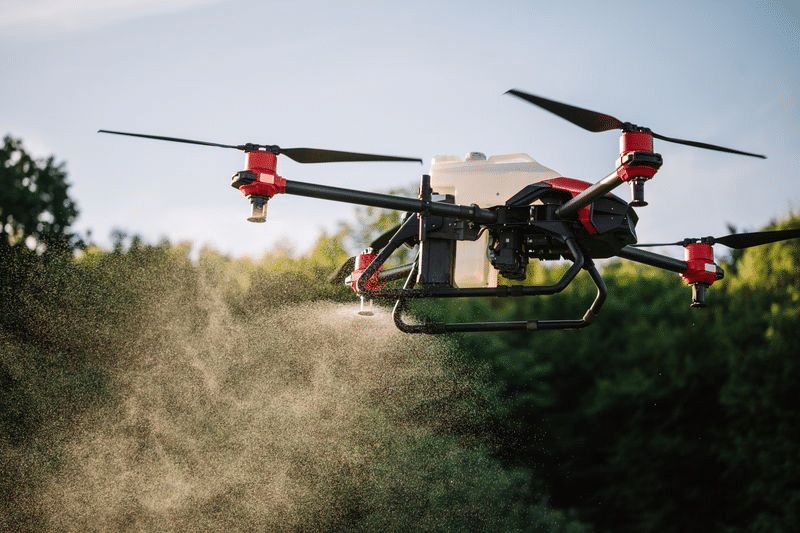
The initiative, undertaken by the Department of Health and Family Welfare, will use drones to apply approved larvicides in locations where conventional ground-level spraying is difficult or ineffective. These include stagnant water bodies, abandoned properties, rooftops and densely populated neighbourhoods.
To implement the programme, the department signed a Memorandum of Understanding (MoU) with Mumbai-based Kiran Corporation/SPV on Monday. The agreement was formalised in the presence of Punjab Health Minister Dr Balbir Singh, with Director of Health and Family Welfare Dr Hitinder Kaur representing the state government and Sachin Shetty signing on behalf of the company.
The programme marks a shift towards more proactive mosquito control, with authorities seeking to identify and eliminate breeding grounds before they contribute to fresh dengue infections.
Dr Singh emphasised that preventing mosquito reproduction, rather than responding only after infections emerge, would remain central to the state’s public health strategy. He noted that several potential breeding sites, particularly those located in inaccessible or congested areas, often escape routine surveillance and treatment.
The use of drones is expected to help health teams reach such locations more effectively while enabling targeted application of mosquito-control substances.
Patiala has been selected for the first phase of the operation because of its relatively high dengue burden in 2025. The district will serve as the initial implementation area before authorities consider extending the programme to other parts of Punjab.
The project will combine aerial spraying with daily field assessments and scientific monitoring of mosquito populations. Surveys will measure changes in larval and adult mosquito density to determine the effectiveness of the intervention.
The Health Department will oversee the identification of priority locations, secure necessary permissions and coordinate with local authorities. Technical supervision will also be provided to ensure that spraying operations follow prescribed guidelines.
The minister also highlighted the contribution of Punjab’s existing dengue prevention measures, particularly the weekly ‘Har Shukarvar Dengue Te Vaar’ campaign. The initiative, supported by household inspections, community participation and efforts to remove stagnant water, has been credited by the state government with reducing dengue infections.
According to Dr Singh, dengue-related fatalities have fallen to zero in the state this year, reflecting the impact of sustained surveillance and public awareness efforts.
Importantly, the drone-based operation will be carried out without any financial expenditure from the state government. Officials confirmed that the arrangement does not involve financial transactions from the public exchequer.
Once the 60-day programme concludes, the department and its implementation partner will conduct a joint evaluation within 10 days. The assessment will examine reductions in mosquito breeding and determine whether similar operations can be introduced in other districts.
The initiative adds an aerial component to Punjab’s existing dengue surveillance and prevention efforts, with the results of the Patiala pilot expected to guide any wider deployment of the technology.