


AI Generated Summary
- In a significant counter-espionage operation, the Special Cell of Delhi Police has dismantled a covert surveillance and terror-linked network allegedly backed by Pakistan’s intelligence agency, the Inter-Services Intelligence (ISI).
- These individuals were reportedly involved in reconnaissance missions, capturing photographs and videos of sensitive Army and paramilitary sites, and aiding in the establishment of surveillance networks.
- According to Additional Commissioner of Police Pramod Singh Kushwah, the first phase of the crackdown led to the arrest of six individuals—three each from Delhi and Punjab.
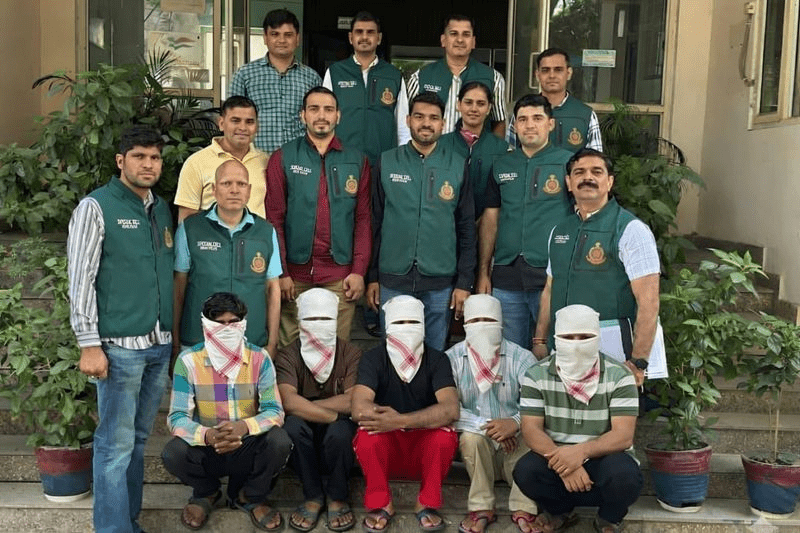
In a significant counter-espionage operation, the Special Cell of Delhi Police has dismantled a covert surveillance and terror-linked network allegedly backed by Pakistan’s intelligence agency, the Inter-Services Intelligence (ISI). Eleven individuals with suspected links to the banned outfit Babbar Khalsa International (BKI) have been arrested, officials confirmed on Friday.
The operation, carried out in two phases, exposed a sophisticated espionage module engaged in tracking sensitive installations and relaying real-time intelligence across the border. Authorities revealed that the accused had installed surveillance equipment, including solar-powered CCTV cameras, near critical defence and security locations.
According to Additional Commissioner of Police Pramod Singh Kushwah, the first phase of the crackdown led to the arrest of six individuals—three each from Delhi and Punjab. Investigators recovered nine strategically placed cameras that were transmitting live footage to handlers based in Pakistan through mobile applications.
“These devices were positioned to monitor key areas, including establishments linked to the Army. The feeds were being accessed remotely by operatives across the border,” Kushwah said.
Alongside the surveillance equipment, police seized a cache of weapons, including three PX5 pistols, a country-made firearm, and 24 live cartridges. Financial investigations revealed that the group used digital payment platforms, including UPI, to fund their operations, with money allegedly sourced from illegal arms trafficking.
The second phase of the operation was triggered by inputs from Military Intelligence, leading to the arrest of five more suspects in Punjab. These individuals were reportedly involved in reconnaissance missions, capturing photographs and videos of sensitive Army and paramilitary sites, and aiding in the establishment of surveillance networks.
Officials described the module as part of a broader nexus involving foreign handlers, criminal gangs, and terror operatives. Indian recruits were allegedly enticed with monetary incentives derived from illicit activities such as drug and arms smuggling.
“The accused were tasked with installing surveillance systems, gathering intelligence on strategic locations, and providing logistical support for potential attacks,” Kushwah added.
Investigators also uncovered the use of SIM cards obtained through forged identities to operate the surveillance systems and transmit classified data. Digital evidence recovered during the raids—including images, videos, and geolocation data—has further strengthened the case.
The probe has also revealed a structured arms supply chain, with foreign-made weapons being smuggled into India and distributed among operatives on instructions from handlers in Pakistan. The proceeds from these illegal activities were reportedly reinvested to sustain and expand the network.
Perhaps most alarming, officials disclosed that the module had begun planning targeted attacks on security establishments, including possible grenade assaults. Authorities believe that swift intervention by the Special Cell may have prevented a major security breach.
The arrests mark a crucial breakthrough in ongoing efforts to counter cross-border terrorism and dismantle networks operating within India. Further investigations are underway to identify additional links and collaborators tied to the espionage ring.