


AI Generated Summary
- The initiatives come in the backdrop of preparations to commemorate the 350th martyrdom anniversary of Guru Tegh Bahadur, but officials say the broader objective is to ensure that Sikh history and values find sustained space within the education system rather than remaining confined to anniversaries.
- Adding to the ambience, a newly installed speaker system now carries live kirtan from the sanctum all the way to the parking area, allowing devotees to remain immersed in prayer throughout their walk.
- The Punjab government has rolled out a set of measures aimed at reconnecting citizens—particularly young students—with the state’s rich Sikh heritage, blending education, symbolism and public space redesign in an effort to renew historical awareness.
The Punjab government has rolled out a set of measures aimed at reconnecting citizens—particularly young students—with the state’s rich Sikh heritage, blending education, symbolism and public space redesign in an effort to renew historical awareness.
The initiatives come in the backdrop of preparations to commemorate the 350th martyrdom anniversary of Guru Tegh Bahadur, but officials say the broader objective is to ensure that Sikh history and values find sustained space within the education system rather than remaining confined to anniversaries.
As part of this push, Education Minister Harjot Bains has announced that the Punjab School Education Board will organise special sessions in government schools from December 22 to 24. The short modules—lasting about 15 to 20 minutes—will focus on the courage and sacrifices of Guru Gobind Singh and his four sons, remembered collectively as the Chaar Sahibzaade. Through storytelling and historical narration, students will be introduced to key moments such as the departure from Anandgarh Sahib and the events leading up to the tragedy of Sirhind.
Officials say the sessions are designed to go beyond rote learning, using examples and narratives to help students understand the ethical and moral foundations of Sikh history. The intent, according to the minister, is to create a deeper emotional and historical connection rather than treating these figures as distant names in textbooks.
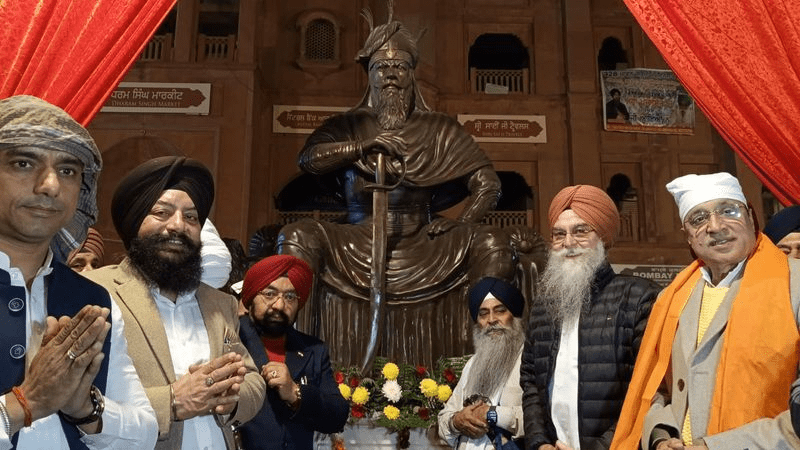
Parallel to these educational efforts, Amritsar’s historic precinct has also seen a visible transformation. The Heritage Street leading to the Golden Temple—officially known as Sri Harmandir Sahib—has been remodelled to reflect Sikh martial and spiritual traditions. Statues of dancers that once lined the stretch have been replaced with imposing sculptures of Sikh warriors Hari Singh Nalwa and Banda Singh Bahadur, now standing at the entrance to the corridor.
The makeover was funded through ₹3 crore from the MPLAD allocation of Dr Vikramjit Singh Sahney, who said the project was conceived to enhance the experience of pilgrims. Adding to the ambience, a newly installed speaker system now carries live kirtan from the sanctum all the way to the parking area, allowing devotees to remain immersed in prayer throughout their walk.
Yet, not everyone views these developments solely through the lens of heritage conservation. Historians note that public statues and symbolic gestures have often served multiple purposes in India’s political and cultural landscape. Figures such as Jawaharlal Nehru, Maharaja Ranjit Singh and Mahatma Gandhi have periodically resurfaced in public memory largely around anniversaries, raising questions about whether remembrance is continuous or selectively invoked.
Heritage experts in Punjab argue that while new installations draw attention, the state’s existing historical structures are in far greater need of care. From Maharaja Ranjit Singh’s summer palace and the Kos Minars to the baradari and the partially restored statue of the Sikh ruler inside Rambagh, many landmarks remain neglected. Even initiatives such as the light-and-sound show chronicling Punjab’s history from the 16th century onwards have failed to attract audiences.
The consensus among conservationists is clear: symbolism alone cannot sustain heritage. Without proper maintenance, public engagement and meaningful storytelling, even the most well-intentioned projects risk becoming static displays. As Punjab invests in remembering its past, the challenge will be to ensure that memory is supported by preservation—and that history continues to speak to those meant to inherit it.