


AI Generated Summary
- The Central Sikh Museum, located within the Golden Temple complex in Amritsar, has inducted portraits of former Supreme Court judge Justice Kuldip Singh, Dal Khalsa leader Gajinder Singh and Gurdev Singh Debu, recognising their contributions to Sikh history, rights and community affairs.
- He also remembered Gurdev Singh Debu, describing his death in the context of the period of government repression faced by sections of the Sikh community.
- Referring to Gajinder Singh, Gargaj said the Dal Khalsa leader had remained steadfast in his commitment to Sikh principles despite spending a considerable part of his life in exile.
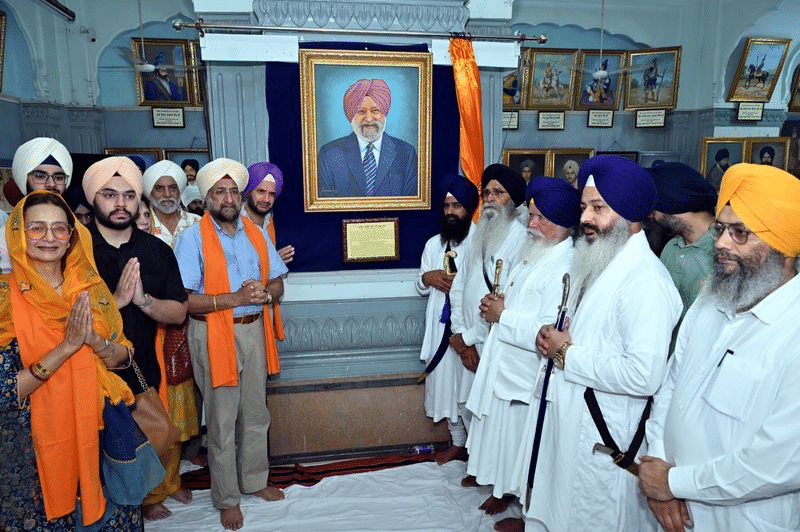
The Central Sikh Museum, located within the Golden Temple complex in Amritsar, has inducted portraits of former Supreme Court judge Justice Kuldip Singh, Dal Khalsa leader Gajinder Singh and Gurdev Singh Debu, recognising their contributions to Sikh history, rights and community affairs.
The portraits were formally unveiled on Saturday following a religious ceremony attended by prominent Sikh religious leaders, representatives of the Shiromani Gurdwara Parbandhak Committee (SGPC), family members and activists.
Among those present were Akal Takht acting Jathedar Giani Kuldeep Singh Gargaj, SGPC president Harjinder Singh Dhami, Takht Damdama Sahib Jathedar Tek Singh and Golden Temple Granthi Giani Baljit Singh.
Speaking on the occasion, Gargaj highlighted the contributions of Justice Kuldip Singh, particularly his efforts to uphold justice and draw attention to alleged human rights violations involving Sikh youths. He said the former judge had consistently advocated truth, accountability and the protection of people’s fundamental rights.
SGPC president Harjinder Singh Dhami also paid tribute to Justice Singh, recalling the significance of his judicial interventions in matters relating to Punjab and civil liberties.
Dhami drew attention to Justice Singh’s tenure as chairman of the Delimitation Commission, during which several Assembly and parliamentary constituencies in Punjab were named after locations associated with the visits of Sikh Gurus. He described the initiative as an important contribution towards preserving the state’s religious and historical heritage.
Justice Singh’s son, senior advocate Paramjit Singh Patwalia, was felicitated during the ceremony in recognition of his father’s legacy.
The occasion also saw tributes to Gajinder Singh and Gurdev Singh Debu, whose portraits were installed alongside that of the former judge.
Referring to Gajinder Singh, Gargaj said the Dal Khalsa leader had remained steadfast in his commitment to Sikh principles despite spending a considerable part of his life in exile.
He also remembered Gurdev Singh Debu, describing his death in the context of the period of government repression faced by sections of the Sikh community.
The installation of the three portraits adds to the Central Sikh Museum’s collection documenting personalities and events associated with Sikh religious, political and social history.
Situated within the Golden Temple complex, the museum serves as an institution dedicated to preserving the community’s historical memory through portraits, artefacts and exhibits commemorating figures considered significant in Sikh history.
The ceremony brought together religious authorities, community representatives and relatives of those honoured, reflecting the SGPC’s continuing efforts to document and commemorate individuals associated with Sikh history and identity.