


AI Generated Summary
- The year-long events to commemorate the 650th birth anniversary of Guru Ravidas (also known as Sant Ravidas or Bhagat Ravidas) have officially begun, marking a significant milestone in honoring the life, teachings, and legacy of this revered 15th-century saint, poet, and social reformer.
- The celebrations, spanning from early 2026 through to the culminating 650th Prakash Purab (birth anniversary) in February 2027, aim to spread his timeless teachings of equality, human dignity, and devotion through a series of spiritual, cultural, and community-focused programs.
- A range of cultural, educational, and spiritual activities designed to reach diverse audiences, promoting his ideals of social justice, compassion, and spiritual equality on a broad scale.
The year-long events to commemorate the 650th birth anniversary of Guru Ravidas (also known as Sant Ravidas or Bhagat Ravidas) have officially begun, marking a significant milestone in honoring the life, teachings, and legacy of this revered 15th-century saint, poet, and social reformer.
Guru Ravidas, born around 1377 CE in Varanasi (then part of the Delhi Sultanate, now Uttar Pradesh), is celebrated for his profound contributions to the Bhakti movement. His devotional hymns, included in the Guru Granth Sahib, emphasize equality, devotion to one God, rejection of caste distinctions, compassion, and the dignity of labor. His message of social harmony and spiritual unity continues to inspire millions across communities.
The celebrations, spanning from early 2026 through to the culminating 650th Prakash Purab (birth anniversary) in February 2027, aim to spread his timeless teachings of equality, human dignity, and devotion through a series of spiritual, cultural, and community-focused programs. These initiatives are guided by saints, religious leaders, and community elders to ensure reverence and inclusivity.
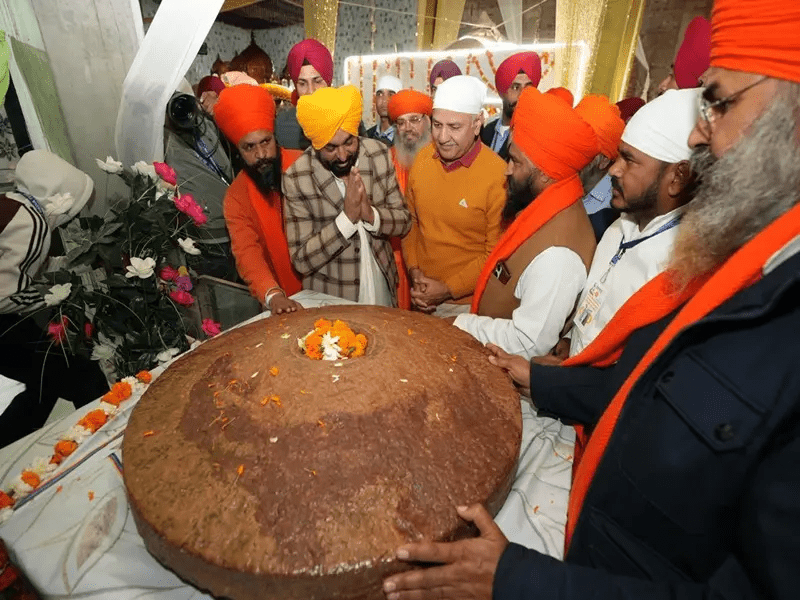
The events kicked off in early February 2026 at the sacred site of Khuralgarh Sahib in Hoshiarpur district, Punjab—a place historically linked to Guru Ravidas. The inaugural program featured an Akhand Path (continuous, uninterrupted recitation of the Guru Granth Sahib), a deeply spiritual observance that set a devotional tone for the year ahead. This three-day state-level event drew devotees and highlighted the beginning of widespread commemorations.
Key highlights of the year-long calendar include:
- Monthly and village-level programs starting from late February 2026, focusing on Guru Ravidas’s life, education, travels, and philosophy. These will be organized across villages in Punjab and beyond, encouraging local participation and reflection on his teachings.
- Shobha Yatras (processions) planned from significant locations such as Varanasi (his birthplace), Faridkot, Bathinda, and Jammu, converging at Khuralgarh Sahib to symbolize unity and devotion.
- Special events in November 2026, including Katha Kirtan Darbar (discourses and devotional singing) and Begampura programs at Khuralgarh Sahib. Begampura, the ideal city of equality envisioned in Guru Ravidas’s famous hymn—”Begumpura shehar ko nau”—represents a society free from sorrow, fear, and discrimination.
- A range of cultural, educational, and spiritual activities designed to reach diverse audiences, promoting his ideals of social justice, compassion, and spiritual equality on a broad scale.
The year builds toward the grand finale in February 2027, when the 650th Prakash Purab will be observed with unprecedented fervor, reflecting on how Guru Ravidas’s philosophy continues to guide humanity toward a more equitable world.
These commemorations serve as a reminder of his enduring relevance: in an era still grappling with divisions, his call for unity, dignity for all, and devotion as the path to liberation resonates deeply. Devotees and communities worldwide are encouraged to participate, reflect, and carry forward the light of his teachings through acts of kindness, equality, and spiritual practice.