


AI Generated Summary
- A prominent gurdwara in Dhotian commemorates the sacrifice of Baba Bir Singh Naurangabad, the revered martyr linked to Maharaja Ranjit Singh, who laid down his life in defence of the Sikh empire.
- Following the Maharaja’s death, Dhotian reportedly served as a base for Baba Bir Singh’s operations, and remnants of that era can still be found in and around the village.
- Alongside Gurdwara Baba Raja Ram, the village also houses the Mata Chintpurni temple and a church, reflecting the presence of Sikh, Hindu and Christian families living side by side.
Nestled along the Sheron–Jamarai road in Tarn Taran district, Dhotian village stands as a living chronicle of Punjab’s layered history and enduring cultural spirit. Home to over 12,000 residents and spread across nearly 3,720 acres, the village has long been recognised for its religious importance, agricultural strength and tradition of social harmony.
Agriculture remains the backbone of Dhotian’s economy, with most families engaged in cultivating wheat and paddy. For many years, sugarcane was also a major crop, particularly when the Co-operative Sugar Mill at Sheron was operational. Its closure about a decade ago forced farmers to abandon sugarcane cultivation, a shift that is still keenly felt. Villagers continue to press for the mill’s revival, hoping it could once again provide stability and better returns for growers.
Dhotian’s historical roots are said to stretch back to the 15th century, when three families from Gill village in Ludhiana district migrated and established settlements in what are now Dhotian, Gandiwind and Sabhra. Over the centuries, the village has grown into a place of deep spiritual significance. Local belief holds that Guru Amar Das, the third Sikh Guru, once visited the area, while Hindu tradition associates the village with a visit by Lord Rama.
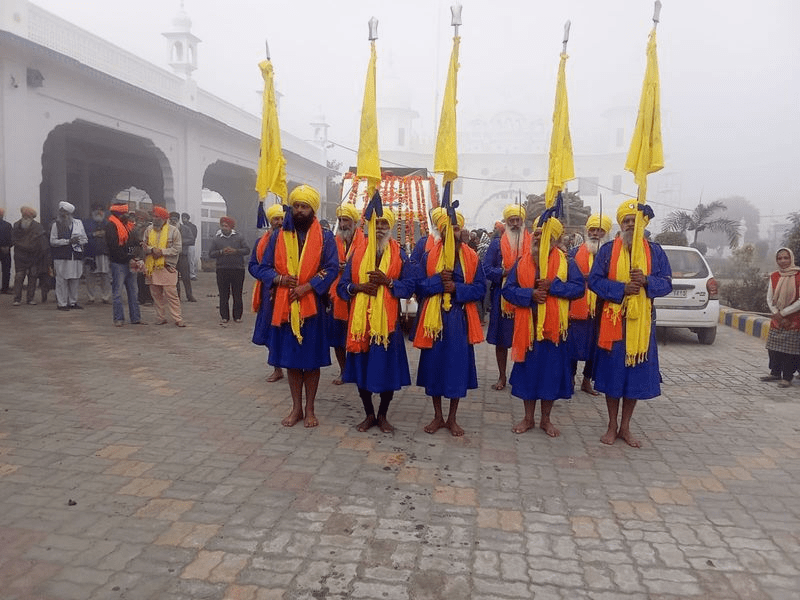
A prominent gurdwara in Dhotian commemorates the sacrifice of Baba Bir Singh Naurangabad, the revered martyr linked to Maharaja Ranjit Singh, who laid down his life in defence of the Sikh empire. Following the Maharaja’s death, Dhotian reportedly served as a base for Baba Bir Singh’s operations, and remnants of that era can still be found in and around the village.
Religious diversity forms a defining feature of Dhotian. Alongside Gurdwara Baba Raja Ram, the village also houses the Mata Chintpurni temple and a church, reflecting the presence of Sikh, Hindu and Christian families living side by side. Every year during the Hindu month of Sawan, a fair is organised at the temple, drawing devotees from surrounding areas.
Despite its rural setting, Dhotian has evolved into a bustling commercial centre. From street food vendors to jewellery shops, the village offers amenities comparable to those of a small town. Recognising its central location among neighbouring villages such as Lalpura, Warana, Dugri, Failoke, Kot Muhammad Khan and Tur, the state government established a ‘focal point’ here in 1977-78. Over time, however, neglect has reduced it to little more than a memory.
Migration has also shaped Dhotian’s modern identity. Many young people from the village have settled abroad, yet ties to their hometown remain strong. Contributions in the form of donations and development support continue to flow back, reinforcing a bond that distance has not broken.
In Dhotian, the past and present exist in quiet conversation — in its fields, its shrines, and its closely knit community. It is this blend of heritage, faith and resilience that gives the village its enduring character.
