


AI Generated Summary
- The Indian Air Force’s only recipient of the Param Vir Chakra remains a symbol of fearless resolve, a reminder that courage in combat is not measured by numbers but by the will to stand firm when danger is at its peak.
- It lives on in the ethos of the Indian Air Force, in the quiet resolve of those who take to the skies knowing that, when the moment demands it, courage must rise higher than fear.
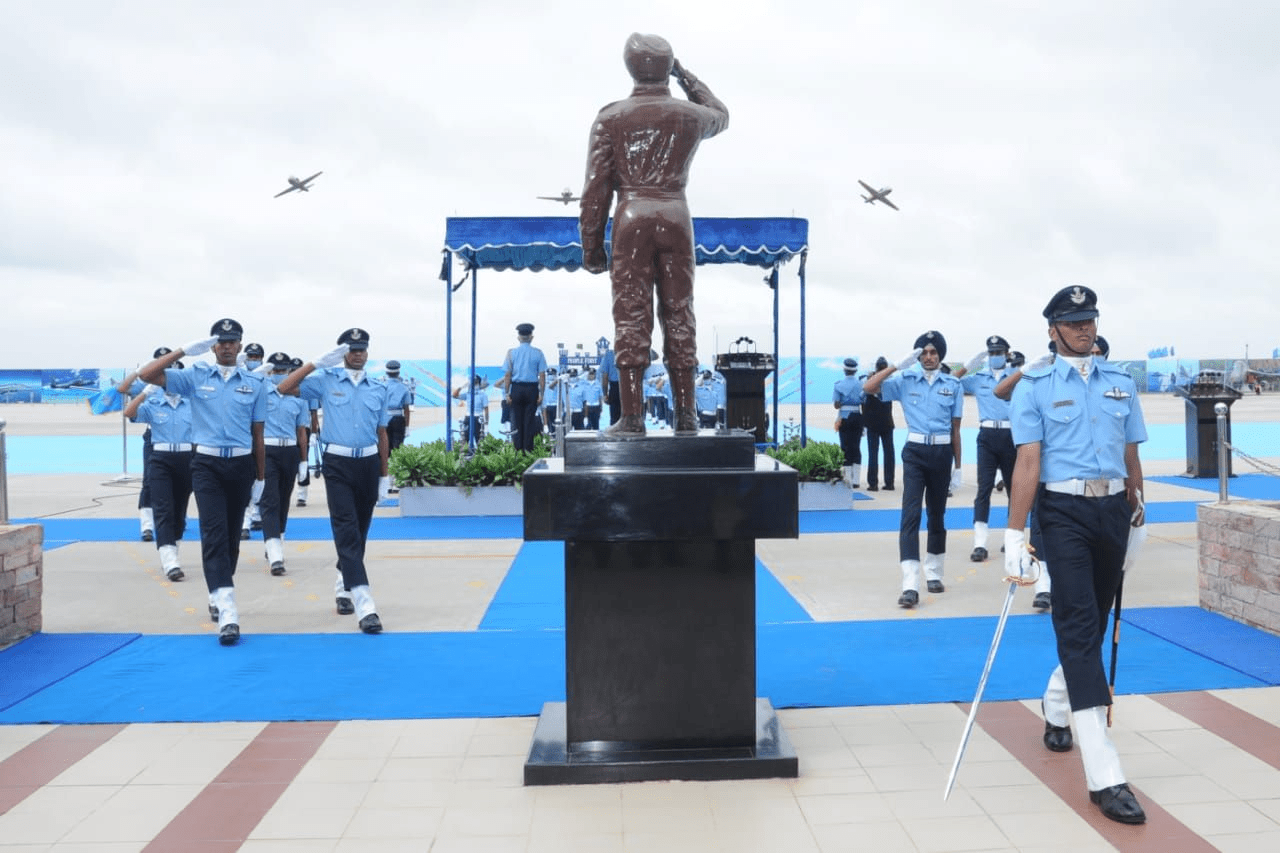
- At the Air Force Academy in Dundigal near Hyderabad, a prominent building overlooking the parade ground and runway is named in his honour, with his statue standing in front.
More than five decades after the guns fell silent in the winter of 1971, the story of Flying Officer Nirmal Jit Singh Sekhon continues to resonate far beyond the pages of military history. The Indian Air Force’s only recipient of the Param Vir Chakra remains a symbol of fearless resolve, a reminder that courage in combat is not measured by numbers but by the will to stand firm when danger is at its peak.
Sekhon’s name is inseparable from one of the most dramatic aerial encounters of the 1971 India–Pakistan War. On December 14 that year, Srinagar airfield came under attack from Pakistani Sabre jets. With the base under threat, Sekhon scrambled in his diminutive Gnat fighter, fully aware that the odds were stacked against him. Outnumbered six to one, he nevertheless chose to engage the enemy rather than yield the skies.
In the dogfight that followed, Sekhon displayed extraordinary flying skill and calm under fire. He managed to score hits on two of the attacking aircraft, disrupting the assault even as his own fighter took damage. Alone and heavily outmatched, he continued to manoeuvre at treetop height, pressing the fight until his aircraft was finally shot down. Sekhon was killed in action, but his stand ensured precious time for the defence of the airfield.
Military leaders say that while air combat has evolved dramatically since the 1970s, the essence of Sekhon’s example remains timeless. His actions, they note, go beyond tactics or technology. They speak instead of a mindset — of selfless service and the willingness to confront mortal danger without hesitation.
Born in 1945 in Isewal village near Ludhiana, Sekhon grew up in an environment shaped by the Air Force; his father served as a Master Warrant Officer. Today, his legacy is firmly etched into both local memory and national consciousness. A statue stands in his native village, a marine tanker bears his name, and a commemorative postal stamp carries his likeness across the country.
Within the Air Force itself, Sekhon’s presence is deeply felt. At the Air Force Academy in Dundigal near Hyderabad, a prominent building overlooking the parade ground and runway is named in his honour, with his statue standing in front. Newly commissioned officers march past it each term, reminded that the uniform they wear carries a tradition forged by acts of supreme sacrifice.
Veteran pilots recall that Sekhon’s story is frequently recounted at Srinagar airbase, where his final sortie took place. For young cadets and seasoned airmen alike, it serves as a touchstone — an account of how one pilot, flying a small fighter against overwhelming odds, chose duty over survival.
The official citation for Sekhon’s Param Vir Chakra captures the essence of his final moments: a lone pilot engaging the enemy in unequal combat, holding his own until sheer numbers prevailed. It describes a standard of heroism and determination “above and beyond the call of duty,” setting a benchmark for generations to follow.
Half a century on, Nirmal Jit Singh Sekhon’s legacy is not confined to memorials or citations. It lives on in the ethos of the Indian Air Force, in the quiet resolve of those who take to the skies knowing that, when the moment demands it, courage must rise higher than fear.