


AI Generated Summary
- In the limestone hills of the Salt Range near Kallar Kahar in Chakwal district, Punjab, the Cave of Baba Farid (also known as his chilla gah) stands as a quiet testament to one of South Asia’s most beloved Sufi mystics.
- In an age of haste, this hidden gem in Chakwal reminds us of the enduring power of inner silence and the sweet legacy of a saint who sweetened hearts across Punjab and beyond.
- About a kilometre from the shimmering saltwater lake of Kallar Kahar, this modest cavern draws trekkers and devotees alike along a winding, six-foot-wide limestone path that climbs a moderate hill.
In the limestone hills of the Salt Range near Kallar Kahar in Chakwal district, Punjab, the Cave of Baba Farid (also known as his chilla gah) stands as a quiet testament to one of South Asia’s most beloved Sufi mystics. About a kilometre from the shimmering saltwater lake of Kallar Kahar, this modest cavern draws trekkers and devotees alike along a winding, six-foot-wide limestone path that climbs a moderate hill.
Hazrat Baba Fariduddin Ganjshakar (1179–1266), revered as Baba Farid or Ganj-e-Shakar (“Treasure of Sugar”), was a 13th-century Punjabi Sufi saint and poet of the Chishti order. His verses, infused with themes of divine love and humility, grace both Muslim and Sikh scriptures, including the Guru Granth Sahib. Legend holds that during his wandering years of spiritual seeking, Baba Farid retreated to this isolated cave for chilla—a rigorous 40-day period of seclusion, prayer, and fasting. Here, amid the stark beauty of mud-and-limestone cliffs, he immersed himself in remembrance of the Divine, far from worldly distractions.
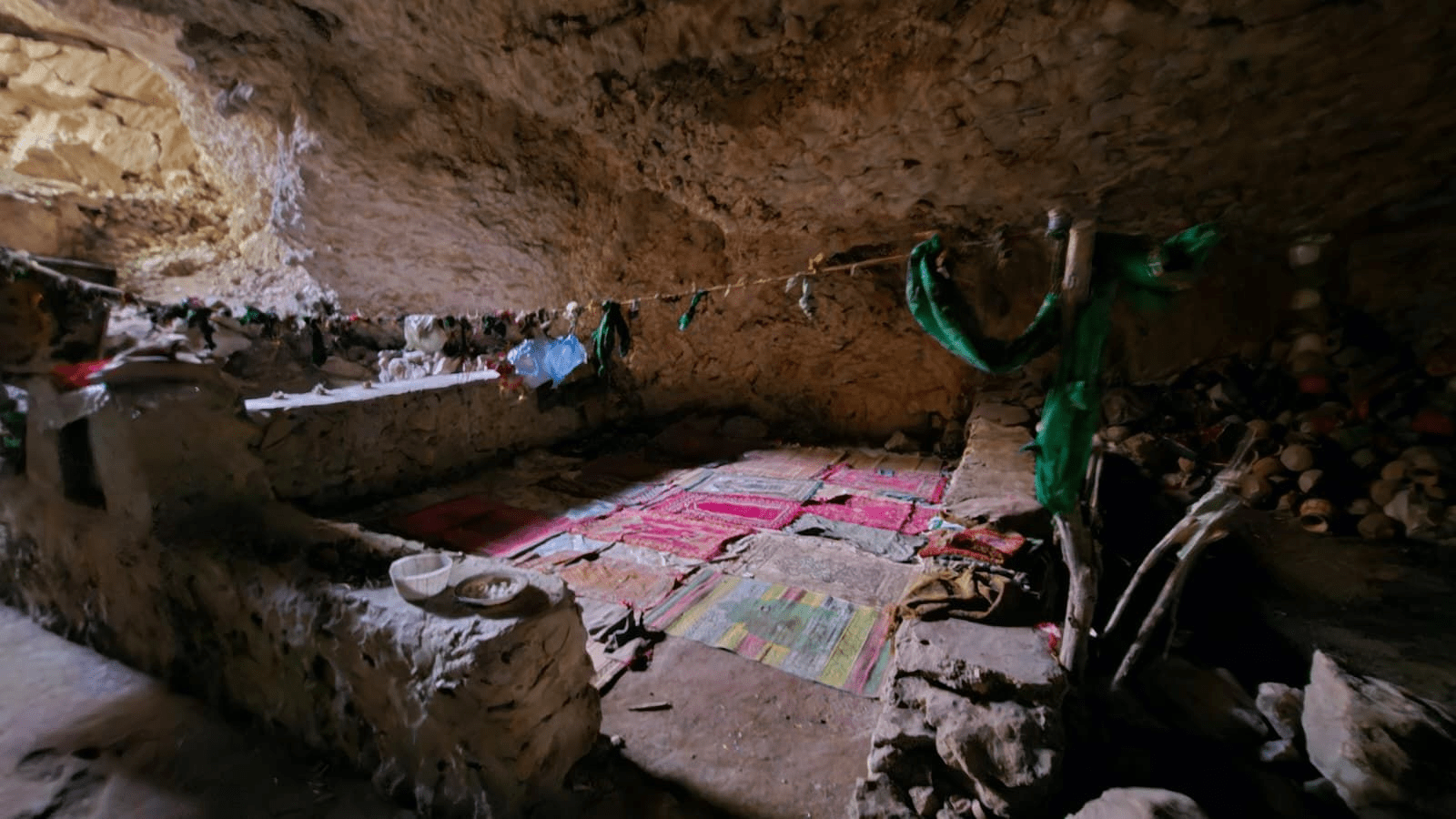
Today, the site retains an aura of serene spirituality. A small platform shaded by an old jujube tree greets visitors at the entrance, where a steel vessel often simmers with wood-fired langar. Inside, the passage narrows before opening into chambers adorned with simple hanging decorations. Devotees leave clay pots as offerings, and a prayer niche marks the space where contemplation once reigned. On clear days, sweeping views of the lake, the curved motorway, and the Chakwal hills unfold below, blending natural grandeur with sacred stillness. A malang (wandering mystic) may recite Baba Farid’s poignant shabads, their echoes filling the cave and stirring deep emotion across faiths.
During Muharram or special gatherings, pilgrims from Pakpattan—home to Baba Farid’s main shrine—make the journey, continuing centuries-old traditions of shared sweet rice langar under the trees. The experience feels timeless: a light breeze from the lake, fluttering flags on hilltop trees, and a sense of unity that transcends religious boundaries.
For those willing to make the short trek, the Cave of Baba Farid offers more than history—it delivers a profound pause. In an age of haste, this hidden gem in Chakwal reminds us of the enduring power of inner silence and the sweet legacy of a saint who sweetened hearts across Punjab and beyond.