


AI Generated Summary
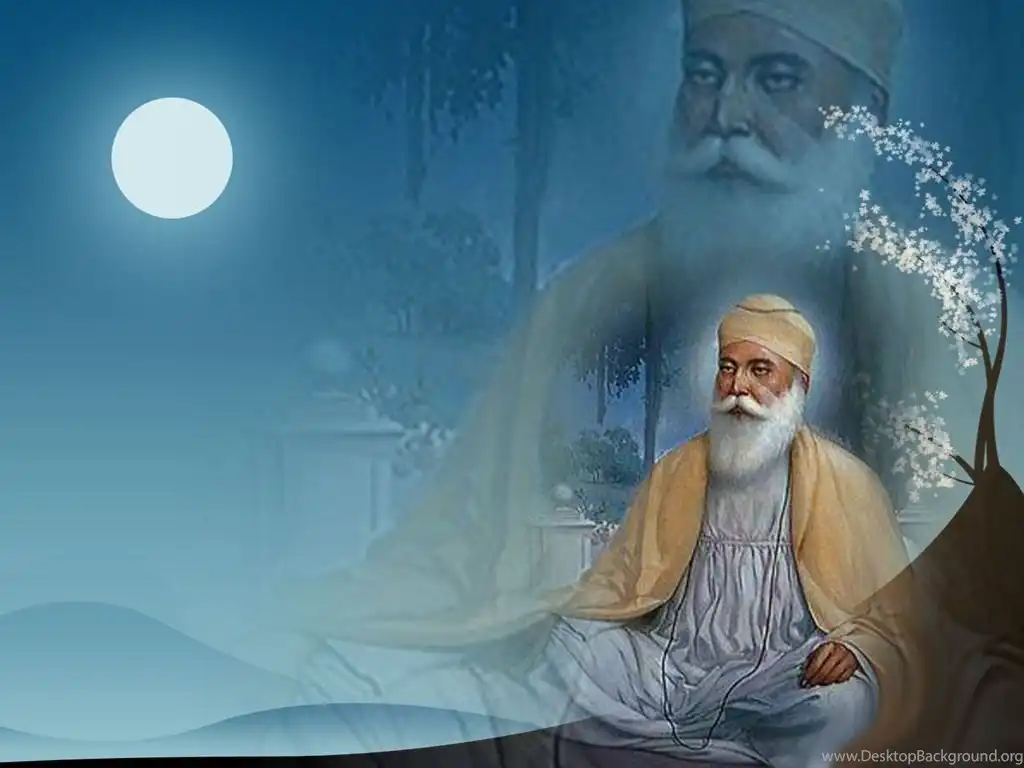
- As millions of devotees across the world prepare to celebrate Guru Nanak Jayanti on November 24, the occasion offers an opportunity not merely to commemorate the birth of the founder of Sikhism, but to reflect upon the extraordinary spiritual and social transformation he initiated more than five centuries ago.
- More than five centuries after Sri Guru Nanak Dev Ji walked the earth, his teachings on equality, compassion, honest living and the oneness of humanity remain a profound answer to many of the challenges confronting the modern world.
- In an age marked by religious divisions, rigid social hierarchies and political uncertainty, Sri Guru Nanak Dev Ji articulated a vision of humanity that transcended the boundaries of caste, creed, gender and geography.
More than five centuries after Sri Guru Nanak Dev Ji walked the earth, his teachings on equality, compassion, honest living and the oneness of humanity remain a profound answer to many of the challenges confronting the modern world.
As millions of devotees across the world prepare to celebrate Guru Nanak Jayanti on November 24, the occasion offers an opportunity not merely to commemorate the birth of the founder of Sikhism, but to reflect upon the extraordinary spiritual and social transformation he initiated more than five centuries ago.
In an age marked by religious divisions, rigid social hierarchies and political uncertainty, Sri Guru Nanak Dev Ji articulated a vision of humanity that transcended the boundaries of caste, creed, gender and geography. His message was remarkably simple, yet revolutionary in its implications: there is one Divine reality, and all human beings are equal manifestations of that creation.
Today, in a world increasingly divided by identities, ideologies and competing interests, that message carries a renewed urgency.
A spiritual revolutionary ahead of his time
Born in 1469 in Rai Bhoi Ki Talwandi, now known as Nankana Sahib in present-day Pakistan, Guru Nanak Dev Ji displayed a deep spiritual inclination from an early age. He questioned ritualistic practices, challenged inherited prejudices and sought a deeper understanding of the relationship between human beings and the Divine.
His teachings emerged at a time when religious identity often determined an individual's place in society. Social hierarchies were deeply entrenched, and access to spiritual knowledge was frequently mediated by established religious institutions.
Guru Nanak Dev Ji challenged these conventions by emphasising that spiritual realisation was accessible to everyone, irrespective of social standing or religious affiliation.
At the heart of his philosophy was Ik Onkar — the affirmation of one ultimate Divine reality. It was not merely a theological declaration, but also the foundation of a social and ethical worldview. If all existence emanates from the same source, discrimination against another human being becomes fundamentally incompatible with spiritual understanding.
Journeys that transcended borders
Guru Nanak Dev Ji's spiritual mission was not confined to a particular community or geographical region. Through his extensive journeys, traditionally known as Udasis, he travelled across the Indian subcontinent and, according to Sikh tradition, to regions beyond it, engaging with people of diverse faiths, cultures and philosophical traditions.
Accompanied on many of these journeys by Bhai Mardana, a Muslim musician and his devoted companion, Guru Nanak Dev Ji communicated through dialogue, poetry, music and reflection.
The companionship between the two remains a powerful illustration of interfaith harmony. Their association demonstrated that spiritual fellowship could transcend inherited religious identities without requiring individuals to abandon their cultural backgrounds.
Rather than seeking to impose beliefs, Guru Nanak Dev Ji encouraged questioning, introspection and meaningful engagement. His encounters with religious scholars, ascetics, rulers and ordinary people reflected an approach rooted in dialogue rather than confrontation.
At a time when contemporary societies are struggling with polarisation and diminishing spaces for constructive conversation, this aspect of his legacy assumes particular significance.
Spirituality beyond ritual
One of Guru Nanak Dev Ji's most enduring contributions was his understanding of spirituality as something inseparable from everyday life.
He did not advocate withdrawing from the world in pursuit of spiritual liberation. Instead, he emphasised the possibility of attaining spiritual fulfilment while participating responsibly in family, society and economic life.
His teachings are widely encapsulated in three foundational principles:
- Naam Japna: Remembering the Divine and cultivating spiritual awareness.
- Kirat Karni: Earning one's livelihood through honest and ethical means.
- Vand Chhakna: Sharing one's earnings and resources with others, particularly those in need.
Together, these principles offer a framework for harmonising individual aspirations with collective well-being.
In an era increasingly characterised by consumerism, material ambition and economic inequality, Guru Nanak Dev Ji's teachings invite a reconsideration of what constitutes genuine prosperity. Wealth, achievement and knowledge acquire deeper meaning when accompanied by integrity, compassion and a sense of responsibility towards others.
Equality as a lived reality
Guru Nanak Dev Ji's commitment to equality was not limited to philosophical discourse. It found practical expression in the institutions and community practices he established.
The tradition of langar, or the community kitchen, remains one of the most remarkable embodiments of his vision. By bringing people together to sit and eat without distinction of caste, wealth, religion or social status, langar challenged deeply entrenched structures of discrimination.
Centuries later, gurdwaras across the world continue to serve meals freely to people from all walks of life.
From natural disasters and humanitarian emergencies to the everyday challenges of hunger and homelessness, Sikh communities have repeatedly demonstrated how the principle of seva, or selfless service, can be translated into meaningful collective action.
Guru Nanak Dev Ji also challenged prevailing attitudes towards women, questioning the social conventions that denied them dignity and equal standing.
His teachings recognised women as integral participants in human and spiritual life, articulating a vision of equality that was remarkably progressive for his time and remains relevant even today.
An early vision of environmental consciousness
Another dimension of Guru Nanak Dev Ji's philosophy that resonates deeply with contemporary concerns is his understanding of humanity's relationship with nature.
In the concluding Salok of Japji Sahib, he declares:
Pavan Guru, Pani Pita, Mata Dharat Mahat.
Air is the Guru, water the father, and the earth the great mother.
These words articulate a relationship with the natural world founded upon reverence rather than exploitation.
Long before climate change, environmental degradation and resource scarcity entered contemporary political discourse, Guru Nanak Dev Ji's teachings recognised humanity's profound dependence upon the natural environment.
His spiritual worldview offers an ethical foundation for environmental responsibility, reminding humanity that nature is not merely a collection of resources to be consumed, but an integral part of the sacred interconnectedness of existence.
Kartarpur and the creation of a living philosophy
Guru Nanak Dev Ji spent the latter years of his life at Kartarpur, where he established a community that translated his spiritual teachings into everyday practice.
Through collective worship, honest labour, agriculture, community dining and selfless service, Kartarpur became a living expression of his philosophy.
It demonstrated that spirituality need not remain confined to scriptures, places of worship or moments of religious observance. It could inform the organisation of society itself.
Before his passing in 1539, Guru Nanak Dev Ji appointed Bhai Lehna, who became Guru Angad Dev Ji, as his successor, laying the foundation for the continuation of the Sikh Guruship.
His compositions, preserved in Sri Guru Granth Sahib Ji, continue to guide generations through their profound exploration of existence, humility, truth, love and the Divine.
A message for an increasingly divided world
The twenty-first century presents humanity with technological capabilities unprecedented in history. Yet material advancement has not necessarily translated into greater social harmony, emotional well-being or moral clarity.
Religious intolerance, economic disparities, environmental crises and the growing isolation of individuals reveal the limitations of progress when it is not accompanied by ethical consciousness.
Guru Nanak Dev Ji's teachings offer an enduring perspective on these contradictions.
His philosophy reminds us that faith without compassion becomes hollow, knowledge without humility becomes arrogance, prosperity without generosity becomes accumulation, and progress without humanity loses its purpose.
The true significance of Gurpurab, therefore, extends beyond ceremonial celebrations, illuminated gurdwaras, devotional music and religious processions. It lies equally in the willingness to embody the values that Guru Nanak Dev Ji imparted to humanity.
More than five centuries after his birth, his legacy endures not simply because his teachings have been preserved, but because the questions he addressed remain fundamental to human existence.
As the world prepares to commemorate his birth anniversary, perhaps the most meaningful tribute to Sri Guru Nanak Dev Ji would be to recognise the Divine in one another, to replace prejudice with understanding, and to ensure that our individual progress contributes to the welfare of all.
For Guru Nanak Dev Ji's message was never confined to one community, one geography or one age.
It was, and remains, a message for humanity itself.