


AI Generated Summary
- Centuries ago, during one of his journeys across the Indian subcontinent, Sri Guru Nanak Dev Ji arrived at Saidpur, a town where a simple meal shared in a humble home would become the setting for one of Sikhism’s most enduring lessons on honesty, dignity and social justice.
- Unable to understand why his lavish hospitality had been rejected in favour of a poor man’s dry bread, Malik Bhago ordered his men to bring the Guru to him.
- Why, he demanded, had the Guru refused the elaborate food prepared in his honour while willingly eating the meagre fare of a poor carpenter.
Centuries ago, during one of his journeys across the Indian subcontinent, Sri Guru Nanak Dev Ji arrived at Saidpur, a town where a simple meal shared in a humble home would become the setting for one of Sikhism’s most enduring lessons on honesty, dignity and social justice.
News of Guru Nanak’s impending arrival had travelled ahead of him. Among those who heard of the visit was Malik Bhago, an influential official of Saidpur who had accumulated considerable wealth and enjoyed a life of privilege. His prosperity, however, had come at the expense of the poor. He was known for imposing heavy demands on farmers and taking away a large share of their produce, leaving many struggling to sustain their families.
Eager to host the revered Guru, Malik Bhago began making elaborate arrangements at his residence. A lavish spread was prepared and provisions were made to receive Guru Nanak with all the grandeur that wealth could command.
But when Guru Nanak reached Saidpur, he chose a very different home.
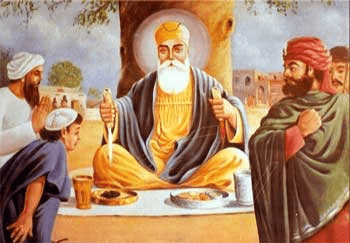
He went to stay with Bhai Lalo, a poor carpenter who earned his living through honest labour. Lalo possessed little and could offer his guest none of the delicacies being prepared elsewhere in the town. His meals were modest — simple bread and whatever little food his earnings allowed him to provide.
Guru Nanak accepted it with affection.
For the Guru, the value of the meal did not lie in its richness but in the integrity with which it had been earned. He continued to stay at Lalo’s modest home, sharing his simple food.
When Malik Bhago learnt that Guru Nanak had chosen the carpenter’s house over his own, he was deeply offended. He organised a grand feast, inviting religious figures and prominent people, and sent an invitation to the Guru.
Guru Nanak declined.
Unable to understand why his lavish hospitality had been rejected in favour of a poor man’s dry bread, Malik Bhago ordered his men to bring the Guru to him.
Guru Nanak eventually went to Malik Bhago’s residence, where the wealthy official confronted him. Why, he demanded, had the Guru refused the elaborate food prepared in his honour while willingly eating the meagre fare of a poor carpenter?
Guru Nanak’s answer went to the heart of the difference between wealth and righteous earning.
He explained that Lalo’s bread had been earned through honest labour, while Malik Bhago’s luxuries had been built upon the suffering and exploitation of the poor. Food purchased with wealth extracted unjustly from others could not become pure merely because it was served on an extravagant table.
Malik Bhago challenged the Guru to prove his assertion.
According to Sikh tradition, Guru Nanak asked for a piece of bread from Lalo’s home. Holding Lalo’s coarse bread in one hand and food from Malik Bhago’s feast in the other, he squeezed them.
Milk flowed from Lalo’s bread.
From Malik Bhago’s food came blood.
The powerful image carried a message that needed no further explanation. The milk symbolised the purity of honest labour and the compassion contained in Lalo’s humble earnings. The blood represented the suffering of those whose labour and livelihood had been exploited to create Malik Bhago’s wealth.
Shaken by what he witnessed, Malik Bhago recognised the injustice of his ways and sought forgiveness.
Guru Nanak did not merely ask him to repent in words. He told him to return his wrongfully acquired wealth by distributing it among the poor and to begin earning and living honestly. Malik Bhago accepted the teaching and, tradition holds, changed the course of his life.
The episode of Bhai Lalo and Malik Bhago remains far more than a story about two meals. It illustrates one of the fundamental principles later deeply associated with the Sikh way of life — Kirat Karo, to earn one’s livelihood through honest work.
It also challenged an entrenched social assumption: that wealth, status and elaborate displays of charity automatically make a person virtuous. Guru Nanak instead placed dignity in the home of a labourer. The dry bread of a carpenter, earned without exploiting another human being, was worth more than a banquet financed through injustice.
The lesson has lost little of its relevance with the passage of centuries. Prosperity cannot be separated from the means by which it is created, and generosity cannot erase exploitation. Behind every possession and every meal lies the question Guru Nanak’s teaching compelled society to confront: Was it earned honestly, or did someone else have to suffer for it?
At Saidpur, the answer was expressed through two pieces of bread — one yielding milk, the other blood.