

AI Generated Summary
- In Punjab’s Malwa region, the rhythmic movement of traditional handlooms is making a comeback, thanks to a grassroots initiative that combines cultural preservation with economic empowerment.
- A significant milestone came in 2023 with the establishment of Bunkar Pathshala, a training centre dedicated to preserving and teaching handloom skills.
- Recognising the diminishing demand for locally grown indigenous cotton, Garg envisioned a model connecting cotton farmers with traditional artisans, thereby rebuilding a rural economy rooted in local resources.
Faridkot’s Nav-Trinjan initiative is reconnecting traditional craftsmanship with sustainable agriculture, rural livelihoods and women’s empowerment.
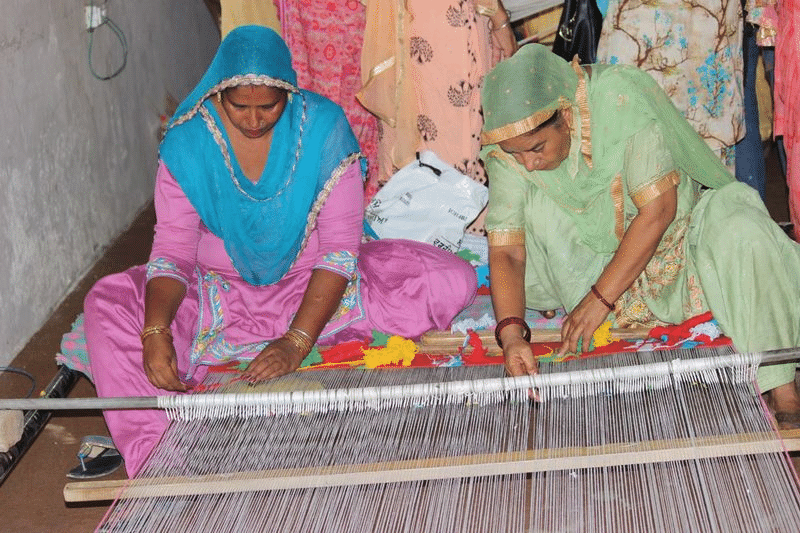
In Punjab’s Malwa region, the rhythmic movement of traditional handlooms is making a comeback, thanks to a grassroots initiative that combines cultural preservation with economic empowerment. Nav-Trinjan, based in Faridkot, is reviving the state’s declining weaving traditions while creating livelihood opportunities for rural women.
The initiative recently received national attention after Indian Prime Minister Narendra Modi highlighted its efforts during his Mann Ki Baat radio programme, bringing renewed focus to Punjab’s indigenous textile heritage.
Led by Rupsi Garg, Nav-Trinjan emerged from her association with the Kheti Virasat Mission (KVM), an organisation promoting sustainable agriculture. Recognising the diminishing demand for locally grown indigenous cotton, Garg envisioned a model connecting cotton farmers with traditional artisans, thereby rebuilding a rural economy rooted in local resources.
The initiative draws inspiration from Punjab’s historic trinjan tradition, where women gathered to spin cotton, weave textiles, sing folk songs and exchange stories. Once integral to village life, these gatherings gradually disappeared as mechanised textile production replaced traditional craftsmanship.
Determined to reverse this decline, Garg spent several years identifying skilled weavers across Faridkot, Muktsar and Barnala. Her efforts encouraged experienced artisans to resume weaving while introducing younger women to techniques that were at risk of disappearing.
A significant milestone came in 2023 with the establishment of Bunkar Pathshala, a training centre dedicated to preserving and teaching handloom skills. The centre provides practical instruction, allowing women without previous weaving experience to develop marketable skills.
Among its beneficiaries is Gurmeet Kaur, who learned weaving through a 45-day training programme. Previously dependent on agricultural income, she now contributes financially to her household. Similarly, experienced artisan Shinder Kaur, who learned weaving during childhood, is helping pass her knowledge to another generation.
Beyond skill development, Nav-Trinjan promotes an environmentally conscious textile production system. It sources indigenous non-Bt cotton cultivated through natural farming practices, which is subsequently processed, spun and woven into shawls, stoles, dupattas, khes and other handcrafted fabrics.
This approach strengthens connections between agriculture and traditional manufacturing while encouraging alternatives to resource-intensive production systems. It also demonstrates how rural enterprises can combine environmental responsibility with employment generation.
However, sustaining the revival remains challenging. Limited funding, inadequate design infrastructure and restricted market access continue to constrain expansion. Although Nav-Trinjan markets its products through exhibitions, online platforms and direct sales, reaching a larger consumer base remains essential.
Greater institutional support, improved branding and stronger connections with contemporary fashion markets could help initiatives like Nav-Trinjan achieve long-term commercial viability.
Its significance extends beyond preserving a traditional craft. By enabling women to earn independently, safeguarding inherited knowledge and supporting indigenous cotton cultivation, the initiative presents an alternative model of rural development.
As India increasingly emphasises sustainable products and locally rooted enterprises, Nav-Trinjan illustrates how traditional skills can find renewed relevance in modern markets.
For Punjab’s women artisans, every woven fabric represents more than craftsmanship. It symbolises economic independence, cultural continuity and the possibility of a more sustainable future.