


AI Generated Summary
- By the next day the plane’s passengers were in Israel, the attacker was in custody in Saudi Arabia, and Machchhar was in a Tabuk hospital after surgery, his family and Indian officials in contact with the doctors.
- Accounts from Israeli officials and passengers say the co-pilot attacked Machchhar with a knife and pushed the Boeing 737 into a violent dive.
- despite being stabbed and seriously injured, the Indian captain had fought back, opened the door, and enabled others to overpower the attacker, preventing a catastrophic disaster.
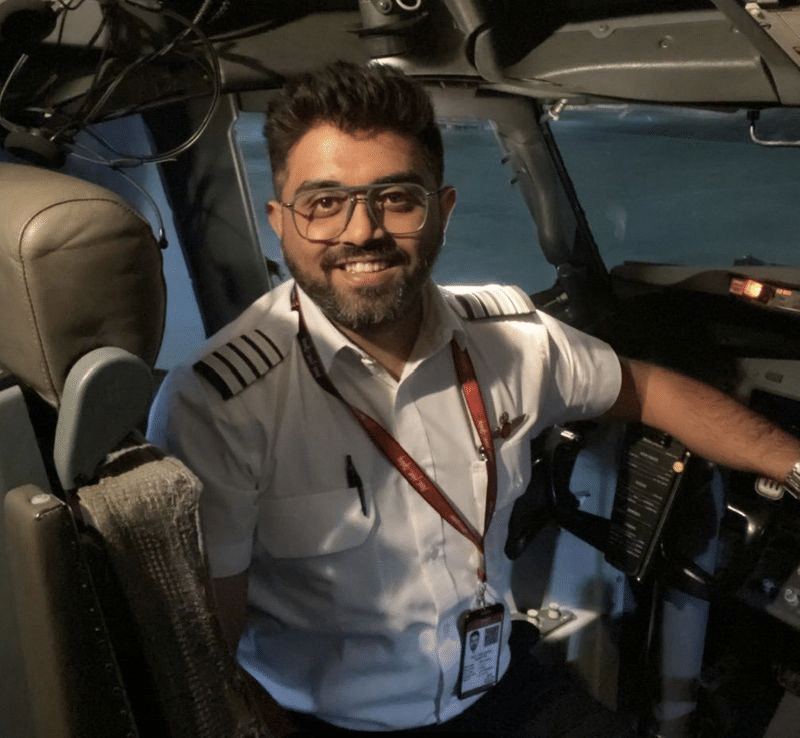
As Flydubai flight FZ1073 lifted off from Dubai bound for Tel Aviv with 174 people aboard, among them families and twenty-seven children. In the left-hand seat sat Captain Smit Machchhar, an Indian pilot from Mumbai who had spent more than a decade at SpiceJet before joining the UAE carrier. Two and a half hours later, over the skies near the Saudi–Jordanian frontier, the cockpit erupted.
Accounts from Israeli officials and passengers say the co-pilot attacked Machchhar with a knife and pushed the Boeing 737 into a violent dive. The aircraft plunged thousands of feet in seconds. Alarms sounded. Emergency codes flashed. Far below, lives that had seemed ordinary that morning suddenly hung on what one bleeding man would do next.
Machchhar was badly wounded. Blood covered the cockpit floor. Yet he fought. He resisted the attacker long enough to reach the door release. The lock clicked. The door opened. Passengers and crew poured in. An Israeli passenger, later named in reports as Yaniv Hayoun, helped pull the attacker from the controls. Off-duty pilots travelling in the cabin joined the struggle. The descent was arrested. The jet was turned toward Tabuk in northwestern Saudi Arabia and landed intact. Every soul on board survived.
What followed was unusual even by the standards of a mid-air crisis. Israeli Prime Minister Benjamin Netanyahu posted a public salute: despite being stabbed and seriously injured, the Indian captain had fought back, opened the door, and enabled others to overpower the attacker, preventing a catastrophic disaster. He called Machchhar a true hero and credited him with saving 174 lives.
In Washington, President Donald Trump, after speaking with Netanyahu, told reporters the same story in his own cadence. The pilot was in very bad shape. The co-pilot was “perhaps a terrorist or perhaps a whack job.” But Machchhar had the presence of mind to open the door. “In a way he was a hero.”
In New Delhi, Prime Minister Narendra Modi answered in the same register. “Captain Smit Machchhar is a HERO,” he wrote. In the gravest danger, and despite grave injury, the captain had shown unwavering resolve to protect others. His valour, Modi said, had averted a great tragedy. India was proud of him.
By the next day the plane’s passengers were in Israel, the attacker was in custody in Saudi Arabia, and Machchhar was in a Tabuk hospital after surgery, his family and Indian officials in contact with the doctors. Three capitals—Jerusalem, New Delhi, Washington—had named the same man. The story that travelled with their praise was simple: at thirty-odd thousand feet, an injured Indian captain refused to let the aircraft die, and 174 people walked away.