


AI Generated Summary
- At a time when Punjab’s annual crop-residue problem continues to pose a challenge, his farm offers a ground-level example of how agricultural waste can instead become an input for the next crop — reducing the need for burning while putting organic matter back into the soil.
- According to Singh, the change in the colour and texture of the soil after the straw decomposes is itself an indication of what returning organic matter to the land can do.
- As Punjab continues to grapple with the environmental consequences of crop-residue burning, a farmer in Udowali has spent the past several years demonstrating that clearing fields need not involve setting them on fire.
Udowali farmer incorporates paddy and wheat residue into soil; says alternative practices can cut costs while protecting farmland
As Punjab continues to grapple with the environmental consequences of crop-residue burning, a farmer in Udowali has spent the past several years demonstrating that clearing fields need not involve setting them on fire.
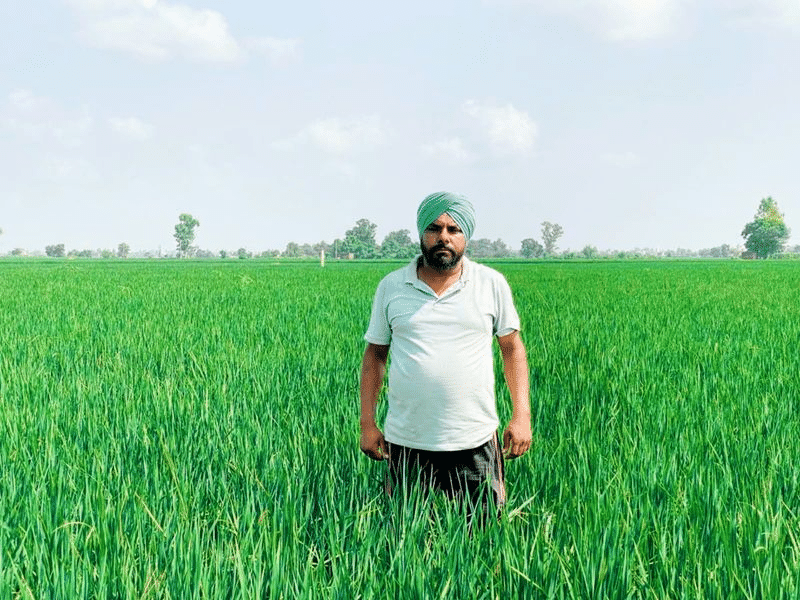
Sukhbir Singh, who cultivates around 30 acres, says he has not burnt paddy straw or wheat residue for the past six years. Instead of treating the leftover biomass as waste that must be quickly removed, he works it back into the land and allows it to decompose.
His departure from conventional farming began about seven years ago, when interactions with farmers associated with the Young Innovative Farmers Group and the Progressive Farmers Network introduced him to alternative agricultural practices. What began as experimentation gradually developed into a broader change in the way he manages his farm.
Following the recent paddy harvest, for instance, Singh incorporated the straw into the field during puddling. Water helped the residue decompose before the land was subsequently ploughed and exposed to sunlight and air. The same field is now being prepared for potato cultivation.
According to Singh, the change in the colour and texture of the soil after the straw decomposes is itself an indication of what returning organic matter to the land can do.
His efforts have extended beyond crop-residue management. After interacting with innovative farmer Gurbinder Singh Bajwa, Singh also began reducing his dependence on chemical-based agricultural inputs.
He now grows crops including paddy, wheat, maize, potato and peas without chemical-based pesticides and other inputs that he considers harmful. In their place, he uses indigenous microbial preparations for purposes ranging from improving soil health to managing pests and assisting the decomposition of crop residue.
For Singh, the shift has been as much about farm economics as environmental concerns. Chemical inputs add to cultivation costs, he says, while residue burning deprives the soil of material that can instead be recycled into it.
He believes a lack of awareness remains one of the reasons many farmers continue with established practices.
“Farmers often burn crop residue and use chemicals because they are not aware of other options. This increases their expenses and harms the environment as well as soil health,” Singh said.
He maintains that biological alternatives can be relatively inexpensive and, if used correctly, need not come at the cost of agricultural productivity.
Singh’s experience also underlines that moving away from conventional methods is rarely an immediate transition. His own change took place gradually, through experimentation and exchanges with farmers already trying different techniques.
At a time when Punjab’s annual crop-residue problem continues to pose a challenge, his farm offers a ground-level example of how agricultural waste can instead become an input for the next crop — reducing the need for burning while putting organic matter back into the soil.