


AI Generated Summary
- In the First World War, Hardit Singh Malik — later known as the “Flying Sikh” — became one of the first Indians and the first Sikh to serve as a pilot with the Royal Flying Corps (and subsequently the RAF).
- Born in Chandigarh in 1998 to a Punjabi Sikh family — his father Jagdeep Singh Dang from Ludhiana, his mother Gagandeep Kaur from Amritsar — Arshdeep moved to the UK at the age of six and grew up in Southall.
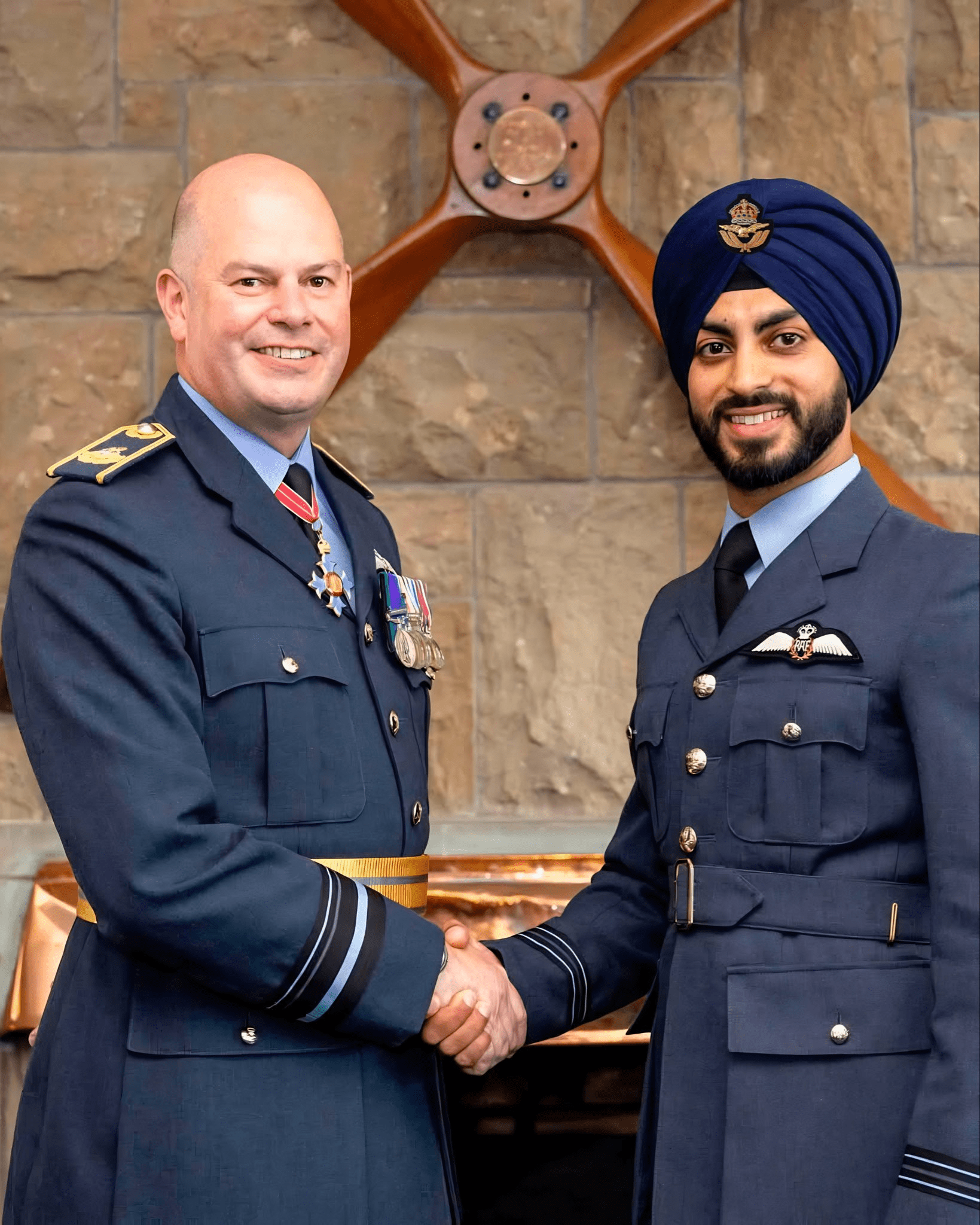
- On 14 August 2026, at RAF Valley in North Wales, the 28-year-old received his fast-jet wings after completing the demanding training pipeline — becoming the first Sikh to graduate as a Royal Air Force fighter pilot since the Second World War.
Many congratulations to Flight Lieutenant Arshdeep Singh Dang on earning his RAF fighter pilot wings. On 14 August 2026, at RAF Valley in North Wales, the 28-year-old received his fast-jet wings after completing the demanding training pipeline — becoming the first Sikh to graduate as a Royal Air Force fighter pilot since the Second World War. It is a historic and inspiring achievement that reconnects a living tradition of Sikh service in British military aviation with the present day.
Born in Chandigarh in 1998 to a Punjabi Sikh family — his father Jagdeep Singh Dang from Ludhiana, his mother Gagandeep Kaur from Amritsar — Arshdeep moved to the UK at the age of six and grew up in Southall. He studied mathematics and philosophy at the University of Bristol before joining the RAF, completing officer training in 2022, elementary flying training, a posting in Cyprus, and then the fast-jet stream. Lead-in and basic fast-jet training, solo flying in Texas, and a successful wings test in July 2026 brought him to the graduation ceremony. He now faces a further year of operational conversion before frontline flying. Throughout, he has spoken of representing his community, of the Sikh spirit of chardi kalan (high spirits and resilience), and of not wanting to be the last.
The achievement carries a personal resonance that stretches across generations. Arshdeep has described how his paternal grandfather, Sardar Santokh Singh Dang, dreamed of seeing his own son become a pilot. That dream was cut short when the grandfather died while Arshdeep’s father was still a young boy. Encouraged by his parents — and especially anchored by his mother’s determination to keep Sikh and Punjabi values alive through language, the gurdwara, and everyday discipline — Arshdeep took up the unfinished ambition. In doing so he closed a family circle while opening a larger historical one.
Sikh pilots have flown with British air services since the earliest days of military aviation. In the First World War, Hardit Singh Malik — later known as the “Flying Sikh” — became one of the first Indians and the first Sikh to serve as a pilot with the Royal Flying Corps (and subsequently the RAF). An Oxford-educated man who insisted on retaining his turban, he flew Sopwith Camels over the Western Front, survived being shot down with his aircraft riddled by hundreds of bullets, and later pursued a distinguished diplomatic career. In the Second World War, Squadron Leader Mohinder Singh Pujji DFC stood among the early Indian volunteers who trained with the RAF. He flew Hurricanes in Britain, North Africa and Burma, wore his turban in combat (with a specially adapted oxygen mask), and earned the Distinguished Flying Cross for gallantry. These men, and others like them, demonstrated both technical skill and the quiet insistence on practising their faith while serving.
For more than eight decades after those wartime years, no Sikh is recorded as having completed the full fighter-pilot pathway in the RAF. Arshdeep Singh Dang’s wings therefore mark a genuine return. They do not invent a tradition; they renew one that was already proud, visible, and hard-won. In an age when military service continues to demand exacting standards of competence, courage and character, his success is both a personal triumph and a public reminder of the long contribution of Sikh airmen to British defence.
Many congratulations, Flight Lieutenant Dang. The legacy continues — and it is in capable hands.