


AI Generated Summary
- Drawn to the egalitarian ethos and spirit of service he encountered in Sikh gurdwaras in Lahore, he adopted the name Puran Singh and dedicated himself to helping the suffering.
- He proved that the measure of a life can be the number of forgotten people who found a home, a clean bed, and someone who would not look away.
- Born Ramji Das on 4 June 1904 in Rajewal (near Khanna) in Ludhiana district, Punjab, into a Hindu family, he later embraced Sikh principles of seva and became known as Bhagat Puran Singh.
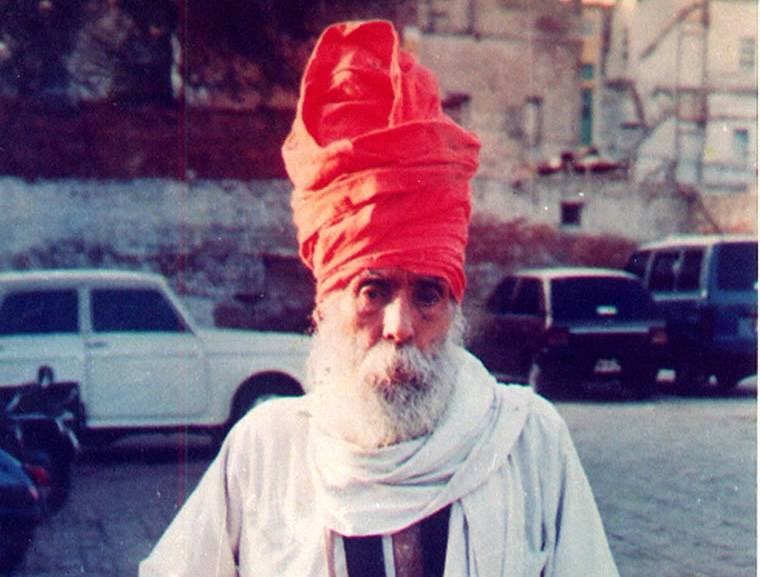
Bhagat Puran Singh stands as one of modern India’s purest embodiments of selfless service. Born Ramji Das on 4 June 1904 in Rajewal (near Khanna) in Ludhiana district, Punjab, into a Hindu family, he later embraced Sikh principles of seva and became known as Bhagat Puran Singh. He founded Pingalwara in Amritsar—a refuge for the abandoned, disabled, mentally ill, and destitute—and lived a life of radical compassion until his death on 5 August 1992.
His mother, Mehtab Kaur, raised him with strong values after early family hardships. Drawn to the egalitarian ethos and spirit of service he encountered in Sikh gurdwaras in Lahore, he adopted the name Puran Singh and dedicated himself to helping the suffering. He never married, owned little, and treated the work of caring for the rejected as his sole vocation.
The decisive moment came in 1934. A severely disabled four-year-old child—mute, physically deformed, and suffering from illness—was left at the entrance of Gurdwara Dehra Sahib in Lahore. The caretaker entrusted the boy to Puran Singh. He named him Piara (“the loved one”) and made the child’s care his central duty, carrying him on his back for years. That single act of acceptance became the seed of everything that followed.
During the violence of Partition in 1947, Bhagat Puran Singh walked from Lahore to Amritsar with Piara on his back. In the refugee camps of Amritsar he tended the sick and displaced. When the camps closed, the most vulnerable—those with no families left—remained. He began collecting the abandoned from streets and platforms, first under tents near Khalsa College and later in more permanent shelters. What began as personal care grew into Pingalwara, literally a “home for the disabled.” The All India Pingalwara Charitable Society was formalised in the late 1950s; land for the main campus was acquired in 1958.
Pingalwara welcomed people society had discarded: those with leprosy, severe physical and mental disabilities, the elderly, orphans, and the terminally ill. Care was given without regard to caste, creed, or religion. Bhagat Puran Singh improvised early transport (a modified rickshaw serving as an ambulance) and relied on small public donations while living in austere simplicity himself.
Long before environmentalism became mainstream, he campaigned against pollution, soil erosion, and wasteful consumption. He printed pamphlets on reused paper, promoted tree planting, public transport, and simple living, and distributed literature freely. Service to people and care for the earth were, for him, inseparable expressions of the same ethic.
He received the Padma Shri for his work (sources note 1979 or 1981). After the 1984 army action at the Golden Temple, he returned the award in protest—an act of moral consistency that underscored his independence. He was nominated for the Nobel Peace Prize near the end of his life.
National heroes are often remembered for battlefield courage, political leadership, or public oratory. Bhagat Puran Singh’s heroism was quieter and, in some ways, rarer. He chose the people no one else wanted and made their dignity his life’s work. In the chaos of Partition he did not merely survive; he created an institution that restored humanity to the discarded. He practised what many only preach: service without calculation of return, without communal boundary, and without personal accumulation.
His environmental foresight was decades ahead of its time. His decision to return a state honour after 1984 showed that principle mattered more than recognition. Above all, he demonstrated that a single individual’s steadfast seva can outlast governments, fashions, and even the individual himself. Pingalwara continues today under the leadership that succeeded him, still offering shelter, medical care, education, and dignity to those on the margins. A commemorative stamp was issued in 2004; a chair for studies in selfless service exists at Guru Nanak Dev University; and calls for higher national recognition continue.
In an age that often equates greatness with power or visibility, Bhagat Puran Singh remains a corrective. He proved that the measure of a life can be the number of forgotten people who found a home, a clean bed, and someone who would not look away. That is why he belongs in the national memory not as a regional or community figure alone, but as a genuine national hero—one whose legacy is measured in restored human dignity rather than monuments or slogans.