


AI Generated Summary
- It was followed by the university anthem, Shaan-o-Shaukat, written by Kamil, setting the tone for an event that celebrated not only the achievements of the two alumni but also their enduring connection with the institution where their creative journeys took shape.
- Emphasising the need for writers to remain connected with classical and regional literary voices, Kamil said an understanding of poets such as Rumi, Kabir and Batalvi was essential to appreciating the metaphors and layered meanings found in literature.
- Jointly organised by the Panjab University Alumni Association and the Chandigarh Citizens Foundation, the programme brought the two artistes together for an informal conversation on creativity, perseverance and the experiences that shaped their artistic careers.
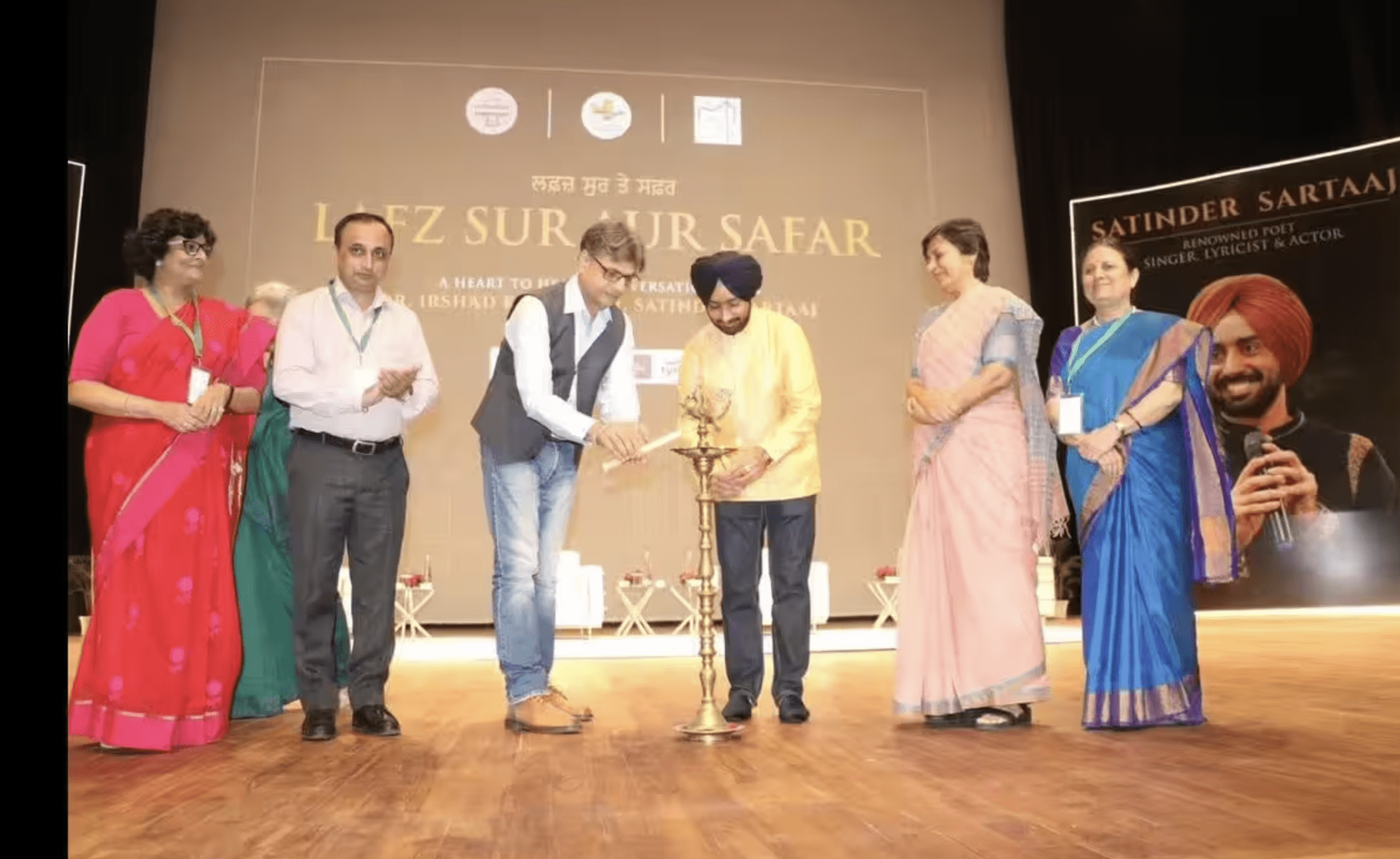
Panjab University witnessed an evening of poetry, music and memories as two of its celebrated alumni — National Award-winning lyricist Irshad Kamil and renowned Sufi singer-poet Satinder Sartaaj — returned to the campus for an interaction titled Lafz, Sur Aur Safar.
Jointly organised by the Panjab University Alumni Association and the Chandigarh Citizens Foundation, the programme brought the two artistes together for an informal conversation on creativity, perseverance and the experiences that shaped their artistic careers.
Moderated by Prof Pushpinder Syal and Prof Archana R Singh, the session moved beyond a conventional stage presentation, allowing the guests to reflect on their student years, professional struggles and evolving relationship with literature and music.
Sartaaj, who completed his Master’s degree and PhD at Panjab University, described the campus as an important influence on both his intellectual development and artistic sensibility. His academic engagement with Sufi music, he said, gradually encouraged him to explore poetry and composition.
He also recalled giving his first public performance at the university. Speaking about the nature of artistic expression, Sartaaj observed that poetry could not be confined by rigid boundaries. Writing for cinema, however, demanded a careful balance between imagination and technical skill, he added.
When asked how he wished to be remembered, Sartaaj said he would like his legacy to be associated primarily with poetry and music composition.
Kamil, who earned a PhD in Hindi Literature from the university, similarly credited the institution with giving direction to his literary journey. He spoke about the uncertainty and rejection he encountered after moving to Mumbai in search of work in the film industry.
Recalling the early years of his career, Kamil said he often spent hours waiting outside the offices of composers and filmmakers before receiving an opportunity. Even after his work began appearing in films, he said, his name was initially missing from the credits.
“The book of reality has different pages for everyone, and Mumbai had its own,” he remarked while describing the city’s demanding and unpredictable character.
Kamil also spoke about the growing influence of Punjabi poetry and literary traditions on Hindi cinema. Referring to the song Aaj Din Chadheya from the film Love Aaj Kal, he revealed that its emotional and poetic character was inspired by the writings of Shiv Kumar Batalvi.
Emphasising the need for writers to remain connected with classical and regional literary voices, Kamil said an understanding of poets such as Rumi, Kabir and Batalvi was essential to appreciating the metaphors and layered meanings found in literature.
The lyricist also recited selections from his poetry collection Ek Mahina Nazmo Ka, drawing an appreciative response from the audience.
The evening began with a Saraswati Vandana performed by Panjab University students. It was followed by the university anthem, Shaan-o-Shaukat, written by Kamil, setting the tone for an event that celebrated not only the achievements of the two alumni but also their enduring connection with the institution where their creative journeys took shape.