


AI Generated Summary
- Freedom of speech is a cornerstone of liberal democracy, but it has limits when it veers into incitement, threats, and the celebration of violence against a head of government.
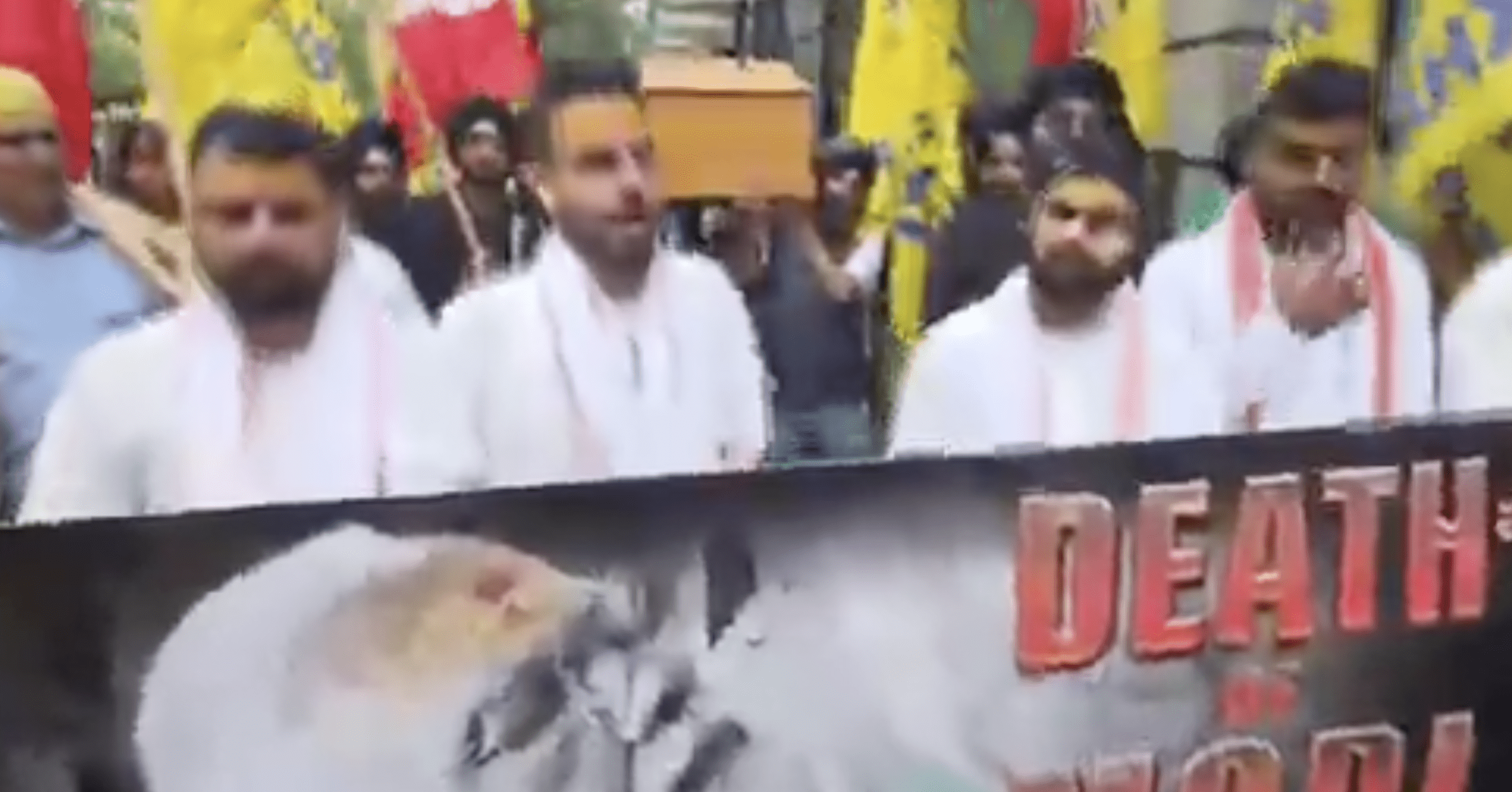
- In a disturbing display that crosses from protest into incitement, Khalistani extremists in Canada recently staged a mock funeral for Indian Prime Minister Narendra Modi on Canadian soil.
- Successive Canadian governments, particularly under Justin Trudeau, prioritized electoral calculus over national security, souring relations with India—one of the world’s fastest-growing major economies and a key counterweight to China in the Indo-Pacific.
In a disturbing display that crosses from protest into incitement, Khalistani extremists in Canada recently staged a mock funeral for Indian Prime Minister Narendra Modi on Canadian soil. Effigies burned, processions marched, and the message rang clear: political violence against India’s democratically elected leader is not only thinkable but celebratory. This isn’t isolated theatre. It follows years of “Kill Modi” chants at rallies, hastily rebranded as “Kill Modi politics” when scrutiny intensified. The mask is off. What began as fringe sloganeering has evolved into open glorification of assassination on Canadian streets.
Freedom of speech is a cornerstone of liberal democracy, but it has limits when it veers into incitement, threats, and the celebration of violence against a head of government. Mock funerals for a sitting prime minister are not legitimate dissent; they are dress rehearsals for extremism. Canada, home to a large and vibrant Sikh diaspora, has long prided itself on multiculturalism. Yet multiculturalism cannot become a suicide pact that permits foreign separatists to import their grievances and export terror.
The historical record is grim. Khalistani extremism has Canadian blood on its hands. The 1985 Air India bombing—Canada’s deadliest terrorist attack—killed 329 people, mostly Canadian citizens. Perpetrators drew support from networks in Canada. Four decades later, the Canadian Security Intelligence Service (CSIS) itself has acknowledged in its 2025 public report that Canada-based Khalistani extremists (CBKE) continue to pose a national security threat. They fundraise, organize, and promote violence, using Canadian soil as a safe haven.
Despite this admission, enforcement remains lax. Protesters openly flout norms, intimidating moderate Sikhs who reject separatism and wish only to thrive in Canada. Mainstream Sikh organizations denounce these radicals, but their voices are drowned out by a vocal minority that has captured political attention through bloc voting. Successive Canadian governments, particularly under Justin Trudeau, prioritized electoral calculus over national security, souring relations with India—one of the world’s fastest-growing major economies and a key counterweight to China in the Indo-Pacific.
The damage is tangible. Trade, intelligence sharing, and people-to-people ties have suffered. India is a vital partner for Canada in critical minerals, technology, defence, and skilled immigration. Billions in potential economic cooperation remain frozen amid diplomatic frost. While recent shifts under new leadership signal some recognition of the threat, actions speak louder than reports. Allowing mock funerals and veiled threats signals weakness to extremists everywhere.
This isn’t merely an India problem. It’s a Canadian problem. Tolerating calls for the murder of a foreign leader normalizes political assassination as legitimate protest. It emboldens radicals who view Canada’s permissive environment as an asset. It erodes public trust when citizens see their government unwilling to confront imported extremism. And it damages Canada’s reputation as a serious player on the global stage—one that cannot even secure its streets from foreign agitators.
Indian Prime Minister Narendra Modi’s government has repeatedly highlighted these concerns, demanding action against individuals and groups involved in terrorism financing and propaganda. India’s position is straightforward: peaceful advocacy is one thing; support for violence, glorification of terrorists like those behind the 1985 bombing or plots against Indian diplomats and leaders, is another. Canada must draw that line clearly
The rebranding from “Kill Modi” to “Kill Modi politics” fooled no one. The mock funeral makes the intent unmistakable. Canada cannot claim to champion democracy and human rights while hosting those who mock the democratic process through veiled calls for murder. It’s time for Ottawa to choose: Will it defend its sovereignty and alliances, or continue appeasing radicals at the expense of its security and prosperity?
The world is watching. India’s rise as a stable, democratic power is an opportunity Canada cannot afford to squander. Extremists thrive on tolerance without boundaries. Canada must prove it still knows the difference between liberty and licence
